
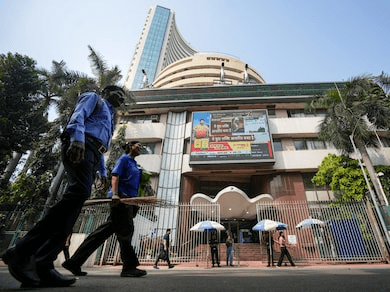
Now the domestic equity markets are facing intense selling pressure. The Sensex today 2026 live updates show a sharp decline in morning trade on Tuesday, May 5. This slide is driven by fresh jitters over the escalating conflict between the US and Iran. Therefore, the Sensex dropped over 500 points to trade near the 76,745 mark. Meanwhile, the Nifty 50 has slipped below the 24,000 level as geopolitical risks overshadow local political victories.
Add businessleague.in as a Preferred Source


Also Read |Tamil Nadu Voter List Purge: 97 Lakh Names Deleted in SIR Phase 1
Early Trade Analysis: Sensex and Nifty Under Pressure
Now the Indian markets have opened with a significant gap down. The Sensex was trading at 76,745, down 524 points during early deals. Therefore, investors are moving into a defensive posture.
First, the Nifty 50 slipped to 23,949, marking a decline of 170 points. Next, the lack of stability in global energy routes is weighing on investor confidence. Thus, the psychological levels of 77,000 for Sensex and 24,000 for Nifty have been breached.
So the initial optimistic surge from the BJP’s West Bengal victory has vanished. Meanwhile, the focus has shifted entirely to international security concerns. Therefore, the “risk-off” sentiment is dominating the floor today.
West Asia Standoff: The Strait of Hormuz Flashpoint
Now the standoff between Washington and Tehran has reached a critical stage. Both sides have exchanged missile and drone fire in the Gulf. Therefore, the Strait of Hormuz has become a potential flashpoint for a larger war.
First, US President Donald Trump is pushing to escort stranded tankers through the artery. Next, Iran is attempting to maintain its blockade to reassert dominance. Thus, a fragile ceasefire brokered last month is rapidly unraveling.
So more than 800 ships remain stuck in this energy chokepoint. Meanwhile, the campaign against Iran—now in its third month—continues to claim lives. Therefore, the threat to global trade is more real than ever.
Sector-Wise Performance: Banking and Auto Hit Hard
Now the selling pressure is broad-based across several sectors. Auto, financials, and banking stocks are the primary laggards today. Therefore, the broader market indices are struggling to find support.
First, the Nifty Auto and Nifty Private Bank indices declined by nearly 0.7 percent. Next, metal and consumer durables also faced significant profit-booking. Thus, high-beta sectors are feeling the maximum heat from geopolitical jitters.
So top losers include Shriram Finance, Maruti Suzuki, and HDFC Bank. Meanwhile, Nifty IT and Nifty FMCG witnessed a small amount of positive momentum. Therefore, investors are seeking refuge in “defensive” sectors during this crisis.
Also Read |Tamil Nadu Voter List Purge: 97 Lakh Names Deleted in SIR Phase 1
The Impact of Rupee at 95.23 and Bond Yields
Now the domestic currency is adding to the market’s woes. The rupee has slid to the 95.23 level against the US dollar. Therefore, the cost of imports, especially oil, is rising rapidly for the Indian economy.
First, the US 10-year bond yield has risen to 4.44 per cent. Next, this makes the US markets more attractive than emerging markets like India. Thus, FPI (Foreign Portfolio Investor) flows are expected to slow down.
So yesterday’s buying by FIIs is unlikely to become a trend. Meanwhile, the combination of a weak rupee and high yields is a major “double whammy.” Therefore, the macro-environment remains unfavorable for a quick recovery.
Expert Opinion: Why the Bengal Election Boost Faded
Now market experts are warning against short-term optimism. One expert noted that the sentimental boost from the BJP’s electoral win in West Bengal will not last. Therefore, the global news cycle has taken over the steering wheel.
First, the market trend is now guided by developments in the Strait of Hormuz. Next, the resumption of hostilities is a major headwind that domestic news cannot counter. Thus, the “political dividend” has been wiped out by “geopolitical risk.”
So the near-term focus will now shift to Q4 results. Meanwhile, management commentary on supply chain disruptions will be vital. Therefore, fundamental earnings must now support the current valuations.
Commodity Watch: Brent Crude and WTI Price Swings
Now commodities are reflecting the extreme volatility of the war. International oil benchmark Brent crude spiked to $112.88 per barrel. Therefore, the threat of an energy shortage is keeping prices elevated.
First, US West Texas Intermediate (WTI) is hovering near $103.92. Next, any fresh strike in the Gulf could push Brent toward $120. Thus, the “war premium” on oil is firmly in place.
So these high energy costs are inflationary for India. Meanwhile, the blockade in the Gulf shows no signs of lifting. Therefore, the “higher-for-longer” narrative for energy prices is currently the base case.
Also Read |Tamil Nadu Voter List Purge: 97 Lakh Names Deleted in SIR Phase 1
Global Market Trends: Asia and US Market Sentiment
Now the global picture remains mixed but cautious. In the US, the S&P 500 and Nasdaq both ended lower on Monday. Therefore, the global trend was already negative before the Indian opening.
First, Asian markets showed a mixed trend on Tuesday morning. Next, Hong Kong’s Hang Seng shed more than 1 per cent. Thus, regional peers are also grappling with the rising cost of energy and security.
So the volatility tracker, India VIX, has spiked over 2 percent to around 19. Meanwhile, safe-haven assets like gold are seeing increased interest. Therefore, the world is bracing for further escalations in West Asia.
FAQ: Markets Today and Geopolitical Risks
1. Why is Sensex falling today? Now the fall is due to escalating tensions between the US and Iran in the Strait of Hormuz.
2. What is the current value of the Rupee? First, the rupee has hit a low of 95.23 against the US dollar. Thus, it is impacting FPI flows.
3. How is the US-Iran war affecting the oil price? So Brent crude has spiked to around $113 per barrel. Therefore, it is causing inflation fears in India.
4. Which sectors are the top losers? Next, Auto, Banking, and Financials are leading the decline today.
5. Is the Bengal election result helping the market? Now the initial boost has faded as geopolitical jitters took center stage.
6. What is India VIX? Finally, it is a volatility tracker. It has spiked to 19, indicating high uncertainty in the market.
Also Read |Tamil Nadu Voter List Purge: 97 Lakh Names Deleted in SIR Phase 1
End…
Add businessleague.in as a Preferred Source
🙏 Support Independent Journalism
We keep news free for you.
Most readers support with ₹500 ❤️
or scan QR below

Voluntary contribution. No tax benefits.
DISCLAIMER
We have taken all measures to ensure that the information provided in this article and on our social media platform is credible, verified and sourced from other Big media Houses. For any feedback or complaint, reach out to us at businessleaguein@gmail.com