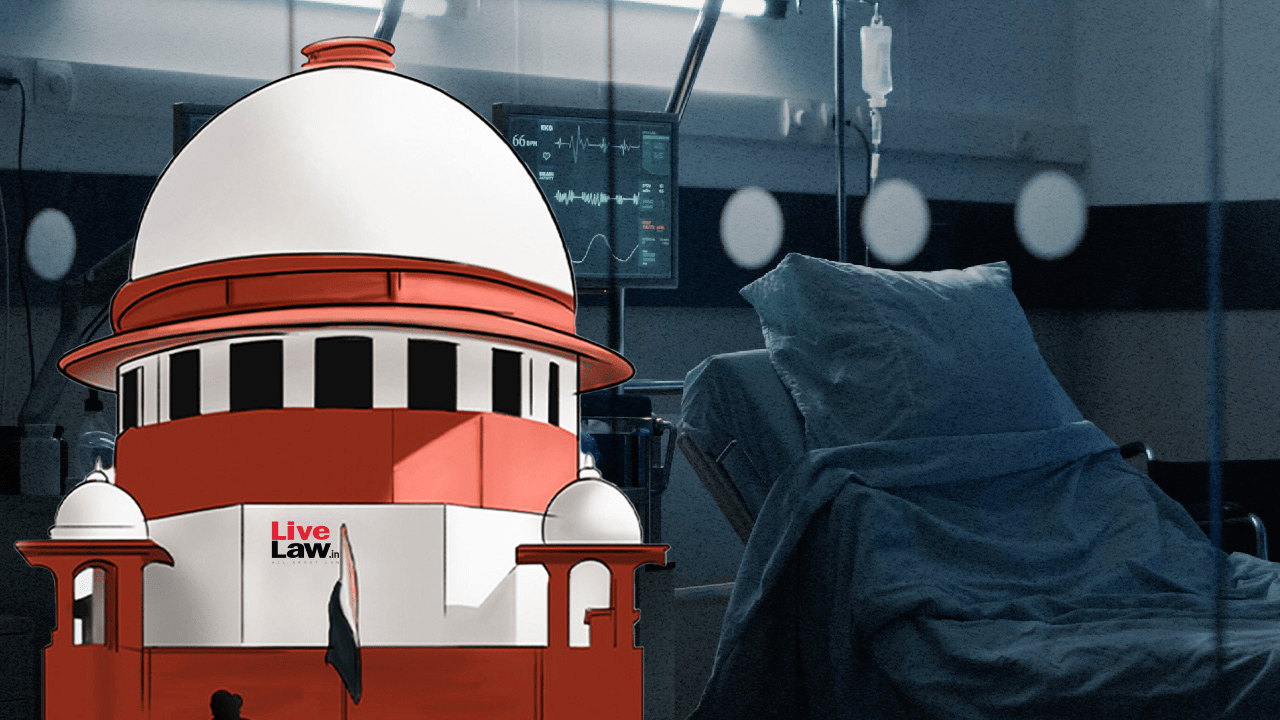
Now the apex court has taken a decisive step toward eliminating the disparity in critical care across the nation. In a significant order dated April 20, 2026, the Supreme Court has asked all states and Union Territories (UTs) to prepare a “realistic and practical” action plan. Therefore, the SC ICU guidelines action plan 2026 mandate is designed to ensure that a minimum standard of intensive care is available to every citizen. Specifically, a bench of Justices Ahsanuddin Amanullah and R Mahadevan has identified that the current challenge lies in making these standards absolutely mandatory rather than mere suggestions.
Add businessleague.in as a Preferred Source


Meanwhile, the court has emphasized that the plan must include a methodology for ground-level implementation and a robust monitoring mechanism.
But for the health departments, the clock is ticking loudly, as the entire exercise must be completed in a high-speed three-week window.
Also Read |Tamil Nadu Voter List Purge: 97 Lakh Names Deleted in SIR Phase 1
The Three-Week Clock: Timeline for the National Blueprint
Now we must understand the urgency of the court’s directive. The bench has demanded that the first meeting of experts in every state must take place within one week. Therefore, the SC ICU guidelines action plan 2026 is operating on a war footing.
The Sequential Process
First, states must hold their expert deliberations immediately. Then, the resulting reports must be forwarded to the Secretary of the Department of Health, Government of India. Thus, the center will circulate these reports to all other states to find common ground. Next, a final meeting will be convened to prepare a “common agreed draft.” Therefore, the final recommendation/blueprint will be placed before the court by mid-May. This rapid-fire timeline ensures that bureaucratic delays do not stall life-saving reforms.
The Five Priorities: Identifying “Mandatory” ICU Requirements
Now the challenge for the states lies in narrowing down the vast field of critical care into five essential points. The bench noted that determining what is “absolutely essential” is the first hurdle in the implementation phase.
Manpower and Logistics
First, states must list the top five requirements in terms of priority. Then, these must cover both manpower (qualified doctors/nurses) and equipment/logistics (ventilators, oxygen, monitors). Thus, the court is seeking a “minimum viable product” for an ICU that can be enforced across rural and urban settings alike. Next, this list will serve as the mandatory baseline for hospital accreditation. Therefore, the “realistic and practical” nature of the plan depends on these five points being achievable for all healthcare facilities.
Secretary-Level Accountability: Personal Attendance Mandated
Now the court has ensured that the responsibility starts at the top. The bench directed that all Additional Chief Secretaries or Secretaries heading health departments must attend these expert meetings “personally.”
Zero Delegation
First, the court wants to avoid the “broken telephone” effect of delegating these tasks to junior officials. Then, by involving the top bureaucracy, the court ensures that the action plan has the necessary administrative and financial backing. Thus, the SC ICU guidelines action plan 2026 carries the weight of executive authority from day one. Next, the personal presence of these officials is expected to expedite the procurement of equipment and the hiring of staff. Therefore, the “practical” aspect of the court’s demand is directly tied to this high-level involvement.
Also Read |Tamil Nadu Voter List Purge: 97 Lakh Names Deleted in SIR Phase 1
Indian Nursing Council: Shifting Focus to 24/7 Caregivers
Now a major shift in the litigation occurred during the hearing regarding the role of nursing staff. It was suggested that nurses, who remain with patients round-the-clock, are the true backbone of ICU success.
Pragmatic and Imperative
First, the bench fully endorsed the idea that nurses require specialized training to handle ICU emergencies that doctors might only visit periodically. Then, the court took the unusual step of impleading the Indian Nursing Council as a party respondent. Thus, they must now come up with a plan to augment their curriculum to include advanced ICU handling. Next, this ensures that the persons emerging from these institutions are “ICU-ready” upon graduation. Therefore, the judicial focus has moved from mere infrastructure to the human element of critical care.
Health Ministry’s Role: Official Advisory and Public Access
Now the central government has been given a clear task to bridge the communication gap. The Ministry of Health must formally issue the “Guidelines for Organisation and Delivery of Intensive Care Services” to all states.
The Power of an Advisory
First, the ministry must treat these guidelines as an official advisory. Then, they are required to upload the full document to the Ministry of Health website for public and institutional access. Thus, there can be no excuse of “lack of awareness” regarding the new standards. Next, this transparency allows hospitals to begin self-auditing their facilities ahead of the mandatory implementation. Therefore, the ministry acts as the central clearinghouse for the SC ICU guidelines action plan 2026 data.
Monitoring Compliance: Creating a Ground-Level Methodology
Now the court was clear that a plan on paper is useless without a way to verify it. A significant portion of the mandate focuses on the mechanism to “ensure compliance.”
The Verification Layer
First, states must formulate a methodology for ground-level implementation. Then, they must create a monitoring system that can identify hospitals failing to meet the “Five Priority” standards. Thus, the court is essentially calling for a standardized audit process for ICUs nationwide. Next, this mechanism will likely involve periodic inspections and data reporting to the Health Secretary. Therefore, the long-term success of the SC intervention depends on how strictly these monitoring agencies operate.
Also Read |Tamil Nadu Voter List Purge: 97 Lakh Names Deleted in SIR Phase 1
Para Medical Integration: Upgrading the Critical Care Curriculum
Now, alongside nurses, the Para Medical Council of India has also been brought into the legal fold. These technicians often manage the complex equipment that keeps ICU patients alive.
Handling Situations
First, the Para Medical Council must indicate how they propose to upgrade training for technicians who handle ventilators and life-support systems. Then, the goal is to ensure that institutional graduates are capable of “managing and handling situations” in high-pressure ICUs. Thus, the court is addressing the technical skill gap that often leads to equipment failure or patient mismanagement. Next, the council must present its upgraded course plan by the next hearing on May 18. Therefore, the healthcare education system is facing a mandatory “reboot” to meet 2026 standards.
Consensus Guidelines: The “Practical and Implementable” Standard
Now it is important to note that the court isn’t starting from scratch. They are utilizing a pre-existing document titled “Guidelines for Organisation and Delivery of Intensive Care Services.”
Consensus-Based Reform
First, the court was informed that these guidelines already enjoy a level of consensus among experts. Then, they have been vetted as being “practical and implementable” across various healthcare tiers. Thus, the SC ICU guidelines action plan 2026 is building upon a foundation of medical expertise rather than just legal theory. Next, by making these guidelines the “minimum standard,” the court is raising the floor for critical care quality in India. Therefore, the “dream team” of experts involved in the initial draft has provided the blueprint that states must now operationalize.
Common Questions Answered
What is the Supreme Court’s 3-week deadline for? Now it is for all states and UTs to hold expert meetings, draft an action plan, and submit a final national blueprint for mandatory ICU standards.
What are the “Five Priority” requirements? First, states must identify the top 5 mandatory needs for an ICU, focusing on manpower (doctors/nurses) and logistics (equipment).
Why was the Indian Nursing Council impleaded? Next, because nurses stay with ICU patients 24/7. Thus, the court wants them to have specialized training and a revised curriculum for managing critical situations.
How will the new ICU guidelines be monitored? So the SC has ordered states to develop a specific methodology for ground-level implementation and a mechanism for continuous compliance monitoring.
When is the next hearing on this matter? Finally, the case is posted for May 18, 2026, when the final report and recommendations will be presented to the bench.
Also Read |Tamil Nadu Voter List Purge: 97 Lakh Names Deleted in SIR Phase 1
End….
Add businessleague.in as a Preferred Source
🙏 Support Independent Journalism
We keep news free for you.
Most readers support with ₹500 ❤️
or scan QR below

Voluntary contribution. No tax benefits.
DISCLAIMER
We have taken all measures to ensure that the information provided in this article and on our social media platform is credible, verified and sourced from other Big media Houses. For any feedback or complaint, reach out to us at businessleaguein@gmail.com