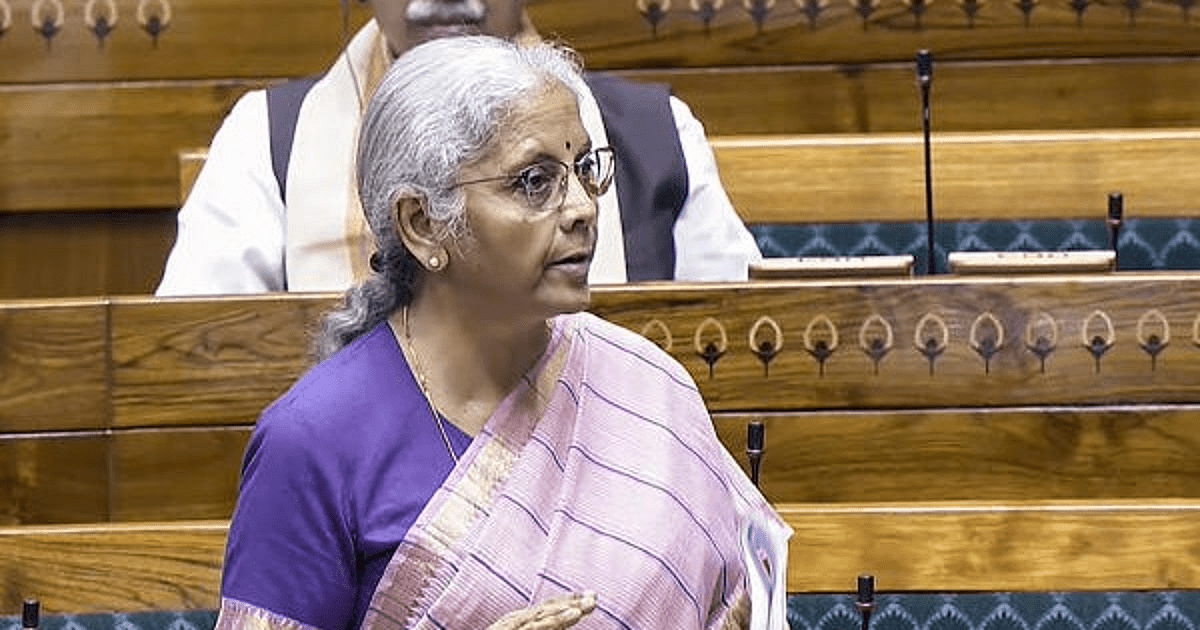
Finance Minister Nirmala Sitharaman addressed the Lok Sabha on March 30, 2026, to provide a steadying outlook on the Indian Rupee. Despite the currency crossing the ₹95 per dollar threshold recently, the Minister insisted that the INR is “absolutely fine” when compared to its regional peers.
Add businessleague.in as a Preferred Source


Since the escalation of the West Asia conflict on February 28, the Rupee has depreciated by 4.1%, but the government maintains that India’s macroeconomic fundamentals remain a “fortress” against global volatility.
Also Read |Tamil Nadu Voter List Purge: 97 Lakh Names Deleted in SIR Phase 1
The “Peer Comparison” Strategy
The Finance Ministry’s primary argument is that the US Dollar’s global surge is a “rising tide” affecting all emerging markets, with India actually faring better than most:
-
The Comparison: While the Rupee fell 4.1% (Feb 28 – March 27), other Asian currencies saw steeper declines:
-
Thai Baht: -5.5%
-
Philippine Peso: -4.8%
-
South Korean Won: -4.6%
-
-
Year-to-Date: The Rupee has weakened by approximately 9.9% in the current financial year, a trend the FM labels as “market-determined” rather than a failure of policy.
Economic “Shock Absorbers”
Minister of State for Finance Pankaj Chaudhary and FM Sitharaman highlighted several pillars supporting the currency’s long-term value:
-
Solid Forex Reserves: India’s foreign exchange buffers remain a critical tool for the RBI to manage “excessive volatility” without defending a specific price point.
-
Historic Low Inflation: Retail inflation has averaged a mere 1.9% in the first 11 months of this fiscal year—a massive drop from the 6.2% seen in 2020–21.
-
Fiscal Discipline: The government emphasized that stable essential commodity prices and fiscal health are preventing a “panic” sell-off of the Rupee.
Also Read |Tamil Nadu Voter List Purge: 97 Lakh Names Deleted in SIR Phase 1
Timeline: The Rupee’s 2026 Journey
| Date | Milestone | Rupee Value (vs USD) |
| Feb 27, 2026 | Pre-Conflict Level | ₹90.80 |
| March 27, 2026 | Record Low (Intraday) | ₹94.84 |
| March 30, 2026 | Breaks Psychological Barrier | ₹95.00+ |
Investigative Insight: The “Oil Bill” Paradox
While the Finance Minister paints a picture of stability, the “Oil Bill” remains the invisible enemy. India’s reliance on imported crude means that as the West Asia war continues, the country must spend more Dollars to keep the economy running. This creates a “leak” in the RBI’s defense; for every billion the RBI sells to support the Rupee, the energy sector “consumes” that liquidity to pay for $93+ oil.
Furthermore, the FM’s claim that the Rupee is “market-determined” is technically true, but the ₹100 million cap on bank forex positions (introduced last week) suggests the government is now using “administrative control” rather than just “market intervention.” By restricting how many dollars banks can hold, the state is artificially increasing dollar supply—a move usually reserved for high-stress economic periods.
Also Read |Tamil Nadu Voter List Purge: 97 Lakh Names Deleted in SIR Phase 1
End….
Add businessleague.in as a Preferred Source
🙏 Support Independent Journalism
We keep news free for you.
Most readers support with ₹500 ❤️
or scan QR below

Voluntary contribution. No tax benefits.
DISCLAIMER
We have taken all measures to ensure that the information provided in this article and on our social media platform is credible, verified and sourced from other Big media Houses. For any feedback or complaint, reach out to us at businessleaguein@gmail.com