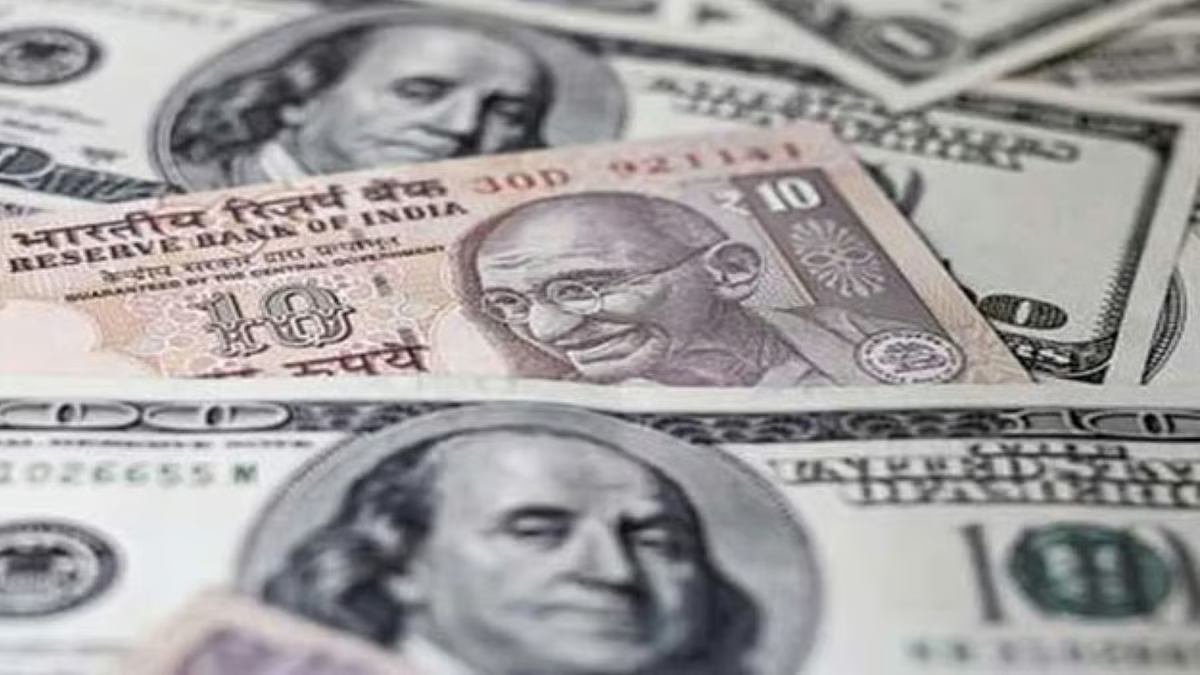
Fresh military strikes between the US and Iran in the Strait of Hormuz trigger a defensive safe-haven rush into the greenback, pressuring emerging market assets.
MUMBAI — The Indian rupee surrendered its previous session gains on Wednesday morning, sliding 20 paise to trade at 95.16 against the US dollar in early interbank foreign exchange transactions. The sudden reversal in currency sentiment comes as escalating geopolitical tensions in West Asia instantly pushed up global crude benchmarks and fueled a broad-based rally for the greenback.
Add businessleague.in as a Preferred Source


Also Read | Tata Sierra EV vs Mahindra BE 6: Price, Performance, and Feature Comparison
The local currency had opened the day at 95.15 per dollar before tracking lower to 95.16, down from Tuesday’s closing peg of 94.96.
1. Forex and Market Data Overview
The early morning currency depreciation matched structural drops across domestic benchmark indices on Dalal Street:
| Financial Indicator | Metric Performance | Absolute Baseline Impact |
| USD/INR Exchange Rate | 95.16 | ⬇ Rupee depreciated by 20 paise |
| Dollar Index (DXY) | 101.08 | ⬆ Appreciated by 0.06% |
| Brent Crude Futures | $76.05 / barrel | 🚀 Spiked up by 2.55% |
| BSE Sensex | 77,642.89 | 📉 Dropped 537.83 points in opening trade |
| NSE Nifty | 24,235.15 | 📉 Declined 163.55 points in opening trade |
| FII Net Inflows (July 7) | +₹393.19 crore | 🟢 Institutional investors remained net buyers |
2. Macroeconomic Pressures Grouping
Forex market analysts point out that the rupee’s downward movement is a direct reaction to a combination of international and domestic pressures:
Market Interconnectivity Diagram:
💥 West Asia Conflict ➔ 🛢 Brent Crude Jumps to $76.05 ➔ 🏢 Indian Oil Refiners Buy More Dollars ➔ 📈 Dollar Index Crosses 101 ➔ 📉 Rupee Drops to 95.16
Geopolitical Spikes in Energy Costs
Also Read | Tata Sierra EV vs Mahindra BE 6: Price, Performance, and Feature Comparison
Following reports that Iran targeted three commercial shipping vessels inside the strategic Strait of Hormuz transit corridor, the United States launched a series of major retaliatory strikes on Iranian military installations. This immediately renewed supply disruption fears, driving Brent crude futures up 2.55% to $76.05 per barrel. Because India imports over 80% of its domestic crude oil requirements, rising global energy costs dramatically increase the corporate demand for dollars from local oil refiners, dragging the rupee lower.
Safe-Haven Strength in the Greenback
The risk-off sentiment generated by the military exchanges caused institutional capital to quickly exit emerging markets and flow back into defensive US Dollar safe havens. The dollar index (DXY), which tracks the greenback against a baseline basket of six major global currencies, advanced to 101.08, adding further downward pressure on most Asian currencies.
Weak Opening on Dalal Street
Domestic financial markets closely mirrored the anxious global mood. Both the BSE Sensex and the NSE Nifty recorded sharp drops within minutes of the opening bell. This equities sell-off offset the minor support provided by Foreign Institutional Investors (FIIs), who had purchased equities worth a net ₹393.19 crore during Tuesday’s market session.
Treasury experts note that while state-run banks have routinely stepped in to sell dollars on behalf of the Reserve Bank of India (RBI) around the 95.00 mark to prevent highly volatile drops, the current wave of geopolitical tension will likely keep the rupee trading tightly within a lower 95.00 to 95.50 range over the upcoming trading sessions.
Also Read | Tata Sierra EV vs Mahindra BE 6: Price, Performance, and Feature Comparison
Add businessleague.in as a Preferred Source
🙏 Support Independent Journalism
We keep news free for you.
Most readers support with ₹500 ❤️
or scan QR below

Voluntary contribution. No tax benefits.
DISCLAIMER
We have taken all measures to ensure that the information provided in this article and on our social media platform is credible, verified and sourced from other Big media Houses. For any feedback or complaint, reach out to us at businessleaguein@gmail.com