
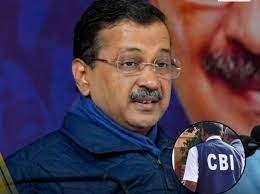
The legal battle over the Delhi Excise Policy took a sharp turn today. On Monday, March 9, 2026, Justice Swarana Kanta Sharma of the Delhi High Court provided significant breathing room for the Central Bureau of Investigation (CBI) by staying scathing remarks made by a trial court that had recommended departmental proceedings against investigating officers.
Add businessleague.in as a Preferred Source


While the discharge of AAP leaders Arvind Kejriwal and Manish Sisodia remains a massive political victory for the party, the High Court’s decision to pause the “misconduct” findings suggests that the judiciary will take a second, rigorous look at how the evidence was handled during the framing of charges.
Also Read |Tamil Nadu Voter List Purge: 97 Lakh Names Deleted in SIR Phase 1
The High Court’s Stay: Protecting the Agency
Justice Sharma’s order focuses on the administrative and professional reputation of the CBI’s probe team.
-
Observations Stayed: “I will be granting stay of whatever observations were made against the investigating agency,” the judge dictated in open court.
-
Notice Issued: The court has issued notice to the discharged leaders and asked for replies before the next hearing.
CBI’s Challenge: Selective Reading of Evidence
Solicitor General Tushar Mehta, representing the CBI, launched a fierce critique of the February 27 discharge order.
-
Mini-Trial Allegation: The CBI contends the trial court analyzed testimonies of 300 witnesses—a level of scrutiny usually reserved for the final trial, not the “framing of charges” stage.
-
Selective Interpretation: The agency argues the court discarded statements from approvers and witnesses (under Section 164 CrPC) by declaring them “unreliable” prematurely.
-
The “Private Jet” Argument: Mehta highlighted that bribe-givers allegedly traveled via private aircraft during the peak of COVID-19 to “work out” the policy—a detail he claims was ignored.
Also Read |Tamil Nadu Voter List Purge: 97 Lakh Names Deleted in SIR Phase 1
The Trial Court’s Original “Institutional Misconduct” Finding
To understand the gravity of today’s stay, one must look at Special Judge Jitendra Singh’s original 600-page judgment.
-
The Line Crossed: The trial court had stated that the investigation crossed the line from “flawed inquiry to institutional misconduct.”
-
No Conspiracy: The judge found no “overarching conspiracy” and suggested the policy was a legitimate government decision that simply failed to meet expectations, rather than a criminal enterprise.
The “Mini-Trial” Allegation
A central pillar of the CBI’s revision plea is the “settled principle of law” that at the stage of framing charges, prosecution material should generally be taken as true. The CBI argues the trial court:
-
Questioned Witness Credibility: Impermissibly did so before the trial even began.
-
Ignored Secrecy: Erroneously held that a lack of direct evidence of meetings negated a conspiracy, ignoring that conspiracies are “hatched in secrecy.”
Reality Check
The discharge of the AAP leadership was a “clean chit” in the eyes of the public. Still, the CBI’s revision plea points to a potential procedural error where the trial court might have overstepped its mandate by acting as a “mini-jury.” Therefore, while the High Court hasn’t overturned the discharge yet, the stay on the remarks against the IOs preserves the CBI’s internal standing. In fact, the deferment of the ED’s case is a crucial technical win for the agency, as the two cases are deeply intertwined.
The Loopholes
The CBI argues the trial court conducted a “mini-trial.” In fact, this is a “Standard of Proof Loophole”—judges often differ on how much evidence is “enough” to move from an investigation to a full trial. Therefore, what Judge Singh saw as “institutional misconduct,” Justice Sharma might see as “sufficient suspicion for trial.” Still, the “Approver Loophole” remains; the CBI relies heavily on Dinesh Arora’s statements, which the trial court found to be uncorroborated. If the High Court agrees that corroboration isn’t needed at this stage, the discharge could be in jeopardy.
Also Read |Tamil Nadu Voter List Purge: 97 Lakh Names Deleted in SIR Phase 1
What This Means for You
If you are following the political fallout, don’t assume the “Liquor Case” is closed. First, realize that a “Stay” on remarks often precedes a deeper look into the merits of the case itself. Then, if you are a supporter of the AAP, understand that Arvind Kejriwal and Manish Sisodia remain discharged for now, but the “Sword of Damocles” in the form of this revision plea still hangs over their legal status.
Finally, understand that procedural law is complex. You should keep an eye on the March 16 hearing, as that is when the High Court will likely decide if the discharge order itself needs to be stayed. Before you draw conclusions, remember that 107 phones were allegedly destroyed (as per SG Mehta)—a fact that the High Court will likely scrutinize during the revision.
What’s Next
The CBI will submit a detailed chart of “perverse findings” to the High Court this week. Then, look for Arvind Kejriwal’s legal team to file their counter-affidavits by Friday. Finally, expect the Delhi High Court to decide on March 16 whether to stay the entire discharge order, which would technically return the leaders to the status of “accused” pending trial.
Also Read |Tamil Nadu Voter List Purge: 97 Lakh Names Deleted in SIR Phase 1
End…
Add businessleague.in as a Preferred Source
🙏 Support Independent Journalism
We keep news free for you.
Most readers support with ₹500 ❤️
or scan QR below

Voluntary contribution. No tax benefits.
DISCLAIMER
We have taken all measures to ensure that the information provided in this article and on our social media platform is credible, verified and sourced from other Big media Houses. For any feedback or complaint, reach out to us at businessleaguein@gmail.com