
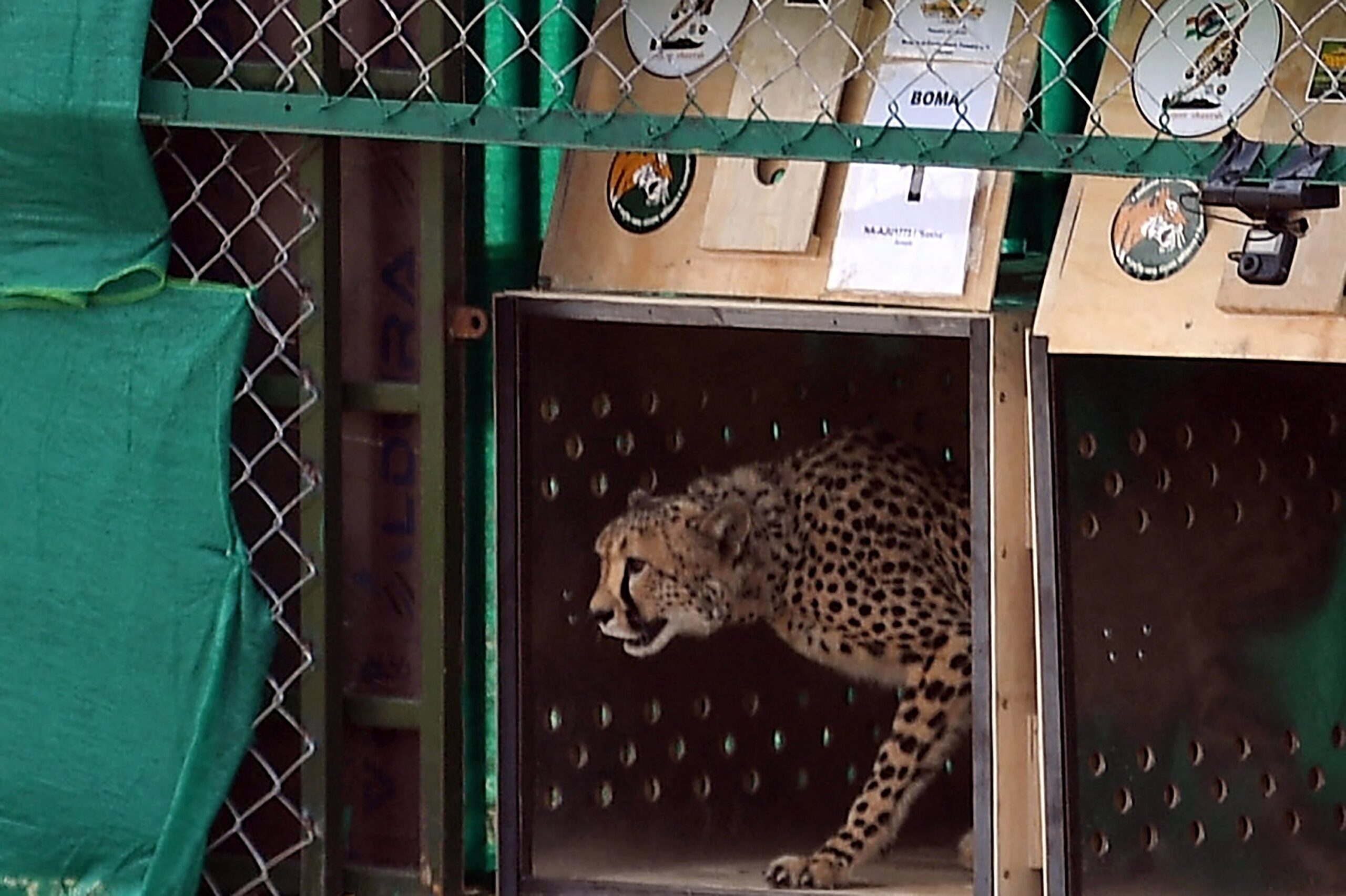
India’s ambitious attempt to bring back the cheetah after 70 years of extinction is facing intense scientific scrutiny. On Monday, March 9, 2026, the Union Environment Ministry celebrated a milestone as the total population hit 53. However, the “success” narrative is being challenged by conservationists who argue that the project has shifted from restoring a wild predator to managing a high-cost captive breeding program.
Add businessleague.in as a Preferred Source


While Environment Minister Bhupender Yadav expressed “great pride” in the 10th litter born on Indian soil, the reality on the ground at Kuno National Park suggests a struggle to let the cats truly go wild.
Also Read |Tamil Nadu Voter List Purge: 97 Lakh Names Deleted in SIR Phase 1
The Population Surge: Botswana and New Litters
The growth in numbers comes from a mix of international translocations and domestic births.
-
The Botswana Nine: Six females and three males arrived from Botswana on February 28, 2026, and are currently in quarantine.
-
The New Litter: Five cubs were recently born, bringing the total of India-born cubs to a significant portion of the population.
-
Location Split: Of the 15 “free” cheetahs, 13 are in Kuno and 2 have been moved to Gandhi Sagar National Park.
The Captive Management Debate
Scientists like Ravi Chellam argue there is “near-zero evidence” of a self-sustaining wild population.
-
Recapture Cycle: Cheetahs that naturally disperse beyond Kuno’s boundaries are often caught and returned to enclosures, which experts say prevents them from establishing natural territories.
-
Fenced Natural Habitats: Project officials defend this as a “soft-release model,” allowing animals to hunt independently in large fenced areas before full release.
Kuno’s Carrying Capacity: 21 vs. 7 Cheetahs
A major point of contention is how many cheetahs the landscape can actually support.
-
Official View: Planners believe Kuno can hold 21 free-ranging cheetahs.
-
Biologists’ View: Based on African density data (1 cat per 100 sq km), Kuno’s 748 sq km may only be able to support 7 to 8 cheetahs, leading to the wide dispersal and subsequent recaptures seen so far.
Also Read |Tamil Nadu Voter List Purge: 97 Lakh Names Deleted in SIR Phase 1
Adaptive Management vs. Genuine Reintroduction
The project has evolved into a complex management exercise.
-
Supplemental Feeding: The MP government spends ₹35,000 per day on goat meat, and enclosures are stocked with chital deer to ensure the cats don’t starve.
-
First-Generation Survival: Veterinarians are focused on ensuring the India-born cubs survive to adulthood, hoping the second generation will be better adapted to the local environment.
Reality Check
The project has successfully kept cheetahs alive and breeding in India. Still, the reliance on fences and supplemental food means these animals are not yet playing their role as apex predators in an open ecosystem. Therefore, while the numbers look good on paper, the ecological goal of “restoring open natural systems” remains unfulfilled. In fact, if the cheetahs cannot survive without being returned to Kuno every time they wander, the project risks becoming a permanent “safari park” rather than a reintroduction.
The Loopholes
The government calls the births a “great success.” In fact, this is a “Breeding Success Loophole”—breeding in a protected, fed environment is a far cry from a population surviving the rigors of the actual wild. Therefore, the birth rate is a poor metric for reintroduction success. Still, the “Adaptive Management Loophole” remains; by labeling every setback or recapture as “adaptive management,” the project avoids the strict criteria usually required for successful reintroduction programs.
Also Read |Tamil Nadu Voter List Purge: 97 Lakh Names Deleted in SIR Phase 1
What This Means for You
If you are a wildlife tourist, Kuno remains a unique destination. First, realize that you are visiting a “managed landscape”; sightings are more controlled than in a completely wild tiger reserve. Then, if you are a taxpayer, understand that the cost per cheetah is exceptionally high, involving international flights, satellite collars, and daily feeding.
Finally, understand that conservation is a long-term game. You should look past the “hype” of new litters and ask how many adults are living independently for more than a year. Before you assume the cheetah is “back,” check if the India-born cubs have successfully raised their own litters in the wild—that is the true finish line.
What’s Next
The 9 Botswana cheetahs will be monitored in quarantine for the next 30 days. Then, look for the National Tiger Conservation Authority (NTCA) to release a new survival report for the monsoon season, which has historically been a high-risk period for the cats. Finally, expect Gandhi Sagar National Park to receive more animals as the government tries to solve the overcrowding issue at Kuno by late 2026.
Also Read |Tamil Nadu Voter List Purge: 97 Lakh Names Deleted in SIR Phase 1
End…
Add businessleague.in as a Preferred Source
🙏 Support Independent Journalism
We keep news free for you.
Most readers support with ₹500 ❤️
or scan QR below

Voluntary contribution. No tax benefits.
DISCLAIMER
We have taken all measures to ensure that the information provided in this article and on our social media platform is credible, verified and sourced from other Big media Houses. For any feedback or complaint, reach out to us at businessleaguein@gmail.com