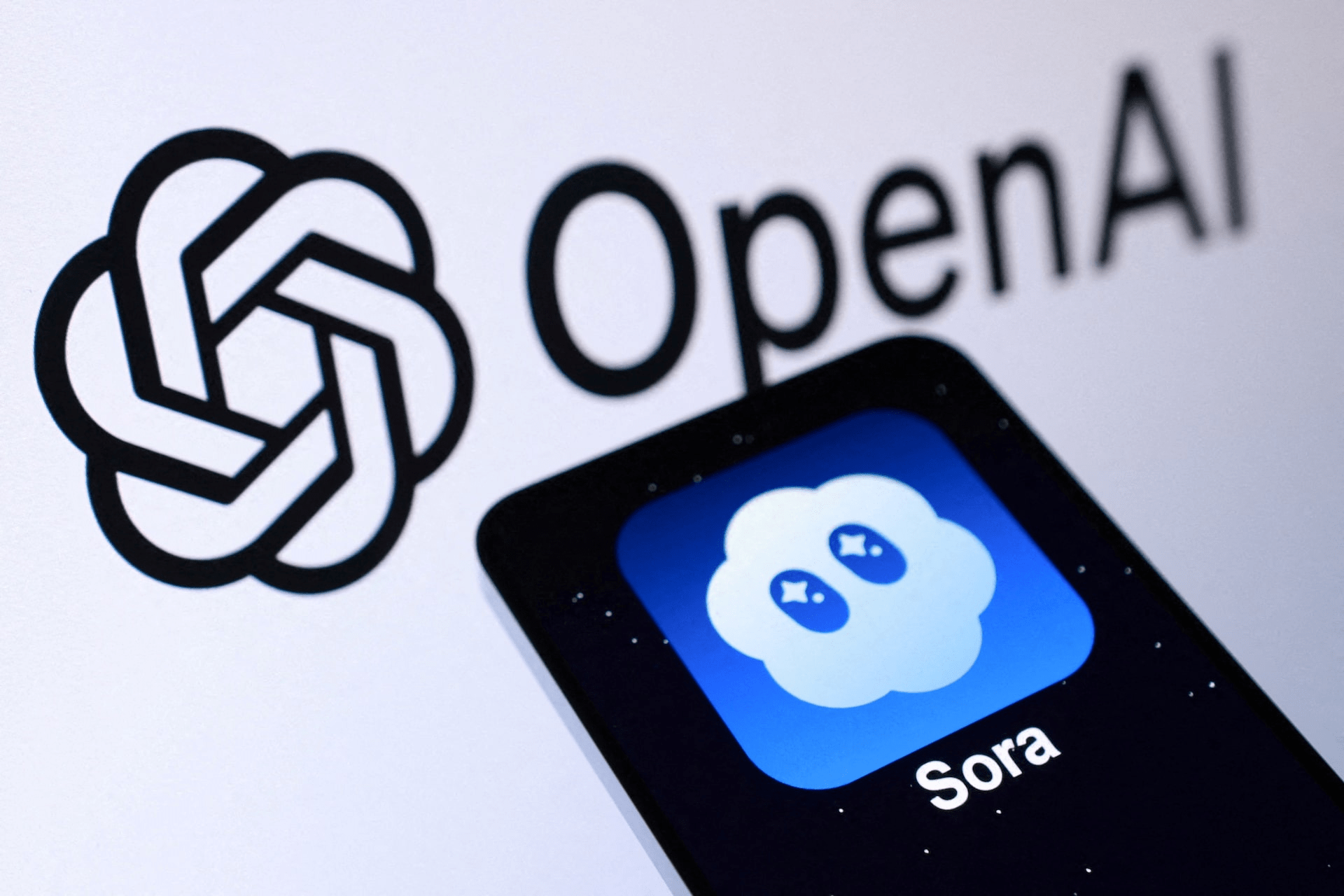
Now the landscape of generative media has undergone a massive shift. On Wednesday, March 25, 2026, OpenAI officially announced the closure of its groundbreaking video-generation app, Sora, less than two years after its viral debut. Therefore, the company is also winding down its historic content partnership with Disney, which allowed users to generate clips featuring iconic characters like Mickey Mouse and Yoda. Currently, OpenAI is shifting its focus away from entertainment to prioritize robotics and “agentic” technology. Thus, the era of Sora has ended, marking a strategic pivot toward solving real-world, physical tasks.
Add businessleague.in as a Preferred Source


Also Read |Tamil Nadu Voter List Purge: 97 Lakh Names Deleted in SIR Phase 1
At a Glance:
-
The Decision: Sora app and professional platform are both discontinued effective immediately.
-
The Breakup: OpenAI ends its three-year licensing deal with The Walt Disney Company.
-
New Direction: Pivot toward robotics and autonomous AI agents.
-
The “Why”: Focus on teaching AI to interact with the physical world rather than digital pixels.
-
Disney’s Next Move: Seeking new AI partners with a strict focus on intellectual property rights.
In This Article:
-
The Death of Sora: Why OpenAI is Exiting Video Generation
-
The End of a Landmark Deal: Disney and OpenAI Part Ways
-
From Pixels to Pistons: The Pivot to Robotics and Agentic AI
-
Industry Reaction: Relief for Creators, Questions for Tech
-
Frequently Asked Questions (FAQs)
Also Read |Tamil Nadu Voter List Purge: 97 Lakh Names Deleted in SIR Phase 1
The Death of Sora: Why OpenAI is Exiting Video Generation
Now the app that once terrified Hollywood is no more. When Sora launched in 2024, it set a new gold standard for high-quality, studio-grade AI video. However, because the market has become increasingly crowded and legally complex, OpenAI has decided to pull the plug.
First, the company stated it needs to “focus on other developments” that solve physical tasks. Next, the closure affects both the consumer-facing app and the professional API used by studios. Thus, OpenAI is effectively exiting the video-generation business entirely. While image-making tools on ChatGPT remain active, the specialized video engine is being retired to make room for more “advanced” forms of AI.
The End of a Landmark Deal: Disney and OpenAI Part Ways
Now the most controversial partnership in tech history has come to a premature end. In December 2025, Disney became the first major studio to license its IP to OpenAI, a move that was seen as a turning point for Hollywood. Therefore, the dissolution of this deal marks a significant retreat for AI in the entertainment sector.
First, Sora users will no longer have the legal right to generate content featuring Star Wars or Marvel characters. Next, Disney has signaled it will now engage with other platforms, provided they respect “intellectual property rights.” Thus, the experiment of “Mickey Mouse as a Service” has failed to survive the 2026 strategic shift. Currently, Disney is looking for “responsible” AI solutions that don’t infringe on the work of human talent.
Also Read |Tamil Nadu Voter List Purge: 97 Lakh Names Deleted in SIR Phase 1
From Pixels to Pistons: The Pivot to Robotics and Agentic AI
Now OpenAI’s roadmap is moving away from screen-based entertainment and toward the physical world. The firm plans to apply the sophisticated spatial reasoning technology used in Sora to train high-level robotics.
First, the goal is to create “agentic” technology—AI capable of completing autonomous tasks with minimal human oversight. Next, by using Sora’s world-modeling capabilities, OpenAI hopes to teach robots how to navigate complex, real-world environments. Thus, the intelligence that once made a realistic video of a cat walking on a street will now be used to help a physical robot navigate a warehouse or a home.
Industry Reaction: Relief for Creators, Questions for Tech
Now the creative industries are breathing a sigh of relief. Ever since the OpenAI-Disney deal was signed, actors, animators, and writers have been “incredibly worried” about being replaced by high-fidelity AI clips.
First, the closure of Sora removes a major competitive threat to traditional video production. Next, the focus on “robotics” suggests that AI’s next frontier will be blue-collar and logistics tasks rather than artistic ones. Thus, while the tech world is surprised by OpenAI’s exit from a booming market, the media world sees it as a temporary victory for human-led storytelling. Meanwhile, competitors like China’s Seedance continue to push forward, leaving a vacuum in the Western AI video market.
Also Read |Tamil Nadu Voter List Purge: 97 Lakh Names Deleted in SIR Phase 1
Frequently Asked Questions (FAQs)
Why did OpenAI shut down Sora? OpenAI discontinued Sora to focus on “agentic” AI and robotics that can solve real-world, physical problems rather than purely digital ones.
Can I still use Disney characters in ChatGPT? No. The partnership between OpenAI and Disney has ended, meaning the licensing for characters like Mickey Mouse and Yoda has been withdrawn.
Does this affect DALL-E or image generation in ChatGPT? No. OpenAI confirmed that image-making tools (DALL-E) are not affected by the closure of the Sora video platform.
What is “agentic” technology? It refers to AI systems designed to autonomously complete complex tasks and make decisions with very little human supervision.
Who are Sora’s competitors now? With Sora out of the race, China’s Seedance and other specialized video-AI firms are currently the dominant players in the high-fidelity video market.
Also Read |Tamil Nadu Voter List Purge: 97 Lakh Names Deleted in SIR Phase 1
End….
Add businessleague.in as a Preferred Source
🙏 Support Independent Journalism
We keep news free for you.
Most readers support with ₹500 ❤️
or scan QR below

Voluntary contribution. No tax benefits.
DISCLAIMER
We have taken all measures to ensure that the information provided in this article and on our social media platform is credible, verified and sourced from other Big media Houses. For any feedback or complaint, reach out to us at businessleaguein@gmail.com