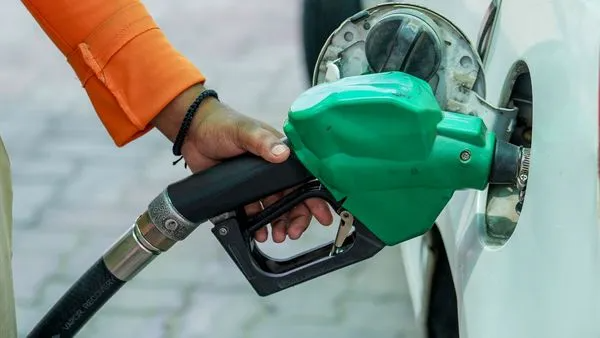
With international energy lanes heavily restricted by ongoing conflicts, the finance ministry has moved to completely eliminate taxes on next-generation biofuels.
The Department of Revenue drops the additional levy and road cess on higher ethanol-blended petrol to secure a localized defense against volatile international crude oil supply lines.
Add businessleague.in as a Preferred Source


Also Read | Viral Trump Lookalike Buffalo Rescue: Saved From Eid Sacrifice
The structural strategy securing India’s domestic energy architecture has taken a major regulatory step forward. Following the recent formal approval of advanced biofuel specifications by the Bureau of Indian Standards (BIS), the Department of Revenue issued a critical set of fiscal notifications late Wednesday. The updates extend a complete, zero-rate ethanol blend petrol excise duty exemption to high-blend fuel variants containing 22%, 25%, 27%, and 30% ethanol by volume.
The timely tax shift comes as the domestic market accelerates past its original E20 milestones ahead of schedule. By completely removing the central excise duty framework, additional excise duties, and associated road and infrastructure cess from these incoming fuel blends, the government is building an attractive fiscal path for commercial energy marketers.
This move aims to quickly cut dependence on foreign oil, support rural agro-processing communities, and lower value-chain carbon emissions across the transport sector.
The Architecture of the Higher-Blend Exemption Matrix
The administrative implementation of this tax relief required precise modifications to legacy fiscal rules. The amendments have been applied directly to Notification No. 11/2017-Central Excise and Notification No. 28/2002-Central Excise, setting a clean zero-tax baseline for manufacturers
Also Read | Viral Trump Lookalike Buffalo Rescue: Saved From Eid Sacrifice.
The Biofuel Refinement & Tax Waiver Lifecycle
  [Raw Domestic Ethanol Production] ──► Derived from sugarcane molasses & broken food grains
                 │
                 ├──► Blending Phase: Mixed with refined motor spirit to exact volumetric weights
                 │
                 └──► Authorized BIS IS 19850 Compliance Gate
                           ├──► Verifies blend weights match precise E22, E25, E27, or E30 levels
                           └──► Triggers immediate, 100% Nil Central Excise Duty Rate application
To legally claim these central tax waivers, fuel marketers must fulfill twin statutory conditions: the primary base motor spirit must have already cleared its appropriate production taxes, and the required Goods and Services Tax (GST) must be paid on the ethanol used in the blend.
Most importantly, the final mixed fuel must perfectly match the precise parameters laid out under the newly minted BIS specification IS 19850, ensuring engine safety across the country’s developing vehicular fleet.
Slicing Through the Next-Gen Fuel Composition Matrix
The rollout of these higher-blend metrics shifts the physical balance of retail fuel, reducing the raw petroleum component in favor of locally processed agricultural byproducts.
| Fuel Variant Classification | Ethanol Volumetric Blend Weight | Hydrocarbon Base Fuel Weight | Mandatory BIS Safety Compliance | Core Strategic Economic Target |
| E22 Premium Fuel | 22% Pure Bio‑Ethanol | 78% Refined Petrol Base | Verified under IS 19850 guidelines. | Maximizes current multi-point fuel injection engine setups. |
| E25 Strategic Blend | 25% Pure Bio‑Ethanol | 75% Refined Petrol Base | Verified under IS 19850 guidelines. | Functions as the primary target for early flex-fuel vehicle blocks. |
| E27 Transition Variant | 27% Pure Bio‑Ethanol | 73% Refined Petrol Base | Verified under IS 19850 guidelines. | Absorbs excess seasonal distillation volumes from grain mills. |
| E30 Hyperscale Variant | 30% Pure Bio‑Ethanol | 70% Refined Petrol Base | Verified under IS 19850 guidelines. | Serves as the ultimate technical ceiling for standard platforms. |
This structural change means that for every liter of E30 pumped into a compatible vehicle, nearly a third of the fluid is sourced entirely from domestic bio-refineries. This layout helps shield the economy from the price shocks that regularly disrupt the international oil trade.
Also Read | Viral Trump Lookalike Buffalo Rescue: Saved From Eid Sacrifice
The Strategic Driver: Surviving the West Asian Supply Squeeze
The timing of this high-blend tax holiday is deeply tied to changing geopolitical realities. Ongoing military operations in West Asia have resulted in an effective closure of the Strait of Hormuz waterway—a vital global shipping lane through which roughly 20% of international crude traffic passes daily.
                  [THE SOVEREIGN ENERGY BLOCKADE INSULATION MATRIX]
   ┌────────────────────────────────────────┐┌────────────────────────────────────────┐
   │         THE HYDROCARBON IMPORT DRAIN   ││         THE DOMESTIC DISTILLERY VALUE  │
   │  • Exposed to unpredictable sea lanes. ││  • Runs entirely on local agro-waste.   │
   │  • Squeezed by high war risk premiums. ││  • Operates at 50% capacity currently.  │
   │  • Depletes valuable foreign reserves. ││  • Scales up fast via tax incentives.   │
   └────────────────────────────────────────┘└────────────────────────────────────────┘
For an economy that imports more than 85% of its crude requirements, prolonged maritime blockades can quickly impact retail prices and stretch national budgets.
By aggressively opening the door for E22 through E30 commercial rollouts, the government is actively building a domestic energy shield. This strategy utilizes the country’s expanding network of sugarcane and grain-based distilleries to fill the supply gap.
The initiative is expected to quickly raise capacity utilization across domestic bio-refineries from its current 50% baseline. This boost will turn agricultural waste into a high-value national asset, giving automakers the long-term confidence needed to ramp up assembly lines for dedicated flex-fuel vehicles through the end of the decade.
Also Read | Viral Trump Lookalike Buffalo Rescue: Saved From Eid Sacrifice
FAQ Section
What is the primary purpose behind the ethanol blend petrol excise duty exemption?
The central government introduced this exemption to lower production costs for high-blend biofuels. By setting a zero excise duty rate for E22, E25, E27, and E30 fuels, the policy encourages oil marketing companies to adopt cleaner alternatives, helping insulate the economy from global oil shocks and rising import costs.
What are the compliance conditions required to claim this tax exemption?
To qualify for the zero-rate tax status, the final mixed fuel must fully comply with the technical parameters of the Bureau of Indian Standards (BIS) under specification IS 19850. Additionally, the base petroleum must have cleared its appropriate production taxes, and the required GST must be paid on the ethanol content.
Are modern passenger vehicles ready to utilize E30 high-blend fuel variants?
While India’s current automobile fleet is built to handle E20 fuel blends seamlessly, running higher E25 or E30 mixes typically requires specialized engine tuning and rubber seals that resist ethanol corrosion. Leading automakers are actively working with energy ministries to roll out dedicated flex-fuel vehicles capable of using these high-blend fuels.
Also Read | Viral Trump Lookalike Buffalo Rescue: Saved From Eid Sacrifice
Add businessleague.in as a Preferred Source
🙏 Support Independent Journalism
We keep news free for you.
Most readers support with ₹500 ❤️
or scan QR below

Voluntary contribution. No tax benefits.
DISCLAIMER
We have taken all measures to ensure that the information provided in this article and on our social media platform is credible, verified and sourced from other Big media Houses. For any feedback or complaint, reach out to us at businessleaguein@gmail.com