
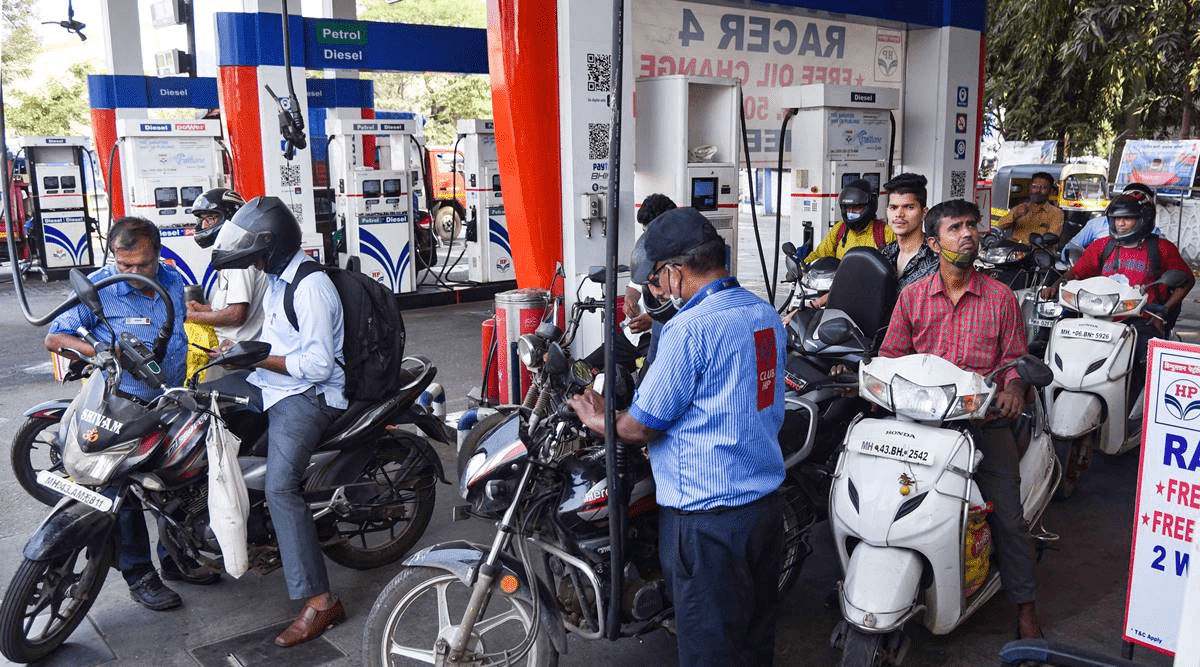
Now the Indian energy market is witnessing a historic standoff. The country’s average crude oil import cost skyrocketed to a record $156.29 per barrel this week. This represents a massive 120% jump since the West Asia conflict began. Therefore, many expected an immediate hike in fuel rates. However, both public and private oil marketing companies (OMCs) are holding pump prices steady today, March 23, 2026.
Add businessleague.in as a Preferred Source


Also Read |Tamil Nadu Voter List Purge: 97 Lakh Names Deleted in SIR Phase 1
At a Glance:
-
Indian Crude Basket: Hit a record $156.29 per barrel (surpassing Brent).
-
Petrol/Diesel Prices: Unchanged in major cities like Delhi and Mumbai.
-
LPG Status: Supply remains a “concern” due to Qatar infrastructure damage.
-
Key Chokepoint: Strait of Hormuz effectively closed to major tankers.
-
Government Stance: Refineries operating at high capacity; adequate stocks.
Table of Contents:
The $156 Crude Shock: Why India is Paying More
Now the price of the “Indian basket” of crude has reached uncharted territory. Just weeks ago, the price sat at a manageable $71.17 per barrel. But the escalating war in West Asia changed everything. Currently, the Indian basket is trading at a premium over global benchmark Brent crude.
So why is India’s cost so high? First, the disruption in the Persian Gulf has forced refiners into expensive spot deals. Next, the composition of India’s imports—heavy on Middle Eastern sour crude—makes it more vulnerable. Thus, the daily import bill has more than doubled in less than a month.
It is a true energy emergency.
Also Read |Tamil Nadu Voter List Purge: 97 Lakh Names Deleted in SIR Phase 1
How OMCs Are Absorbing High Input Costs
Now you might wonder why your local fuel station hasn’t raised prices. Both state-run and private retailers like Jio-BP are currently “absorbing” the loss. Since crude oil makes up 90% of refining costs, OMCs are bleeding cash.
So what is the strategy? The government is using the buffer built during low-price periods. Meanwhile, refineries are maximizing their output to keep the supply chain full. Thus, while premium petrol saw a small ₹2 hike last week, regular fuel remains frozen to curb inflation.
But this “quiet subsidy” cannot last forever.
Strait of Hormuz and Global Supply Disruptions
Now the root of the crisis lies at the Strait of Hormuz. This maritime chokepoint is effectively closed to major energy traffic. Currently, shipping insurance rates have increased six-fold. Therefore, getting oil out of the Persian Gulf is nearly impossible.
So India is facing a “supply vs price” crisis. While physical stocks are currently sufficient, the cost to replace them is rising. Thus, any prolonged closure of the strait will eventually force retail price hikes. Meanwhile, the Indian Navy is monitoring the safety of incoming vessels.
The world’s energy artery is clogged.
LPG Shortage: Prioritizing Hospitals and Homes
Now while petrol is stable, cooking gas is a different story. The government admitted that LPG supply remains a “concern” today. Iranian strikes on Qatar’s Ras Laffan industrial city have damaged 17% of its LNG export capacity.
So how is India managing the shortfall? First, the government is prioritizing 330 million domestic households. Next, supplies for hospitals and schools are being fast-tracked. Therefore, the commercial sector—like restaurants and factories—is facing a 50% supply cut.
Panic bookings are finally starting to reduce.
Also Read |Tamil Nadu Voter List Purge: 97 Lakh Names Deleted in SIR Phase 1
Diversifying Sources: Imports from US and Russia
Finally, India is looking far beyond the Middle East for energy. A massive LPG cargo from the US arrived at New Mangalore Port on Sunday. Also, a Russian crude tanker—the Aqua Titan—was recently diverted to India.
So these diversified sources provide a critical cushion. Currently, India imports oil from over 40 different countries. This strategy prevents the “dry-outs” currently seen in neighboring nations. Thus, while the price is high, the physical supply of fuel remains secure for now.
Energy diplomacy is India’s best defense.
Common Questions Answered
Why hasn’t petrol price increased in India today? Oil marketing companies are absorbing the high costs for now to prevent a massive spike in domestic inflation.
Is there a shortage of cooking gas (LPG)? There is a supply squeeze due to damage at Qatar’s export facilities, but domestic household supply is being prioritized.
What is the “Indian basket” of crude? It is a derived benchmark reflecting the average price of the various types of crude oil India imports from global markets.
Will fuel prices go up next week? If the Indian basket stays above $150, analysts suggest a gradual price hike may become unavoidable for OMCs.
Is it safe to go to petrol pumps? Yes. The government has confirmed there are no fuel dry-outs, and stocks are adequate at all retail outlets.
Also Read |Tamil Nadu Voter List Purge: 97 Lakh Names Deleted in SIR Phase 1
End….
Add businessleague.in as a Preferred Source
🙏 Support Independent Journalism
We keep news free for you.
Most readers support with ₹500 ❤️
or scan QR below

Voluntary contribution. No tax benefits.
DISCLAIMER
We have taken all measures to ensure that the information provided in this article and on our social media platform is credible, verified and sourced from other Big media Houses. For any feedback or complaint, reach out to us at businessleaguein@gmail.com