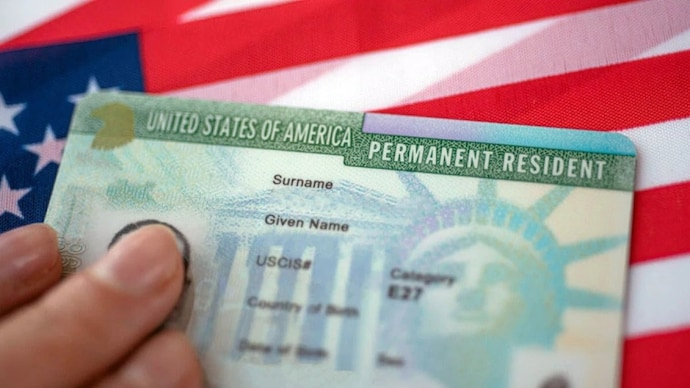
Now the internal procedural networks and multinational labor mobility structures anchoring the American corporate talent landscape are experiencing a historic, highly disruptive regulatory upheaval. United States Citizenship and Immigration Services (USCIS) has officially released an aggressive policy memorandum altering the baseline rules for permanent residency acquisition. The hard-hitting federal directive moved into immediate institutional execution on Saturday, May 23, 2026. Therefore, multinational enterprise boards, global immigration law firms, and thousands of legally residing foreign professionals are auditing their current compliance frameworks with absolute urgency. Turning away from decades of established administrative precedent, evaluating these newly restricted status modification avenues stands as an absolute mechanical necessity to protect cross-border corporate operations from sudden workforce losses.
Add businessleague.in as a Preferred Source


Also Read |Tamil Nadu Voter List Purge: 97 Lakh Names Deleted in SIR Phase 1
At a Glance: USCIS Discretionary Adjustment vs. Consular Processing Matrix
| IMMIGRATION PATH NODE | LEGACY APPLICATION BLUEPRINT | FRESH EXECUTIVE MEMO OVERLAY | LONG-TERM SYSTEMIC OUTCOME |
| Internal Modification | Standard internal Adjustment of Status | Strict extraordinary form of relief | High-volume exits forced for legal residents |
| Overseas Processing | Secondary pathway for offshore applicants | Primary mandatory track for visa holders | Severe application backlogs at embassies |
| Target Demographics | H-1B tech staff, researchers, students | Universal case-by-case vetting blocks | High employment disruption risks |
| Agency Resource Focus | Distributed domestic market auditing | Prioritizing crime victim tracking loops | Insulating borders from visa overstays |
The Discretionary Grace Clause: Parsing Zach Kahler’s Original Intent Rules
Now the formal policy directives published by federal immigration authorities establish an exceptionally strict new interpretation of existing statutory text codes. For multiple generations, legal non-immigrant workers routinely operated under the assumption that adapting their local visas into permanent residency status was a standard step. Therefore, corporate regulatory compliance boards are analyzing this latest federal shift to map how upcoming employment extensions will survive these tough verification rules.
First, look at the core justification issued by USCIS spokesman Zach Kahler: the agency explicitly states that internal status adjustments represent a matter of pure administrative grace rather than an automatic citizen right. Next, the revised guidance mandates that federal adjudication officers view every single internal filing as an exceptional variance requiring extraordinary justification blocks. Thus, the mechanical necessity of pushing incoming applicants to utilize standard consular pipelines abroad is aggressively enforced by the administration.
So this strategic pivot aims to roll back the legal framework to what the agency calls the original intent of historical immigration statutes. This rigid stance stops corporate immigration counsels from utilizing routine domestic filings to shield their foreign personnel from facing overseas embassy interviews. Meanwhile, regional human resource offices are updating their automated tracking software to flag vulnerable employee visa expiration dates before sudden exit deadlines hit. Therefore, the discretionary grace clause parameters establish an exceptionally challenging baseline that reshapes contemporary corporate mobility models.
Consular Processing Overlays: Shifting Application Weight to Offshore Embassies
Nowhere does the execution of complex visa verification demand higher administrative processing capacity than across international consular offices. The new federal memo asserts that internal status adjustments were never engineered to supersede the regular visa-issuing systems managed at foreign embassies. Therefore, global workforce allocation planners are testing the capacity of home-country consulates to absorb a massive wave of returning applicants.
First, identify the primary operational directive: temporary visitors, including high-skill scientists, academic researchers, and commercial tourists, are systematically expected to depart the country once their initial stay boundaries expire. Next, forcing these individuals to execute their permanent residency processing from their native soil centers the legal workload entirely onto offshore state department desks. Thus, the mechanical necessity of maintaining continuous, on-site employment loops inside domestic laboratories is severely threatened by these exit rules.
[USCIS Enacts Mandatory Consular Processing Memo]──► Pushes Internal Green Card Seekers Off Domestic Adjustments
                                                             │
                                                             ▼ (The Forced Sovereign Departure Phase)
[Legal Non-Immigrants Exit to Native Countries]   ──► Floods International Embassies with High Interview Demands
                                                             │
                                                             ▼
[Long-Term Employment Continuity Breaks Down]    ──► Disrupts Enterprise Engineering Timelines Inside Major Firms
So this structural transfer of application files creates unprecedented logistics logjams across busy foreign capital hubs. Returning tech workers must wait for months to capture open interview slots while their domestic research projects sit completely idled. This careful tracking ensures that corporate boards look for alternative corporate expansion choices outside American boundaries to preserve their development speeds. Therefore, analyzing the consular processing overlay highlights the massive systemic bottlenecks that global talent coordinators must navigate throughout the current year.
Also Read |Tamil Nadu Voter List Purge: 97 Lakh Names Deleted in SIR Phase 1
The 70-Year Upheaval: Todd Schulte and FWD.us Condemn the Chaos
Now separating official administrative logic from real, on-ground economic impacts requires look at the fierce pushback originating from industry advocacy networks. Prominent immigration reform organization FWD.us has issued an emergency warning detailing the immense structural damages hitting the domestic technology substrate. Therefore, corporate policy analytics cells are utilizing these advocacy data sheets to calculate the projected legal expenses facing corporate employers.
-
The Systemic Upheaval Metrics Disclosed by FWD.us:
-
Precedent Demolition: Overturning more than 70 years of consolidated legislative, administrative, and judicial precedent.
-
The Historical Majority: Overriding the core mechanism providing the vast majority of successful annual Green Card adjustments since the 1950s.
-
Chaos Infrastructure: Triggering immediate operational confusion and massive out-of-pocket travel expenses for legal families.
-
Systemic Legal Disruption: Deliberately fracturing the legal pipeline to make local environments uninviting for global innovators.
-
First, look at the precise condemnation delivered by FWD.us President Todd Schulte: he labeled the executive policy memo a stark, deeply harmful alteration of historical codes. Next, forcing long-term legal workers to exit their active local lives creates massive compliance disruptions for the domestic companies that rely on their daily inputs. Thus, the mechanical necessity of protecting stable human capital investments is highlighted by industry coalitions looking to block the policy inside federal courts.
Family Separation Vectors: Congresswoman Grace Meng Warns of Indefinite Splits
Now crossing away from corporate economic performance metrics toward humanitarian balance sheets exposes a deep layer of intense domestic panic. Representative Grace Meng, Chair of the Congressional Asian Pacific American Caucus (CAPAC), has launched a blistering public critique against the administration’s tactical choices. Therefore, non-governmental monitoring groups are tracking these political statements to anticipate upcoming class-action legal filings.
[Federal Mandates Compel Legal Exits for Processing]──► Forces Family Units to Disperse Across International Borders
                                                                │
                                                                ▼ (The Country‑Specific Cap Interaction)
[Travel Restrictions and Backlog Queues Interlock]   ──► Traps Returning Relatives Inside Lengthy Overseas Standoffs
                                                                │
                                                                ▼
[Household Stability Collapses Across Communities]  ──► Triggers Long-Term Separation Hazards for Immigrant Homes
First, look at the primary policy critique: Meng stated that the administration is targeting valid, legal immigration systems rather than focusing on dangerous criminal elements. Next, she warned that intersecting the new exit requirements with pre-existing travel limitations could lock returning relatives outside domestic borders for indefinite periods. This critical interaction shows why managing cross-border family unity operates as an essential requirement to protect community health.
The Innovation Sink: Local Officials Project Severe Job Creation Losses
Now performing a comprehensive regional economic audit reveals that the sudden loss of high-skill visa holders poses an immediate threat to municipal development loops. Montgomery County Executive Marc Elrich released an extensive statement charting how severely the forced exit of technical staff hits local business centers. Therefore, local city planning boards are urging federal representatives to establish special regional exemptions to protect local workforces.
-
The Regional Innovation Drainage Metrics:
-
Talent Asset Depletion: Threatening the immediate retention of local neighborhood business owners, medical researchers, and advanced teachers.
-
Job Creation Degradation: Weakening the natural capacity of localized commercial hubs to attract fresh enterprise investments.
-
Surge in Attrition Loops: Forcing local tech firms to spend substantial resources replacing specialized system developers.
-
Economic Resilience Chills: Diminishing aggregate regional tax collections as high-earning consumers exit local housing markets.
-
First, this regional analysis proves that treating legal immigrants as disposable elements directly harms the long-term innovation power of local communities. Next, forcing specialized healthcare workers to abandon their local hospital units degrades the medical delivery networks backing dense municipal populations. Thus, the system effectively penalizes local municipal development models to satisfy a highly restrictive federal enforcement agenda.
Also Read |Tamil Nadu Voter List Purge: 97 Lakh Names Deleted in SIR Phase 1
Sub-Continental Tech Trajectories: The Long-Term Strains on Indian Families
Now the final definitive framework confirming the extreme asymmetry of this policy shift is visible across the massive Green Card backlogs hitting South Asian workers. Historically, highly educated technical professionals from the sub-continent relied heavily on internal adjustment provisions to maintain their employment while waiting out country-specific queues. Therefore, international technology consortia treat the sudden removal of these internal adjustment protections as a major crisis hitting global software networks.
First, because long-standing immigration caps force Indian applicants to navigate decades-long backlogs, forcing them to wait abroad destroys their career stability. Next, disrupting family residential arrangements forces spouses to abandon their own local employment tracking tracks, creating immense mental strain. Thus, the mechanical necessity of maintaining an un-challengeable, stable professional lifestyle is completely lost, leaving thousands of legal households facing sudden uprooting risks.
So while the new USCIS memo claims to optimize administrative focus, it introduces profound structural friction across the nation’s premier technology clusters. The close coordination maintained between immigration attorney networks and corporate defense funds represents the ultimate shield left to protect these high-value families. Meanwhile, international corporate allocation blocks are reconsidering their long-term infrastructure choices, redirecting massive development capital toward tech hubs situated in more predictable global jurisdictions. Therefore, the comprehensive structural updates confirm that the American immigration architecture remains perfectly locked into high-friction coordinates through the changing global landscape of 2026.
FAQ: Understanding the 2026 USCIS Green Card Adjustment Directives
1. What core procedural shift does the new USCIS immigration rule enforce? Now, the policy memo states that Green Card adjustments inside the US are a matter of pure discretion rather than an automatic right, forcing many to apply from abroad.
2. Which specific temporary visa categories face the biggest operational impact from this memo? First, the policy introduces severe implications for highly skilled H-1B technology workers, academic researchers, international students, and tourists.
3. Why does the Trump administration argue that this exit requirement is necessary? So, USCIS officials state the rule aims to reduce visa overstays while letting the agency prioritize applications for victims of violent crime and trafficking.
4. How does the head of FWD.us characterize this sudden immigration policy shift? Next, Todd Schulte labeled the memo a harmful upheaval of over 70 years of legislative and judicial precedent that will create massive chaos.
5. Why are Indian technology professionals uniquely vulnerable to this forced departure rule? Now, because they navigate massive country-specific Green Card backlogs, forcing them to exit during processing destroys long-term job and family stability.
6. What warning did local municipal executives share regarding the retention of legal immigrants? Finally, regional heads emphasize that treating legal immigrants as unwelcome disposable elements weakens national innovation, job creation, and economic growth.
Also Read |Tamil Nadu Voter List Purge: 97 Lakh Names Deleted in SIR Phase 1
End…
Add businessleague.in as a Preferred Source
🙏 Support Independent Journalism
We keep news free for you.
Most readers support with ₹500 ❤️
or scan QR below

Voluntary contribution. No tax benefits.
DISCLAIMER
We have taken all measures to ensure that the information provided in this article and on our social media platform is credible, verified and sourced from other Big media Houses. For any feedback or complaint, reach out to us at businessleaguein@gmail.com