


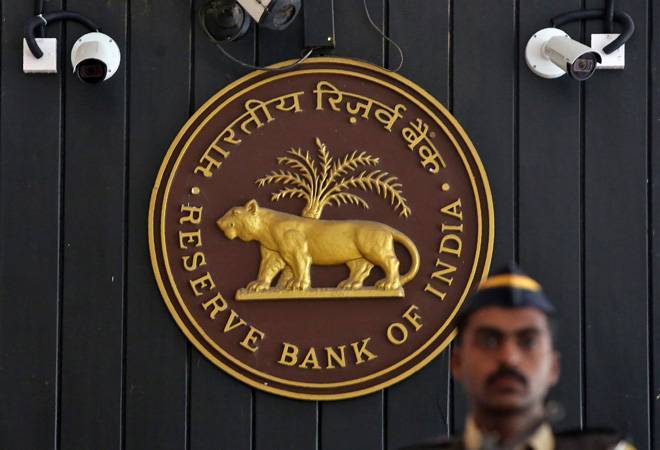
The central bank introduces strict reporting windows for consumers while mandating advanced AI risk controls for commercial banks.
For years, cyber criminals operating online scams in India relied on a predictable pattern: once money left a victim’s account via a fraudulent transaction, the chances of recovery were low. Whether initiated through a deceptive Know Your Customer (KYC) notification, a malicious hyperlink, or a compromised mobile application, the ensuing administrative delays frequently allowed stolen assets to vanish entirely.
Add businessleague.in as a Preferred Source


Also Read | The Constitutional Exit: Analyzing the George Kurian Resignation Council of Ministers Data
The Reserve Bank of India (RBI) has introduced a regulatory framework designed to change this dynamic.
The central bank has unveiled an updated digital payment architecture that establishes a direct financial safety net for scam victims, allowing for compensation claims of up to ₹25,000. Scheduled to take effect on January 1, 2027, the directives aim to protect retail consumers while forcing commercial banks to overhaul their internal risk monitoring systems.
The Five-Day Reporting Rule for Compensation
The newly established protocol creates an explicit legal pathway for account holders to seek direct financial restitution following unauthorized digital transactions.
To qualify for the compensation mechanism, speed is the critical factor. Under the framework, consumers who identify fraudulent electronic transactions must formally report the incident to their respective banking institution within a maximum window of five days from the date of detection.
Valid claims submitted within this five-day timeline will be eligible for a direct payout of up to ₹25,000, subject to standard institutional investigations and compliance verifications. The targeted intervention addresses a sharp rise in electronic transaction vulnerabilities that have accompanied the exponential growth of the Unified Payments Interface (UPI), mobile applications, and internet banking portals across the country.
Also Read | The Constitutional Exit: Analyzing the George Kurian Resignation Council of Ministers Data
Tightening Bank Infrastructure via Model Risk Management
The consumer compensation policy represents only half of the regulator’s strategy. Alongside consumer protection mandates, the RBI has distributed draft guidelines focused on model risk management, establishing clear compliance boundaries for automated decision-making engines, machine learning tools, and artificial intelligence models used by financial firms.
Modern commercial banks rely heavily on these internal digital frameworks to parse real-time transaction streams, catch abnormal spending habits, and flag fraudulent activity before money leaves the banking network.
By standardizing how these algorithms operate, the central bank aims to enhance the industry’s overall preventative capabilities.
Ajay Sirikonda, Partner and Leader of Financial Services Risk Management at EY India, noted that the RBI’s guidance provides long-overdue operational clarity for institutional tech deployment.
“The RBI’s draft guidance is a welcome step that finally gives Indian banks a clear playbook for model and AI risk,” Sirikonda explained. “In some ways, it goes further than the UK’s PRA or the US regulators—it brings AI, third-party models, and consumer protection into one frame.”
Eliminating Uncertainty to Accelerate Security Upgrades
While the introduction of stricter oversight creates additional layers of administrative verification for complex financial products, industry experts argue that the elimination of regulatory ambiguity will ultimately accelerate technology adoption. Prior to these rules, many institutions delayed deploying advanced fraud detection algorithms due to uncertainty over what automated systems were legally permitted to do.
By defining clear parameters for accountability and algorithm explainability, the RBI framework eliminates this hesitation.
For the average banking consumer, the core lesson of the upcoming 2027 rollout remains straightforward. If an account is compromised by an online scam, immediate action dictates the outcome. Reporting the breach to the bank’s fraud department within the designated five-day window directly impacts a user’s eligibility for the new recovery funds.
FAQ
What happens if I report a digital banking fraud after the five-day window closes?
If you report unauthorized transactions after the five-day deadline, your claim will not be automatically covered under the new ₹25,000 simplified compensation mandate. Instead, reimbursement will be subject to the older, individual liability policies of your specific bank.
Does this new compensation rule apply to cash scammed through offline methods?
No. The upcoming framework is designed explicitly for digital payment frauds, covering electronic pathways such as UPI, net banking, mobile wallets, and unauthorized debit or credit card transactions.
Can I get more than ₹25,000 back if my total loss from an online scam was higher?
The mandatory baseline compensation under this specific fast-track framework is capped at ₹25,000. For higher loss values, full restitution depends on whether the bank’s internal investigation proves there was zero negligence or security lapses on the part of the customer.
When exactly do these new banking regulations take effect across India?
The Reserve Bank of India has scheduled the official implementation date for both the consumer fraud compensation path and the institutional AI risk frameworks for January 1, 2027.
Also Read | The Constitutional Exit: Analyzing the George Kurian Resignation Council of Ministers Data
Add businessleague.in as a Preferred Source

