


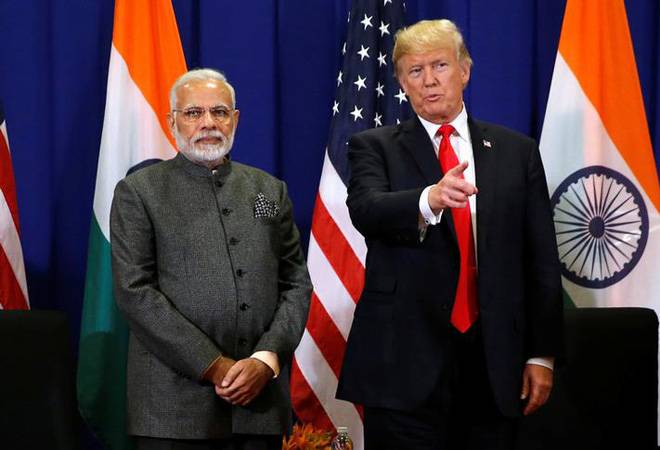
G7 Summit: Cold Body Language, Stinging Remarks Signal Deep Strain in Modi-Trump Bilateral Talks
Evian, France — A missing gesture often speaks volumes in international diplomacy. When Prime Minister Narendra Modi and US President Donald Trump came face-to-face at the G7 Summit on Tuesday—their first meeting in 16 months—the trademark, enthusiastic bear hug that once defined their personal chemistry was entirely absent.
Add businessleague.in as a Preferred Source


Instead, the two leaders exchanged a formal, heavily restrained handshake. Observers noted a distinct lack of eye contact during the group photo session, signaling a relationship under severe geopolitical and economic strain as they head into crucial bilateral talks on Wednesday evening.
Most Popular : –
- The Border Transit Mandate: Analyzing Iran World Cup Team Political Tensions 2026
- Countering the Disinformation: Analyzing the E20 Fuel Vehicle Insurance Validation PIB Metric
A Relationship Upended by ‘Trump 2.0’
While PM Modi was among the first global leaders to congratulate Trump on his re-election victory, the subsequent 16 months have severely tested the India-US partnership. The diplomatic warmth built during Trump’s first term has been replaced by a highly transactional and unpredictable approach from Washington, marked by several key flashpoints:
-
Tariff Wars & Economic Hits: Last year, Trump singled out India over its continued procurement of discounted Russian oil, unilaterally doubling overall tariff rates on Indian goods to a stinging 50%. While intense negotiations successfully lowered that baseline rate to 18% under a framework trade deal this past February, the rhetorical damage remains. Trump publicly labeled India a “dead economy” and shared social media posts describing New Delhi as a “hellhole.”
-
The Gulf of Oman Crisis: The strategic relationship suffered a direct blow following the tragic deaths of three Indian seafarers in the Gulf of Oman, caused by US military strikes targeting Iranian positions.
-
Military & Territorial Reversals: In a move that deeply unsettled New Delhi, the US administration abruptly dropped the word “Indo” from its largest military command, reverting it to its legacy name. More controversially, the official map used during the announcement depicted Pakistan-occupied Kashmir (PoK) as part of Pakistan—a stark reversal from Trump’s first-term policies which heavily emphasized India’s central role in the Indo-Pacific strategy.
-
Defense Delays: Strategic defense ties have stagnated, highlighted by severe delivery delays from American aviation major General Electric (GE) in supplying the jet engines necessary to power India’s indigenous Tejas Mk1A fighter jet program.
-
Diplomatic Friction: Personal friction has reportedly built over Trump’s unilateral claim that he single-handedly mediated an end to the India-Pakistan military conflict last May by threatening both nations with punitive tariffs—a claim New Delhi firmly denies, maintaining the cessation of hostilities occurred strictly at Islamabad’s request. Sources indicate Trump was further irked by Modi’s refusal to publicly nominate him for the Nobel Peace Prize.
‘A Deficit of Trust’
The escalating friction was brought to the forefront during the G7 outreach session. Standing beside the US President, PM Modi delivered a pointed speech that, while avoiding naming the US explicitly, left little doubt as to its intended target.
Modi underlined that the contemporary global order “suffers from a shortage of trust,” adding that “the future of our partnerships depends on rebuilding this trust.”
“The world is not suffering from a deficit of resources; it is suffering from a deficit of trust,” Modi stated. He went on to flag that the ongoing US-Iran conflict had directly cost Indian lives, demanding that global powers guarantee the absolute safety of critical maritime routes and protect international seafarers.
Most Popular : –
- The Border Transit Mandate: Analyzing Iran World Cup Team Political Tensions 2026
- Countering the Disinformation: Analyzing the E20 Fuel Vehicle Insurance Validation PIB Metric
Can the Relationship Recover?
Despite intense damage-control efforts over the past few months—including a high-level visit to Delhi by US Secretary of State Marco Rubio and active diplomatic outreach by the newly appointed US Envoy to India, Sergio Gor—experts remain highly cautious about the prospects of an immediate reset.
“Trump’s meeting with PM Modi won’t lead to a reset. There’s too much mistrust on the Indian side, despite Rubio’s recent damage-control visit and Sergio Gor’s relentless rapprochement efforts. The relationship has stabilized of late, but may not fully recover until post-Trump.” — Michael Kugelman, Geopolitical Expert (via X)
Pragmatism Behind the Scenes
Despite the heavy geopolitical turbulence, India has managed the relationship with careful, mature restraint. PM Modi has deliberately avoided engaging in public wars of words over Trump’s sharp rhetoric.
There are minor signs that the personal bridge between the two leaders is not entirely broken. Last week, President Trump took to Truth Social to congratulate Modi on becoming India’s longest-serving prime minister, writing, “And a great one he is!” Furthermore, Envoy Sergio Gor recently noted that “real friends can disagree, but always resolve their differences in the end.”
Wednesday evening’s closed-door bilateral talks will serve as the ultimate litmus test. The long-delayed, comprehensive trade deal is expected to dominate the agenda. The outcome of the session will determine whether personal diplomacy can once again rescue the structural alignment between Washington and New Delhi, or if the rifts of Trump 2.0 run too deep to bridge.
FAQ
Q1: Why did PM Modi mention a “deficit of trust” at the G7 outreach session?
While PM Modi did not name the United States directly, his speech was delivered right next to President Trump. It was a pointed reaction to recent unilateral US actions, including aggressive tariff hikes, shifting maritime command names, and military strikes in the Gulf of Oman that resulted in the tragic deaths of three Indian seafarers.
Q2: What is the significance of the US dropping “Indo” from the Indo-Pacific Command?
The US military’s sudden decision to revert the name back to its legacy title—paired with an official map that depicted Pakistan-occupied Kashmir (PoK) as part of Pakistan—is viewed by New Delhi as a major geopolitical regression. During Trump’s first term, the original renaming was celebrated as a milestone showcasing India’s central role in America’s Asian security strategy.
Q3: Is the proposed India-US trade deal completely dead?
Not entirely, but negotiations are heavily gridlocked. While a temporary framework trade agreement in February successfully lowered retaliatory tariffs from 50% down to 18%, a comprehensive, long-term deal remains elusive due to Trump’s protectionist economic policies and public criticism of India’s trade practices.
Most Popular : –
- The Border Transit Mandate: Analyzing Iran World Cup Team Political Tensions 2026
- Countering the Disinformation: Analyzing the E20 Fuel Vehicle Insurance Validation PIB Metric
Add businessleague.in as a Preferred Source

