Direct Defiance: Israel Launches Strikes on Iran June 2026 to Blow Past Trump’s Peace Ultimatum
The IDF targets central military assets and the Mahshahr petrochemical complex hours after a 30-minute Bedminster phone call fails to halt the regional cycle of retaliation.
Add businessleague.in as a Preferred Source


The Middle East has tilted back into a state of direct, uninhibited regional warfare. In the early hours of Monday morning, Israel launched strikes on Iran in June 2026, executing high-impact air operations against critical western and central military installations. The aggressive counter-strike represents an absolute, public rejection of direct warnings issued by United States President Donald Trump, who spent the weekend attempting to freeze the escalation cycle to preserve back-channel nuclear negotiations with Tehran.
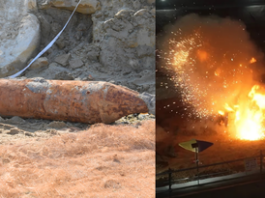
According to structural field briefs released by the Israel Defense Forces (IDF), the airstrikes targeted specialized missile storage facilities, air defense radar hubs, and a primary petrochemical refining complex located in the southwestern port city of Mahshahr. The strike waves forced Iranian aviation authorities to immediately close western airspace and shut down all international flight routing through Tehran’s Imam Khomeini International Airport, as emergency sirens sent millions of citizens rushing into subterranean shelters across Tabriz, Isfahan, Karaj, and the capital city.
Also Read | Viral Trump Lookalike Buffalo Rescue: Saved From Eid Sacrifice
The Sunday Midnight Flashpoint
The rapid return to direct open warfare follows a severe violation of the fragile ceasefire that had paused direct hostilities between Jerusalem and Tehran since early April. The breakdown began on Sunday afternoon when Israeli fighter jets struck a high-density residential perimeter within Beirut’s southern suburbs without warning, defying a specific Washington request to stand down.
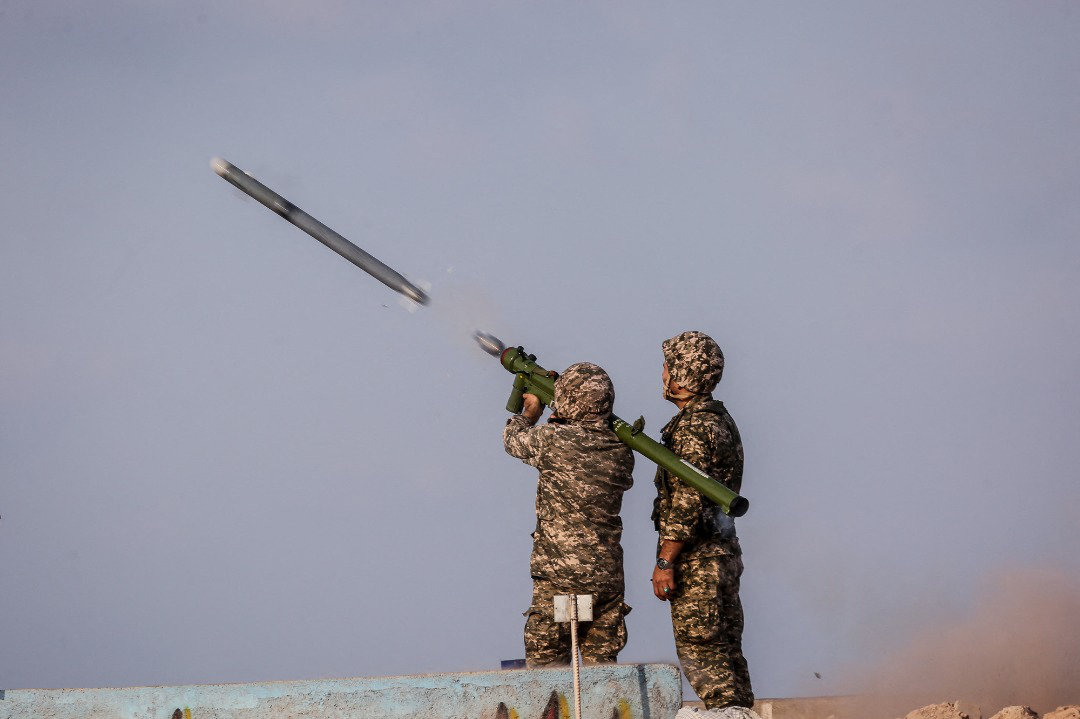
Declaring the operation a blatant breach of the regional balance, Iran’s Islamic Revolutionary Guard Corps (IRGC) executed an immediate retaliatory strike on Sunday night. Tehran launched a heavy barrage of air-launched ballistic missiles targeted directly at northern and central Israel, specifically aiming at the Ramat David Air Base near Nazareth. Though the IDF’s multi-tiered Arrow and David’s Sling air defense architectures intercepted the majority of the incoming threats, the exchange triggered secondary missile launches from Houthi positions in Yemen, instantly driving global energy benchmarks up as Brent crude futures jumped more than 3% to settle above $96 a barrel.
The Bedminster Standoff: “He Doesn’t Call the Shots”
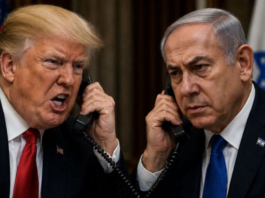
The geopolitical significance of the strike centers entirely on the visible breakdown in communication between President Trump and Israeli Prime Minister Benjamin Netanyahu. While spending the weekend at his private golf estate in Bedminster, New Jersey, Trump held a tense, 30-minute phone call with Netanyahu on Sunday night. Citing senior intelligence aides, the brief was straightforward: Washington was days away from finalizing a comprehensive regional peace treaty with Tehran, and any immediate Israeli counter-strike would destroy months of delicate mediation led by Pakistan.
| Executive Actor Profile | Public Diplomatic Stance | Real‑Time Policy Actions & Interventions |
| President Donald Trump | Claims total authority over foreign policy; downplays the physical impact of the missile waves. | Told the Financial Times: “I call the shots. He [Netanyahu] doesn’t call the shots. The deal is going on.” |
| PM Benjamin Netanyahu | Rejects external limits on sovereign defense; prioritizes military deterrence over diplomatic pacing. | Authorized immediate strike packages against mainland Iranian assets without consulting Washington. |
| IRGC Command Desk | Frames its actions as structural self-defense against constant Israeli perimeter violations. | Closed major air hubs; warned of an immediate, crushing response if energy infrastructure is targeted further. |
Immediately following his phone exchange with Netanyahu, Trump told reporters from the Financial Times that the latest exchange of missiles would have zero structural impact on his administration’s willingness to close a comprehensive deal with Iran. Asserting his absolute dominance over Western alliance strategy, Trump stated that Netanyahu would have “no choice” but to accept whatever terms the United States negotiates with Tehran.
Also Read | Viral Trump Lookalike Buffalo Rescue: Saved From Eid Sacrifice
Expanding the Conflict Vectors
Israel’s rapid deployment of air-launched ballistic missiles just hours after that phone call indicates that Jerusalem is actively separating its domestic survival parameters from Washington’s political timeline.
IDF Operational Posture: “Iran has made a grave mistake by once again choosing the path of terror,” stated Israeli military spokesperson Brigadier General Effie Defrin during a live operational review. Lieutenant General Eyal Zamir reinforced the message, confirming that ground forces have locked down all crossings into the Gaza Strip—including Kerem Shalom and Rafah—to brace for an extended conflict.
As neighboring states Iraq and Syria close their domestic air corridors for a projected 72 hours, regional security desks are monitoring secondary alarms. Missile sirens were detected near Saudi Arabia’s Prince Sultan Air Base, which hosts several thousand US military personnel.
While the White House has remained notably silent regarding whether Israel used American-coded data loops to execute its dawn raids, the independent offensive places the Trump administration in a challenging position. The White House must now choose between enforcing its maritime oil blockades to punish Tehran, or applying intense economic restrictions to rein in its closest ally in Jerusalem.
FAQ Section
Why did Israel launch airstrikes on Iran in June 2026?
Israel launched strikes on western and central Iran on Monday, June 8, 2026, in response to a massive ballistic missile barrage fired by Iran’s Revolutionary Guards on Sunday night. The Iranian missile wave was itself a response to an unannounced Israeli airstrike on Beirut.
What did Donald Trump say about the sudden escalation between Israel and Iran?
In an interview with the Financial Times, President Trump insisted that the missile exchanges would not derail his administration’s back-channel peace negotiations with Tehran. Trump downplayed the strikes and explicitly challenged Prime Minister Netanyahu’s authority, stating, “I call the shots. He doesn’t call the shots.”
What specific targets were hit inside Iranian territory?
The Israeli Air Force targeted central military infrastructure, air defense facilities, and a primary petrochemical refining complex located in Mahshahr, southwestern Iran. The strikes forced the immediate closure of the airspace around Tehran’s main international airport.
Also Read | Viral Trump Lookalike Buffalo Rescue: Saved From Eid Sacrifice
End…
Add businessleague.in as a Preferred Source
🙏 Support Independent Journalism
We keep news free for you.
Most readers support with ₹500 ❤️
or scan QR below

Voluntary contribution. No tax benefits.
DISCLAIMER
We have taken all measures to ensure that the information provided in this article and on our social media platform is credible, verified and sourced from other Big media Houses. For any feedback or complaint, reach out to us at businessleaguein@gmail.com