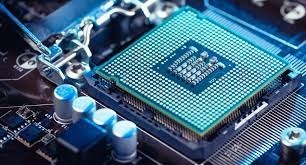
India is doubling down on its quest for “silicon sovereignty.” On Thursday, March 12, 2026, officials revealed that the Ministry of Electronics and Information Technology (MeitY) has proposed a massive ₹1 lakh crore ($12 Billion approx.) war chest for the second phase of the India Semiconductor Mission.
Add businessleague.in as a Preferred Source


This fresh funding is intended to move India beyond basic 180nm “legacy” chips—currently produced in Mohali—and into the ultra-advanced 2nm and 3nm nodes that power today’s flagship smartphones and AI servers. With Phase 1 funds already fully committed to approved projects, ISM 2.0 represents the long-term capital required to build a self-sustaining, end-to-end semiconductor ecosystem on Indian soil.
Also Read |Tamil Nadu Voter List Purge: 97 Lakh Names Deleted in SIR Phase 1
From 180nm to 2nm: Closing the Global Gap
Currently, India’s domestic capabilities are restricted to 180-nanometre chips used in defense and space.
-
The Mid-Tier: Current Phase 1 projects, such as the Tata-PSMC fab in Gujarat, are targeting 28-nm production.
-
The Frontier: ISM 2.0 aims to create a roadmap for 2-nm and 3-nm nodes. This is critical for India to stay relevant as global leaders like TSMC and Samsung are already at this stage.
The Ecosystem Shift: Design, Equipment, and IP
Phase 2 isn’t just about building “fabs” (factories); it’s about the “Intellectual Property” (IP) behind them.
-
Fabless Focus: The government plans to expand the Design Linked Incentive (DLI) scheme to nurture at least 50 fabless semiconductor companies.
-
Critical Materials: Funding will also be funneled into manufacturing the specialized chemicals, gases, and equipment used inside fabs, reducing dependence on imports from Japan and the US.
Phase 1 Success: Projects Moving to Production
The Ministry official confirmed that Phase 1 (₹76,000 crore) has been a successful proof-of-concept.
-
Approvals: 10 major projects have been cleared so far.
-
Timeline: Four of these facilities—spanning silicon fabrication and advanced memory packaging—are expected to begin actual chip production by late 2026.
Also Read |Tamil Nadu Voter List Purge: 97 Lakh Names Deleted in SIR Phase 1
Global Competition: The Road to Fabless Dominance
IT Minister Ashwini Vaishnaw has articulated a vision where Indian companies don’t just “make” chips but “design” them to compete with AMD, Nvidia, and Qualcomm. By fostering industry-led research and training centers, ISM 2.0 aims to create a skilled workforce of over 1 lakh semiconductor engineers within the next five years.
Reality Check
The ₹1 lakh crore proposal is ambitious. Still, the global semiconductor race is expensive; the US “CHIPS Act” alone is over $50 billion. Therefore, while India is making significant strides, we are still in the early “catch-up” phase. In fact, the real success of ISM 2.0 will be measured not by the amount of money spent, but by whether India can secure a 2nm partnership with a global giant to jumpstart the advanced manufacturing curve.
The Loopholes
The government says it wants to “rival Qualcomm.” In fact, this is a “Talent Drain Loophole”—while India produces thousands of world-class chip designers, most currently work for global firms (Intel, TI, Qualcomm) in Bengaluru. Therefore, building a “rival” requires more than just subsidies; it requires capturing IP that is currently owned by foreign MNCs. Still, the “Supply Chain Loophole” remains; as long as the raw silicon wafers and lithography machines are imported, a localized fab remains vulnerable to global geopolitical shifts.
Also Read |Tamil Nadu Voter List Purge: 97 Lakh Names Deleted in SIR Phase 1
What This Means for You
If you are an engineering student or a tech professional, specialize in VLSI (Very Large Scale Integration) design now. First, realize that the next decade in India will be defined by hardware, not just software. Then, if you are an investor, understand that ancillary sectors (chemicals, gases, industrial construction) will be the first to see the “spillover” wealth from this ₹1 lakh crore outlay.
Finally, understand that “Made in India” chips won’t lower smartphone prices immediately. You should expect a 5-10 year lag before domestic production creates the scale needed to lower consumer costs. Before you wait for an “Indian iPhone,” check if the first 28nm chips from Tata hit the market later this year—that will be the true test of India’s manufacturing maturity.
What’s Next
The Cabinet is expected to review the ISM 2.0 proposal by the end of March. Then, look for the official Phase 2 announcement at the “India Semiconductor Summit” in late April. Finally, expect the first tenders for 3nm/2nm R&D centers to be floated by June 2026.
Also Read |Tamil Nadu Voter List Purge: 97 Lakh Names Deleted in SIR Phase 1
End…..
Add businessleague.in as a Preferred Source
We have taken all measures to ensure that the information provided in this article and on our social media platform is credible, verified and sourced from other Big media Houses. For any feedback or complaint, reach out to us at businessleaguein@gmail.com