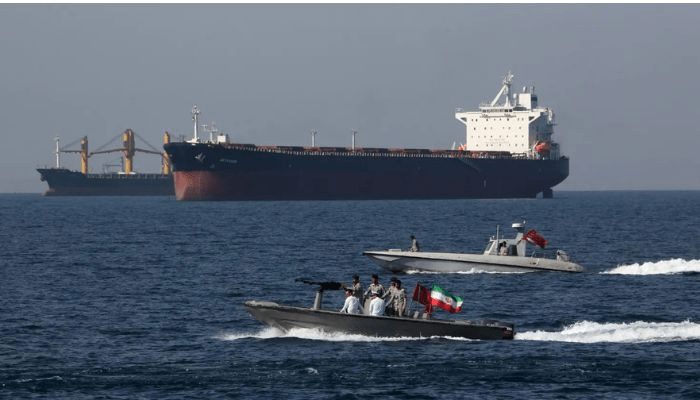
Now the Indian energy landscape is witnessing a historic pivot necessitated by a global conflict. After a seven-year hiatus, Iranian oil India 2026 flows have officially resumed as the very large crude carrier (VLCC) ‘Jaya’ heads for Paradip. First, the vessel is carrying two million barrels of crude originally intended for Southeast Asia. Therefore, this mid-journey redirection marks a significant victory for New Delhi’s energy diplomacy. Meanwhile, the ongoing war in the Middle East has forced Washington to briefly ease sanctions, allowing India to tap into Tehran’s massive floating reserves.
Add businessleague.in as a Preferred Source


Also Read |Tamil Nadu Voter List Purge: 97 Lakh Names Deleted in SIR Phase 1
Second Time Lucky: The Jaya vs. Ping Shun Trajectory
Now we must examine the specific movements that brought this oil to Indian shores. First, the tanker ‘Ping Shun’ was originally scheduled to deliver Iranian crude to Vadinar earlier this week. Therefore, it was expected to be the ice-breaker for Indo-Iranian trade.
Next, the Ping Shun steered away at the last minute and headed for China. Thus, the arrival of the ‘Jaya’ is being hailed as “second time lucky.”
Meanwhile, analysts at Kpler have confirmed that the Jaya’s trajectory shifted mid-journey from Southeast Asia to India. Therefore, the Iranian oil India 2026 arrival at Paradip is a result of aggressive spot-market maneuvering. So the government is successfully capturing cargoes that were previously bound for other Asian hubs.
Why Now? The 2026 Middle East War and Sanction Easing
So why has the US suddenly allowed India to buy from Tehran again? The answer lies in the extreme tightness of the global market. First, the war in the Middle East has pushed oil prices to record levels. Therefore, Washington has been forced to offer a brief “breathing room” for major importers.
Next, the current sanctions waiver is specifically for Iranian oil already at sea and is valid until April 19. Thus, India has a very narrow window to secure as many millions of barrels as possible.
Meanwhile, the Strait of Hormuz remains a dangerous zone for traditional tanker traffic. Therefore, tapping into Iran’s offshore storage is the most logical way to stabilize domestic prices. So the Iranian oil India 2026 move is a pragmatic response to an “existential” energy threat.
The Role of IOCL: Securing the Nation’s Largest Refineries
Now the primary actor in this purchase is the Indian Oil Corporation (IOCL). First, as the country’s largest refiner, IOCL is tasked with maintaining the national fuel supply during the crisis. Therefore, they were the ones who moved quickly to purchase the Jaya’s two-million-barrel cargo.
Next, docking at Paradip allows the oil to be fed directly into the massive refinery networks of the East Coast. Thus, it provides an immediate buffer against the shortages seen in March.
Meanwhile, other tankers like the ‘Jordan’ are already signaling India as their next destination. Therefore, IOCL is leading a broader effort to diversify the nation’s crude basket. So the Iranian oil India 2026 strategy is firmly centered on state-run refining capacity.
Also Read |Tamil Nadu Voter List Purge: 97 Lakh Names Deleted in SIR Phase 1
Shadow Fleet Dilemma: Managing Insurance and Safety Risks
So what makes these ships “different” from standard tankers? Most of Iran’s oil moves on what is known as the “shadow fleet.” First, these are older vessels that often lack standard international insurance and safety clearances. Therefore, letting them dock at Indian ports is usually forbidden under normal rules.
Next, the shipping ministry has had to issue unique “one-time” clearances for these ships. Thus, they are citing the “emergency situation” created by the Hormuz shutdown.
Meanwhile, this move has raised some eyebrows in the international maritime community. Therefore, the government is walking a tightrope between environmental safety and energy security. So the Iranian oil India 2026 arrivals are being handled with extreme technical caution at every port.
Reliance at Sikka: The Conflict Between Rules and Reality
Now the private sector is also getting involved, but with more hesitation. First, the government has given special permission for four vessels to dock at Reliance Industries’ Sikka terminal. Therefore, the world’s largest refining complex has a legal path to process Iranian crude.
Next, Reliance is reportedly still “weighing” whether to proceed with the refining. Thus, they are wary of future international sanctions or long-term regulatory blowback.
Meanwhile, the cargo may be allowed into the port for storage, but that does not guarantee it will be turned into petrol or diesel. Therefore, the Iranian oil India 2026 story has a layer of corporate caution that the state-run firms do not share. So Sikka remains a potential but unconfirmed destination for these “emergency” barrels.
Energy Self-Reliance: The ONGC “Wake-Up Call”
So what does this mean for India’s long-term energy policy? ONGC Chairman Arun Kumar Singh has been very vocal about the situation. First, he described the current war as a “wake-up call” for the nation. Therefore, he believes energy self-reliance is now an “existential necessity.”
Next, he has urged the country to “chase every drop of oil and gas” it can find domestically. Thus, the reliance on Iranian imports is seen as a short-term fix for a long-term problem.
Meanwhile, domestic production is currently struggling to keep pace with the massive 2026 demand. Therefore, the Iranian oil India 2026 influx is a temporary bridge while ONGC ramps up its deep-water exploration. So the goal remains to never be this vulnerable to a Middle Eastern conflict again.
Also Read |Tamil Nadu Voter List Purge: 97 Lakh Names Deleted in SIR Phase 1
Hormuz Chokepoint: Impact on South Asian Energy Supplies
Now we must understand why South Asia is hurting more than most regions. First, India, Pakistan, and Bangladesh have long depended on Gulf producers. Therefore, the closure of the Strait of Hormuz has essentially cut off their primary energy artery.
Next, these producers were just a few days away by sea, making the logistics cheap and fast. Thus, switching to Atlantic or Russian oil involves much longer routes and higher costs.
Meanwhile, the “shadow fleet” from Iran offers a closer, albeit riskier, alternative. Therefore, the Iranian oil India 2026 arrival at Paradip is a relief for the entire region’s supply chain. So the geography of the war has made Iran a necessary partner despite the political complications.
Future Cargoes: The ‘Jordan’ and ‘Sea Bird’ Signals
So is the Jaya just a one-off event? First, ship-tracking data suggests a larger trend is forming. Therefore, the tanker ‘Jordan’ is already indicating an Indian port as its destination.
Next, a vessel carrying Iranian LPG, the ‘Sea Bird’, successfully docked in Mangalore just a few days ago. Thus, the energy flow is expanding from crude oil to cooking gas as well.
Meanwhile, analysts note that Iran still has over 180 million barrels floating at sea. Therefore, the potential for more Iranian oil India 2026 arrivals is massive if the US window remains open. So Paradip is likely just the first of many ports to see the Iranian flag this month.
Common Questions Answered
Is India buying Iranian oil again in 2026? Now yes. After a seven-year gap, the tanker Jaya is delivering 2 million barrels to Paradip. Therefore, trade has resumed under a temporary sanctions waiver.
Why did the US ease sanctions on Iran? First, because the 2026 Middle East war has choked global supplies. Thus, Washington is allowing sea-based purchases until April 19 to stabilize prices.
What is the ‘Shadow Fleet’ mentioned in the reports? Next, it refers to older tankers used by Iran that lack standard insurance. Therefore, the Indian government had to grant special “one-time” safety exemptions for them to dock.
Which Indian companies are buying the oil? So Indian Oil Corporation (IOCL) is the primary buyer. Reliance Industries has permission to dock ships at Sikka but is still weighing the risks.
Will this solve the fuel shortage in India? Finally, it is a significant help. However, analysts note that the overall flow is still more limited than expected. So it is a “temporary bridge” for energy security.
How much oil does Iran have floating at sea? Actually, near record highs of well over 180 million barrels. Therefore, there is plenty of supply available if India can secure the logistics.
Also Read |Tamil Nadu Voter List Purge: 97 Lakh Names Deleted in SIR Phase 1
End….
Add businessleague.in as a Preferred Source
🙏 Support Independent Journalism
We keep news free for you.
Most readers support with ₹500 ❤️
or scan QR below

Voluntary contribution. No tax benefits.
DISCLAIMER
We have taken all measures to ensure that the information provided in this article and on our social media platform is credible, verified and sourced from other Big media Houses. For any feedback or complaint, reach out to us at businessleaguein@gmail.com