


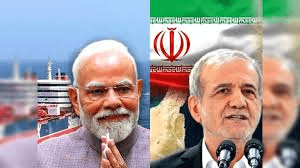
Now the world’s most critical maritime chokepoint remains at the center of a high-stakes geopolitical standoff. Iran has officially defended its decision to shut the Strait of Hormuz, arguing that the move was a forced response to military “aggression” by the United States and Israel in February 2026. Therefore, the disruption has sent shockwaves through global energy markets, directly impacting major importers like India. Meanwhile, in a recent diplomatic outreach, Tehran admitted it is “not happy” about the economic consequences for New Delhi. Following these developments, Iranian Foreign Minister Abbas Araghchi is expected to land in Delhi this week to address these tensions at the BRICS forum.
Add businessleague.in as a Preferred Source


Also Read |Tamil Nadu Voter List Purge: 97 Lakh Names Deleted in SIR Phase 1
The February 28 Incident: Why Iran ‘Forced’ the Closure
Now the roots of the current maritime blockade trace back to a series of military escalations on February 28, 2026. Iranian Foreign Ministry spokesperson Esmaeil Baghaei explained that Tehran was “forced” to take action following what he described as aggression from Washington and Tel Aviv. Therefore, the closure is being framed by Iran not as a choice, but as a defensive requirement.
First, Baghaei alleged that US and Israeli forces utilized bases in neighboring Persian Gulf states to launch strikes against Iranian soil. Next, he argued that before these events, the Strait of Hormuz was “open and free to every country.” Thus, the shift in policy is a direct consequence of the military standoff in the region.
So the Iranian official insisted that fighting back was the only way to prevent “aggressors from abusing this water lane.” Meanwhile, the international community continues to debate the legality of shutting down a vital international passage. Therefore, the February 28 incident remains the primary justification for Tehran’s current posture.
‘Not Happy’ for India: Tehran Addresses the Economic Fallout
Now the impact on India is particularly severe, as the nation depends heavily on the Persian Gulf for its energy security. Baghaei acknowledged this reality, stating that Iran understands the difficulties faced by New Delhi. Therefore, Tehran is attempting to separate its conflict with the West from its economic relationship with India.
First, the spokesperson emphasized that Iran itself is a coastal state that depends on the strait more than most. Next, he placed the blame for the global economic “consequences” entirely on the US and Israel. Thus, the “not happy” sentiment is intended to reassure India that it is not a target of Iranian policy.
So the disruption has forced Indian refineries to seek more expensive alternatives. Meanwhile, the rising cost of freight and insurance is adding to the inflationary pressure in South Asia. Therefore, the upcoming diplomatic talks in Delhi will be a mechanical necessity to find a workaround for Indian energy imports.
The Blockade Standoff: Araghchi’s Flexibility vs. US Refusal
Now the narrative of the closure has been complicated by claims of diplomatic “flexibility” that went unrewarded. Baghaei referred to a public statement by Foreign Minister Abbas Araghchi, who had signaled an opening for the route. Therefore, Tehran claims it made an effort to de-escalate the maritime crisis.
First, the spokesperson alleged that immediately after Araghchi’s outreach, the US President dismissed the gesture. Next, Washington reportedly stated that even if the Strait was opened, the broader blockade against Iran would continue. Thus, the “flexibility” shown by Tehran was met with a rigid “maximum pressure” response from the Oval Office.
So the stalemate continues as neither side is willing to blink first. Meanwhile, the Strait remains a “war of aggression” zone in the eyes of Iranian leadership. Therefore, the reopening of the route appears linked to a wider ceasefire agreement that currently remains out of reach.
Also Read |Tamil Nadu Voter List Purge: 97 Lakh Names Deleted in SIR Phase 1
Strategic Autonomy: How India-Iran Ties Survive Regional War
Now despite the regional turmoil, the bilateral relationship between India and Iran is described as “stable and respectful.” Baghaei highlighted the historical commonalities and diplomatic ties that have endured for decades. Therefore, the two nations are maintaining a channel of communication that bypasses the US-led alliance.
Core Pillars of India-Iran Ties in 2026:
-
Historical Commonalities: Shared cultural and diplomatic heritage.
-
Multilateral Cooperation: Joint membership in BRICS and the SCO.
-
Mutual Interest: Focus on regional stability and energy trade.
-
Sovereignty: Respect for each other’s independent foreign policy decisions.
First, Tehran believes that India recognizes Iran as a sovereign UN member facing “unjust” attacks. Next, Baghaei clarified that Iran’s relations with third countries are never directed against India. Thus, the “strategic autonomy” of both nations allows them to navigate the crisis without severing ties.
BRICS in Delhi: A Crucial Platform for Diplomatic Resolution
Now the upcoming BRICS Foreign Ministers’ Meeting in New Delhi (May 14-15) is being viewed as a critical opportunity. Foreign Minister Abbas Araghchi is expected to attend, marking a high-profile visit to the Indian capital. Therefore, the forum will serve as more than just a multi-lateral meeting; it will be a hub for urgent bilateral talks.
First, both Iran and India are now members of BRICS, giving them a structured platform for coordination. Next, Araghchi plans to meet his Indian counterpart to discuss the safety of the Persian Gulf water lanes. Thus, the Delhi meet could be the first step toward creating a “safety corridor” for Indian shipping.
So the meeting is important for Tehran to present its side of the “clear facts” to a global audience. Meanwhile, India, as the host, must balance its relations with the US and Israel while securing its energy interests. Therefore, the May 14 session is the most anticipated diplomatic event of the month.
Energy Security: The ₹1700 Crore Daily Loss for Indian Firms
Now the numbers behind the crisis are staggering. With the Strait of Hormuz closed, Indian oil firms are reportedly losing roughly ₹1700 crore every single day. Therefore, the “forced” measures taken in the Gulf have a direct and measurable impact on India’s national wealth.
First, the loss is driven by the need to reroute ships around Africa or find alternative, more expensive suppliers. Next, the delay in delivery is causing a supply-chain bottleneck at Indian ports. Thus, a price hike at the petrol pumps appears to be the only way out if the conflict drags on.
So the Indian government is under pressure to find a diplomatic solution to lower the energy bill. Meanwhile, the strategic oil reserves are being monitored to ensure they can sustain the nation through the standoff. Therefore, the ₹1700 crore figure is a constant reminder of the mechanical necessity of an open Hormuz.
Also Read |Tamil Nadu Voter List Purge: 97 Lakh Names Deleted in SIR Phase 1
International Law: Iran’s Legal Defense of the Maritime Shutdown
Now Iran is not just defending the closure on military grounds; it is also using the language of international law. Baghaei argued that the measures taken were “allowed under international law” because they were a response to the “unlawful” use of neighboring soil by aggressors. Therefore, Tehran is attempting to build a legal case for its actions.
First, the spokesperson cited the right to self-defense against nuclear-armed regimes. Next, he emphasized that Iran’s response was a proportional reaction to the attacks of February 28. Thus, the debate over the “freedom of navigation” has become a complex legal battleground in 2026.
So the international community remains divided, with Western powers calling the move an act of economic terrorism. Meanwhile, Tehran maintains that it is the victim of a “war of aggression” inflicted on the whole economy. Therefore, the legal status of the Strait remains one of the most contested issues in modern maritime history.
FAQ: Understanding the Strait of Hormuz Disruption
1. Why did Iran close the Strait of Hormuz in 2026? Now, Iran claims it was forced to shut the route following military attacks by the US and Israel on February 28, which utilized bases in the Persian Gulf.
2. How is the closure affecting India’s economy? First, Indian oil firms are losing an estimated ₹1700 crore daily. Next, it has disrupted trade flows and increased the cost of energy imports.
3. What is the status of India-Iran diplomatic relations? So Tehran describes them as “stable and respectful,” citing many historical commonalities and mutual interests despite the ongoing conflict.
4. When is the next high-level meeting between India and Iran? Next, Foreign Minister Abbas Araghchi is expected to attend the BRICS meeting in New Delhi on May 14 and 15, 2026.
5. Does Iran want to keep the Strait closed permanently? Now, the spokesperson stated that Iran wants “security and safety” in the water lane but blames the US and Israel for initiating the war that led to the closure.
6. What is the “flexibility” Iran claims to have shown? Finally, Iran referred to a statement by Minister Araghchi about reopening the route, which they claim was dismissed by the US president.
Also Read |Tamil Nadu Voter List Purge: 97 Lakh Names Deleted in SIR Phase 1
End…
Add businessleague.in as a Preferred Source

