
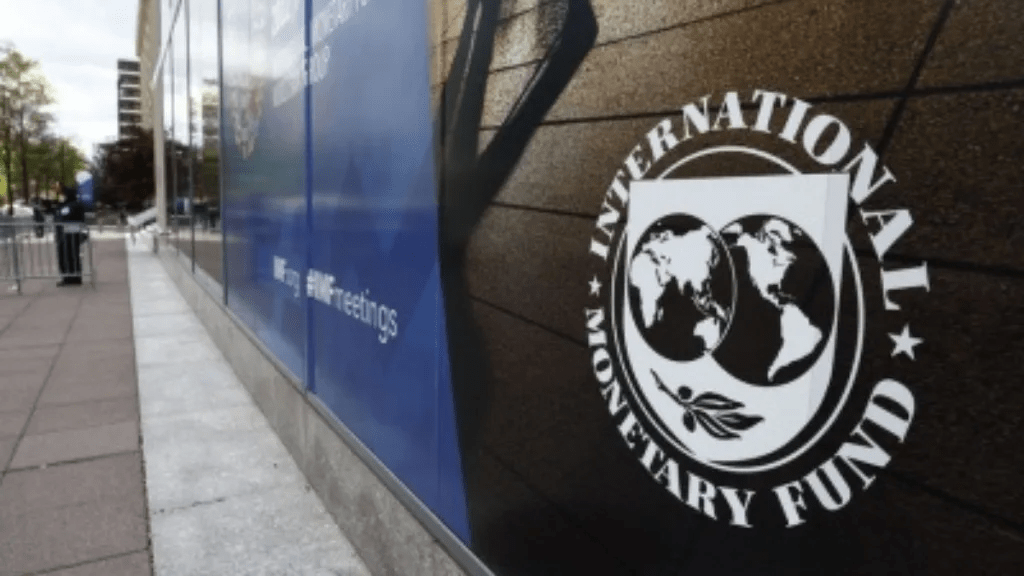
Now the global financial community is acknowledging a singular truth: India is currently the world’s primary engine of growth. In its latest World Economic Outlook (WEO) released this Tuesday, the IMF India growth forecast 2026 has been marginally increased to 6.5%. First, this comes even as the International Monetary Fund (IMF) downgraded its global growth projection to 3.1% due to the “hostile” environment created by the war in West Asia. Therefore, India is expected to maintain its title as the fastest-growing major economy in both 2026 and 2027. Meanwhile, a strategic reduction in US tariffs on Indian goods is acting as a massive counterweight to the regional supply chain disruptions.
Add businessleague.in as a Preferred Source


Also Read |Tamil Nadu Voter List Purge: 97 Lakh Names Deleted in SIR Phase 1
Global Economy in the Shadow of War: Decoding the 2026 WEO
Now we must examine the somber title of the IMF’s April 2026 report: “Global Economy in the Shadow of War.” First, the report acknowledges that the conflict in West Asia has roiled global markets and energy supplies. Therefore, the IMF India growth forecast 2026 is framed against a world that is struggling to maintain a 3% growth average.
Next, the US and Iran are currently maintaining an “uncertain ceasefire,” but the failure of recent peace talks has left the global economy on a knife’s edge. Thus, the IMF has abandoned its standard baseline in favor of a “reference forecast” that assumes disruptions fade by mid-2026.
Meanwhile, the global growth projection for 2026 has been cut from 3.3% to 3.1%. Therefore, India’s 6.5% rate is not just a high number; it is more than double the global average. So while the world slows down, India is accelerating into the vacuum.
The 6.5% Trajectory: Why India is Outpacing Global Rivals
So why is India uniquely resilient? First, the IMF India growth forecast 2026 was revised upward by 0.3 percentage points relative to last October. Therefore, the Fund believes that the “strong momentum” of the Indian market can absorb the shocks of a regional war.
Next, this 6.5% projection for both 2026 and 2027 leaves India well ahead of other major economies like China and the US. Thus, the “India Era” of the 21st century is being codified in these IMF statistics.
Growth Drivers for 2026:
-
Carry-over Effect: Strong performance in Q4 2025 providing a high base.
-
Export Strength: Easing trade barriers with Western partners.
-
Domestic Demand: A massive internal market that is less sensitive to global cargo delays.
Meanwhile, the IMF clarified that the current global environment is “hostile.” Therefore, India’s growth is a testament to its internal economic structural integrity.
7.6% Momentum: How 2025 Set the Stage for 2026 Success
Now we should look at the foundation of this success. First, the IMF revised its 2025 growth estimate for India to a stunning 7.6%. Therefore, the IMF India growth forecast 2026 is not a “lucky break” but the continuation of a high-growth cycle that outperformed expectations in 2025.
Next, this revision was driven by a better-than-expected outturn in the second and third quarters of the previous fiscal year. Thus, the “momentum” is effectively baked into the 2026 numbers.
Meanwhile, the IMF’s calendar year data (2025) corresponds to India’s fiscal year (2025-26). Therefore, the 7.6% figure is the official anchor for the current trajectory. So the country is entering 2026 with its “economic cylinders” firing at full capacity.
Also Read |Tamil Nadu Voter List Purge: 97 Lakh Names Deleted in SIR Phase 1
US Tariff De-escalation: The Multi-Billion Dollar Trade Tailwind
Now we come to the single most important trade factor in the report. First, the IMF highlights the significant decline in additional US tariffs on Indian goods. Therefore, the IMF India growth forecast 2026 has been significantly bolstered by these tariffs dropping from a high of 50% down to 10%.
Next, this reduction outweighs the “adverse impact” of the Middle East conflict on Indian trade. Thus, the export sector is enjoying a massive competitive advantage in 2026.
The Tariff Shift:
-
Previous Rate: 50% (A major barrier to engineering and textile exports).
-
New Rate: 10% (Facilitating a surge in US-bound shipments).
-
Result: Positive contribution that counters higher energy import costs.
Meanwhile, this “trade de-escalation” with Washington is a strategic victory for Indian diplomacy. Therefore, the economic alliance between the two largest democracies is paying real dividends for the Indian GDP.
Inflation Alert: Managing the 4.7% Peak in 2026
So what is the “price” of this high growth? First, India’s inflation is expected to pick up moderately, rising to 4.7% in 2026 from 3.3% in 2025. Therefore, the IMF India growth forecast 2026 comes with a caveat of “managed inflation” due to global shocks.
Next, the rise is largely attributed to higher global energy and food prices stemming from the West Asia conflict. Thus, the “imported inflation” is the primary risk factor for the 2026 fiscal year.
Meanwhile, this projection is largely in keeping with the RBI’s own forecast of 4.6%. Therefore, there is a rare institutional consensus between the IMF and the Reserve Bank of India regarding the 2026 price trajectory. So while prices will rise, they are expected to ease back to 4% by 2027.
West Asia Supply Shocks: The Impact on Indian Gas and Logistics
Now we must address the “friction” in the system. First, India has been directly affected by the war, specifically regarding gas supplies. Therefore, the IMF India growth forecast 2026 of 6.5% is an achievement of “resilience” over “convenience.”
Next, the roiled supply chains in the Middle East have increased the cost of logistics for Indian manufacturers. Thus, the 6.5% figure could have been even higher if not for the regional instability.
Supply Chain Bottlenecks:
-
Gas Imports: Delays and higher spot prices for LNG shipments.
-
Maritime Security: Increased insurance and freight costs for Arabian Sea routes.
-
Components: Delayed arrival of high-tech parts via the Suez canal.
Meanwhile, India’s move toward domestic manufacturing (PLI schemes) is helping buffer these shocks. Therefore, the “Global Economy in the Shadow of War” is a storm that India is better equipped to weather than its peers.
Also Read |Tamil Nadu Voter List Purge: 97 Lakh Names Deleted in SIR Phase 1
The ‘Reference Forecast’ vs. Reality: Risks of a Protracted War
So what happens if the war doesn’t end? First, the IMF’s 6.5% projection assumes the conflict remains “limited in duration and scope.” Therefore, the IMF India growth forecast 2026 is vulnerable to a “Severe Scenario” where the war becomes protracted.
Next, in a scenario where energy infrastructure in the Middle East is heavily damaged, global growth could fall to just 2%. Thus, India would likely see a downward revision toward the 5% mark.
Meanwhile, the IMF warns that “damage to the global economy could be substantially larger” if the mid-2026 de-escalation doesn’t happen. Therefore, the current forecast is a “cautious hope” rather than a guaranteed certainty. So the world is watching the US-Iran ceasefire with bated breath.
IMF vs. RBI: Comparing the 6.5% and 6.9% Projections
Finally, why is the IMF more conservative than India’s own central bank? First, the IMF India growth forecast 2026 of 6.5% is slightly lower than the RBI’s forecast of 6.9%. Therefore, there is a 40-basis-point gap in optimism between Washington and Mumbai.
Next, the IMF places a higher weight on “global hostile environments” and export shocks. Thus, they are more cautious about India’s external sector performance.
The Divergence:
-
IMF View: 6.5% (Weighted by global war risks and supply disruptions).
-
RBI View: 6.9% (Weighted by strong domestic credit and rural consumption recovery).
-
Common Ground: Both agree India is the fastest-growing major economy.
Meanwhile, both institutions agree that India will remain well ahead of other nations. Therefore, whether it is 6.5% or 6.9%, India is the “lighthouse” in the 2026 global economic storm.
Common Questions Answered
What is the IMF India growth forecast 2026? Now, the IMF has raised its growth projection for India to 6.5% for 2026 and 2027. Therefore, it remains the fastest-growing major economy in the world.
Why is the global economy slowing down in 2026? First, primarily because of the war in West Asia. Next, the IMF has downgraded global growth to 3.1% as the conflict roils supply chains and energy markets.
How did the US tariffs help India’s 2026 GDP? So, a major factor in the upward revision was the reduction in US tariffs on Indian goods from 50% to 10%. Thus, it provided a massive boost to Indian exports.
What is the expected inflation for India in 2026? Next, inflation is expected to peak at 4.7% in 2026 due to higher food and energy prices before easing back to 4% in 2027.
Why is 2025 growth cited as 7.6%? Finally, the IMF revised the 2025 estimate upward by a full percentage point, reflecting India’s official FY 2025-26 GDP performance and strong quarterly momentum.
What happens if the West Asia war continues? Actually, the IMF warns that if the conflict is protracted, global growth could fall to 2%, which would significantly lower the growth projections for all nations, including India.
Also Read |Tamil Nadu Voter List Purge: 97 Lakh Names Deleted in SIR Phase 1
End…
Add businessleague.in as a Preferred Source
🙏 Support Independent Journalism
We keep news free for you.
Most readers support with ₹500 ❤️
or scan QR below

Voluntary contribution. No tax benefits.
DISCLAIMER
We have taken all measures to ensure that the information provided in this article and on our social media platform is credible, verified and sourced from other Big media Houses. For any feedback or complaint, reach out to us at businessleaguein@gmail.com