


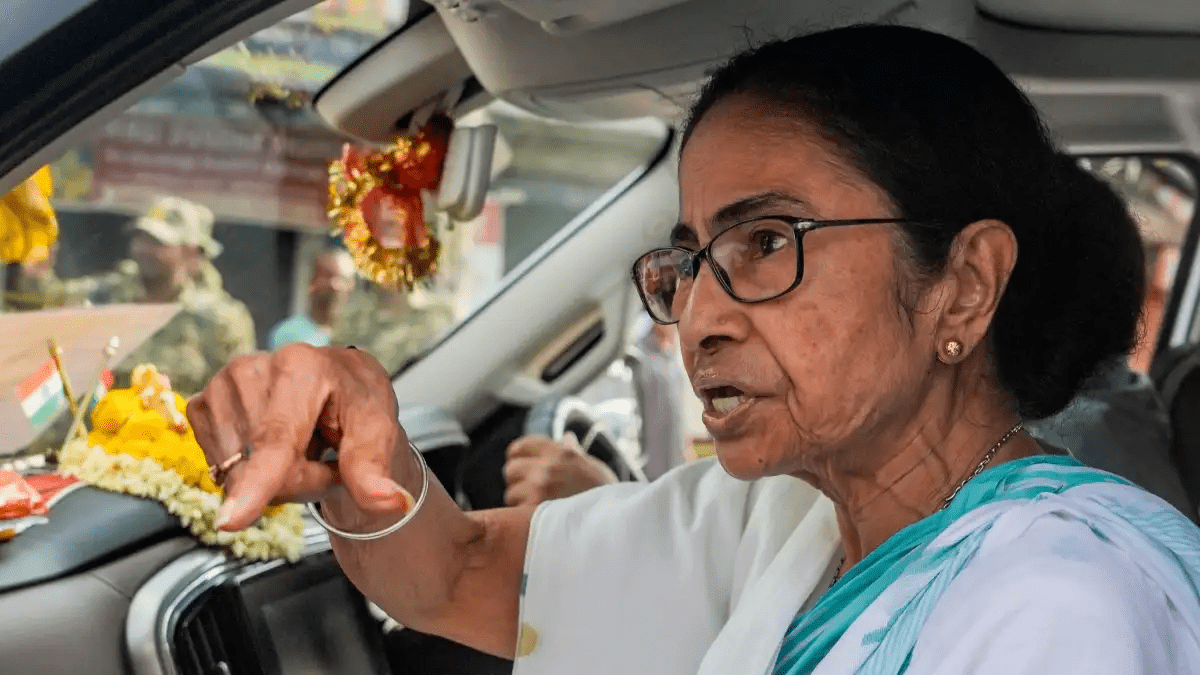
Now the political map of Eastern India has been redrawn following the historic 2026 West Bengal Assembly elections. While former Chief Minister Mamata Banerjee continues to allege widespread irregularities by the Election Commission of India (ECI), a voice from within her own ranks has offered a different narrative. Therefore, Riju Dutta, a recently suspended TMC leader, has identified three core internal failures that led to the party’s significant defeat. Meanwhile, as Suvendu Adhikari takes the oath as the new Chief Minister, the TMC finds itself grappling with allegations of corruption, external control by I-PAC, and a critical loss of trust among women voters.
Add businessleague.in as a Preferred Source


Also Read |Tamil Nadu Voter List Purge: 97 Lakh Names Deleted in SIR Phase 1
Riju Dutta’s Revelation: The Three Pillars of TMC’s Downfall
Now the shock of the 2026 results has prompted a period of intense soul-searching within the Trinamool Congress. Riju Dutta, speaking with news agency ANI shortly after his six-year suspension, refused to blame external agencies. Therefore, he identified three specific internal issues: I-PAC’s control, lower-level corruption, and a fundamental disrespect for women.
First, Dutta acknowledged that the party had failed to garner the people’s trust. Next, he emphasized that while the top leadership—Mamata and Abhishek Banerjee—may have been “kept in the dark,” the ground reality was vastly different. Thus, the defeat was seen as a popular vote against the party’s current operational structure.
So the 32 lakh vote difference between the BJP and TMC is viewed by many as a clear mandate for change. Meanwhile, the party continues to reel from the suspension order issued from its central office in Kolkata. Therefore, Dutta’s perspective offers a rare glimpse into the cracks within the once-impenetrable TMC fortress.
I-PAC Control: Allegations of Extortion and Strategic Missteps
Now one of the most explosive claims made by Dutta involves the influence of the political consultancy firm, I-PAC. He alleged that for the last six months, I-PAC had effectively been running the party. Therefore, elected representatives felt sidelined by external consultants.
First, Dutta claimed that I-PAC directed members to “abuse Suvendu Adhikari and his father,” a strategy he believes backfired. Next, he alleged a more personal grievance regarding financial extortion. Thus, he claimed a person associated with the office demanded ₹50 lakhs for him to be able to contest the elections.
So the fear of retribution supposedly kept these issues from reaching the senior leadership. Meanwhile, the reliance on external data over grassroots intuition created a massive disconnect with the electorate. Therefore, the “consultant-led” approach is now being cited as a primary reason for the party’s administrative paralysis.
Grassroots Corruption: Atrocities Committed by Lower-Level Cadres
Now the second major reason for the TMC’s downfall, according to Dutta, was the conduct of its lower-level cadres. While he maintained that “no one can point a finger at Didi,” he was scathing about the behavior of local party workers. Therefore, the party’s reputation was tarnished by those operating at the village and booth levels.
First, these cadres were accused of committing “huge corruption and atrocities” against local populations. Next, the lack of accountability allowed these issues to fester month after month. Thus, the public perception shifted from seeing the TMC as a “pro-people” party to one defined by local bullying.
So the senior MPs and leadership were reportedly insulated from these realities. Meanwhile, the anger of the common people was manifesting in silence until the day of the vote. Therefore, the disconnect between the leadership’s vision and the cadre’s actions proved fatal for the TMC’s 2026 campaign.
Also Read |Tamil Nadu Voter List Purge: 97 Lakh Names Deleted in SIR Phase 1
The Women’s Vote: Why Financial Aid Failed to Secure Loyalty
Now the most significant demographic shift in 2026 was seen among Bengal’s women voters. Traditionally a stronghold for Mamata Banerjee, the “women’s vote” fragmented significantly in the recent election. Therefore, the TMC’s reliance on financial aid schemes, such as providing ₹1500, was insufficient to counteract grassroots grievances.
First, Dutta pointed to “atrocities against Hindu women” in villages as a major factor. Next, he asserted that “you can’t buy the respect of a woman for ₹1500.” Thus, the lack of faith among the women electorate was a result of long-term suffering and disrespect.
So while the TMC expected blind loyalty from women, the reality on the ground was one of fear and resentment. Meanwhile, the BJP successfully capitalized on this sentiment, positioning itself as a party of law and order. Therefore, the loss of the women’s mandate is perhaps the most symbolic aspect of Banerjee’s defeat.
Mamata Banerjee’s Counter-Attack: Allegations Against the ECI
Now Mamata Banerjee has not accepted the internal critiques or the mandate quietly. A day after the results, she leveled serious allegations against the poll body and the BJP. Therefore, she maintains that the election was “officially” lost through manipulation rather than a moral defeat.
First, she accused the ECI of declaring premature results before final rounds of counting were completed. Next, she alleged that BJP candidates entered polling stations with CRPF personnel to beat up counting agents. Thus, her narrative is one of a “stolen” election rather than a popular rejection.
So she has publicly stated, “I did not lose… morally we won the election.” Meanwhile, she has refused to resign or visit the Raj Bhavan, claiming the question does not arise. Therefore, the legal and verbal battle between the TMC and the ECI is expected to continue long after the new government is formed.
The Physical Assault Claims: Chaos at the Polling Station
Now the most dramatic part of Banerjee’s accusations involves a personal assault. She claimed that during the final rounds of counting, she was “manhandled and assaulted” when she tried to intervene. Therefore, she has framed the victory of her opponent as a result of physical intimidation.
First, she alleged that BJP “goons” and CRPF personnel kicked her and beat up her people. Next, she claimed that CCTV cameras were conveniently turned off during this period. Thus, she argues that the official victory margin was manufactured through the destruction of forms and the expulsion of her agents.
So the RO (Returning Officer) and DEO (District Election Officer) have also come under fire in her statements. Meanwhile, the Governor’s decision to dissolve the Assembly was seen as a move to restore normalcy. Therefore, the 2026 election will be remembered for its high intensity and allegations of unprecedented violence.
Also Read |Tamil Nadu Voter List Purge: 97 Lakh Names Deleted in SIR Phase 1
The New Leadership: Suvendu Adhikari’s Swearing-In
Now the page has officially turned for West Bengal with the swearing-in of Suvendu Adhikari as the new Chief Minister. Therefore, the BJP has successfully breached its “final frontier” in Indian state politics. First, Adhikari was sworn in on Saturday, following the Governor’s dissolution of the previous Assembly.
Next, the new administration has promised to “do so much work” in the next 2-3 years that the TMC will remain irrelevant in 2029. Thus, the focus has shifted from electioneering to governance. Meanwhile, the BJP is positioning itself as a fresh alternative to the decades of regional party rule in Bengal.
So the transition of power marks the beginning of a new political era in the state. Meanwhile, Suvendu Adhikari’s rise from a former Banerjee protégé to her successor is a narrative that continues to fascinate political analysts. Therefore, the 2026 mandate is being viewed as a definitive call for administrative transparency.
FAQ: Understanding the 2026 West Bengal Election Results
1. Who is the new Chief Minister of West Bengal? Now, Suvendu Adhikari of the BJP was sworn in as the new Chief Minister on Saturday, May 9, 2026.
2. Why did Riju Dutta get suspended from the TMC? First, the party cited violations of discipline and non-compliance with summons. Next, Dutta claims it was due to his public statements regarding the party’s internal failures.
3. What were the three main reasons for TMC’s loss? So according to Riju Dutta, the reasons were: I-PAC’s over-control, grassroots corruption by lower cadres, and the disrespect shown to women at the village level.
4. What are Mamata Banerjee’s main allegations against the ECI? Next, she claims the ECI allowed premature result declarations and that counting agents were physically beaten and withdrawn under pressure from the BJP and CRPF.
5. How large was the vote difference between BJP and TMC? Now, according to Riju Dutta, the BJP secured a mandate with a difference of approximately 32 lakh votes over the TMC.
6. Will Mamata Banerjee resign as party leader? Finally, Banerjee has stated she will not resign, maintaining that “morally we won the election” despite the official outcome.
Also Read |Tamil Nadu Voter List Purge: 97 Lakh Names Deleted in SIR Phase 1
End…
Add businessleague.in as a Preferred Source

