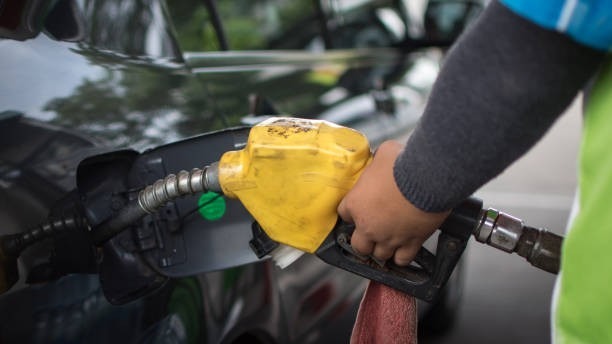
India is poised for its most significant fuel transition since the leap to BS-VI. In a notification dated February 17, 2026, the Central Government mandated that all oil marketing companies (OMCs) must supply E20 petrol with a minimum 95 Octane rating (RON 95) across all States and Union Territories starting April 1, 2026.
Add businessleague.in as a Preferred Source


This move effectively standardizes “Premium” fuel quality across every pump in the country, leveraging ethanol’s natural octane-boosting properties to protect engines while advancing the nation’s green energy goals.
Also Read |Tamil Nadu Voter List Purge: 97 Lakh Names Deleted in SIR Phase 1
RON 95 vs. RON 91: Why Octane Matters
The Research Octane Number (RON) measures a fuel’s ability to resist “knocking” or “pinging”—a phenomenon where the air-fuel mixture ignites prematurely under pressure, potentially causing severe engine damage.
-
The Upgrade: Currently, “Regular” petrol in India is RON 91. The new mandate raises the floor to RON 95.
-
The Ethanol Factor: Pure ethanol has an octane rating of roughly 108. When blended at 20%, it naturally raises the octane of base petrol.
-
Performance: Higher octane allows modern turbocharged and high-compression engines (common in post-2023 cars) to operate at peak efficiency without the risk of pre-ignition.
Vehicle Compatibility: New vs. Old Engines
The transition is not without its hurdles, particularly for the millions of older vehicles still on Indian roads.
-
Modern Vehicles (Post-April 2023): Most cars and two-wheelers manufactured after April 2023 are E20-compliant. They feature corrosion-resistant fuel lines and re-calibrated engines designed to handle the chemical properties of ethanol.
-
Older Vehicles: Vehicles built before 2023 may face issues. Ethanol is hygroscopic (absorbs water) and can be corrosive to certain rubber gaskets, plastic hoses, and older metal tanks.
-
Efficiency: Users of older vehicles should expect a marginal 3% to 7% drop in mileage due to ethanol’s lower energy density compared to pure gasoline.
Also Read |Tamil Nadu Voter List Purge: 97 Lakh Names Deleted in SIR Phase 1
Economic & Environmental Impact
The Ethanol Blended Petrol (EBP) program has already transformed India’s trade balance.
-
Forex Savings: By substituting 20% of petrol with domestically produced ethanol, India expects to save approximately ₹43,000 crore annually in foreign exchange.
-
Agricultural Boost: The program has funneled over ₹1.43 lakh crore to farmers since 2014, as the demand for maize and sugarcane-based feedstock continues to climb.
-
Emissions: E20 fuel is estimated to reduce tailpipe carbon monoxide emissions by up to 30% compared to E10.
Reality Check
The government claims the transition will be “seamless.” Still, for the owner of a 10-year-old hatchback, E20 is a forced trade-off. Therefore, while the nation saves on imports, the individual consumer may pay more in the form of increased fuel consumption and potentially shorter maintenance intervals for fuel filters and hoses. In fact, the “RON 95” benefit is mostly realized by high-end modern engines; older, low-compression engines will see little to no performance gain from the higher octane.
The Loopholes
The notification allows for “special circumstances” and “limited duration” exemptions. In fact, this is a “Supply-Chain Loophole”—if ethanol production lags in a specific region or if a remote UT like Lakshadweep faces logistical hurdles, OMCs can temporarily sell lower-spec fuel. Therefore, the “Nationwide” mandate has a built-in safety valve to prevent fuel shortages. Still, the “Mileage Loophole” remains: the government often cites “acceleration gains” to distract from the 5-10% real-world efficiency loss reported by many motorists.
Also Read |Tamil Nadu Voter List Purge: 97 Lakh Names Deleted in SIR Phase 1
What This Means for You
If you are driving a vehicle older than 2023, it is time to be proactive. First, realize that your car will run on E20, but it requires closer inspection. Then, if your car is prone to “knocking,” the new RON 95 standard is actually a blessing that will make your engine run smoother.
Finally, understand that you do not need to buy “Premium” petrol (like XP95 or Power95) after April 2026, as the “Regular” fuel will already meet those octane standards. You should check your owner’s manual for material compatibility. Before the mandate kicks in, consider replacing your fuel hoses and filters if they are more than 5 years old to prevent ethanol-induced leaks.
What’s Next
The Ministry will monitor ethanol production closely through the remainder of ESY 2025-26. Then, expect a massive labelling drive at fuel stations to clearly distinguish E20 dispensers. Finally, look for a potential GST rationalization discussion on “Flex-Fuel” vehicles later this year, as the government moves toward its next target: E27 by 2030.
Also Read |Tamil Nadu Voter List Purge: 97 Lakh Names Deleted in SIR Phase 1
End…
Add businessleague.in as a Preferred Source
🙏 Support Independent Journalism
We keep news free for you.
Most readers support with ₹500 ❤️
or scan QR below

Voluntary contribution. No tax benefits.
DISCLAIMER
We have taken all measures to ensure that the information provided in this article and on our social media platform is credible, verified and sourced from other Big media Houses. For any feedback or complaint, reach out to us at businessleaguein@gmail.com