
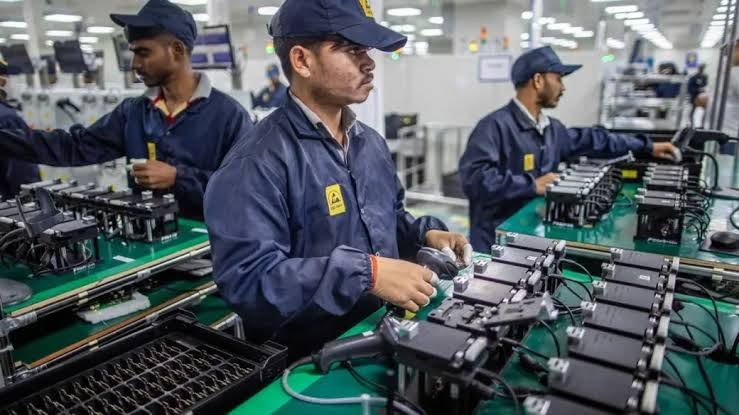
The targeted BCD exemptions look to cut import reliance, streamline tax compliance, and boost domestic production for smartphones, electric vehicles, and medical tech.
NEW DELHI — In a major regulatory push to scale up India’s tech supply chain, the Ministry of Finance has issued three strategic notifications completely waiving the Basic Customs Duty (BCD) on critical capital goods and raw inputs. The tax exemptions target core elements used in the production of display assemblies, lithium-ion cells, and inductor coil modules.
Add businessleague.in as a Preferred Source


Aligned directly with the central government’s Production Linked Incentive (PLI) strategy, this fiscal intervention looks to transition local operations from basic product assembly to deep component manufacturing. The new guidelines eliminate previous regulatory bottlenecks by expanding concessions across consumer, automotive, and industrial lines.
Also Read | Nothing Debuts New (b) Series: Phone 4b Arrives With Snapdragon 6 Gen 4 and Android 16
1. Scope and Lifespan of the New BCD Exemptions
The policy shifts are structured around two distinct operational tracks: explicit multi-year sunset clauses for consumer components, and a sweeping structural overhaul of battery equipment classifications.
Customs Restructuring Framework:
🛠️ Raw Component Inputs (Display & Inductor Modules) ➔ ⏳ 3-Year Fixed Waiver (Valid Until March 31, 2029)
⚙️ Capital Machinery (Lithium-Ion Cells)             ➔ 🔄 Permanent Technology-Neutral Consolidation
-
Fixed Sunset Timelines: The import tax exemptions for raw items going into display assemblies and wireless charging inductor coil modules are locked in until March 31, 2029. This timeline gives manufacturers a stable three-year runway to build out local vendor networks.
-
Consolidated Tech-Neutral Battery Policy: Industry analysts point out that the government has successfully combined separate, fragmented customs exemptions for machinery used in mobile and EV battery assembly lines. It has replaced them with a single, comprehensive “technology-neutral” exemption explicitly covering equipment for manufacturing lithium-ion cells.
Also Read | Nothing Debuts New (b) Series: Phone 4b Arrives With Snapdragon 6 Gen 4 and Android 16
2. Sectoral Impact and Primary Beneficiaries
By removing end-use restrictions, the policy change automatically opens up cost reliefs for industries far beyond basic consumer hardware like laptops and wearables.
| Component Track | Targeted Industrial Vertical | Strategic Macro Impact |
| Display Assemblies | Automotive clusters, medical diagnostics, and industrial automation control monitors. | Broadens component localization beyond mobile phones into heavy transport and health infrastructure. |
| Lithium-Ion Machinery | Battery gigafactories, electric vehicle (EV) ecosystems, and Battery Energy Storage Systems (BESS). | Lowers initial setup costs for massive green-energy production facilities and grid infrastructure. |
| Inductor Coil Modules | Next-generation smartphone manufacturing and wireless charging pads. | Encourages immediate domestic adoption of advanced premium device features. |
3. Industry Feedback and Economic Outlook
Key industrial groups and fiscal advisory experts have welcomed the simplified tax codes, noting that the changes directly resolve long-standing tax disputes and compliance friction.
📊 Expert Insight from AMRG Global:
“This consolidation significantly cuts down on compliance and classification challenges for factory operators. By removing end-use distinctions, it provides integrated manufacturing hubs the absolute flexibility needed to drive fresh capital investments into local cell production.”
According to Pankaj Mohindroo, Chairman of the India Cellular and Electronics Association (ICEA), widening the display assembly tax reliefs to include automotive and medical screen arrays is a masterstroke. He noted that India already possesses a robust core display assembly footprint, and this targeted capital goods relief will make the local sector hyper-competitive on a global scale.
Also Read | Nothing Debuts New (b) Series: Phone 4b Arrives With Snapdragon 6 Gen 4 and Android 16
Strategic Localization Sequence
Also Read | Nothing Debuts New (b) Series: Phone 4b Arrives With Snapdragon 6 Gen 4 and Android 16
Add businessleague.in as a Preferred Source
🙏 Support Independent Journalism
We keep news free for you.
Most readers support with ₹500 ❤️
or scan QR below

Voluntary contribution. No tax benefits.
DISCLAIMER
We have taken all measures to ensure that the information provided in this article and on our social media platform is credible, verified and sourced from other Big media Houses. For any feedback or complaint, reach out to us at businessleaguein@gmail.com