Now the center of global gravity has shifted to the Indian capital. India is currently playing host to a crucial two-day conference of BRICS foreign ministers on May 14-15, 2026, at the iconic Bharat Mandapam. Therefore, as the war on Iran enters its 76th day, the expanded bloc is meeting under the shadow of a severe energy crisis and a historic blockade of the Strait of Hormuz. Meanwhile, the strategic context is further complicated by the parallelism of President Donald Trump’s state visit to China. Following the failure of the April summit to reach a consensus, this New Delhi gathering is a mechanical necessity for emerging nations looking to safeguard their economic resilience and voice their needs in an increasingly unstable world order.
Add businessleague.in as a Preferred Source


Also Read |Tamil Nadu Voter List Purge: 97 Lakh Names Deleted in SIR Phase 1
Resilience in Times of War: The Domination of the Iran Conflict
Now while the official theme emphasizes innovation and sustainability, the ongoing war on Iran is the unavoidable focal point of the Delhi meet. Therefore, the “Building for Resilience” aspect of the conference has taken on a literal meaning as member states struggle with rising fuel costs and supply chain instability.
First, the conflict has reached its 76th day, leading to visible tensions within the bloc. Next, the memory of the failed April summit—where Iran and the UAE clashed over regional actions—still looms over the delegates. Thus, the foreign ministers must now find a way to navigate these internal frictions while presenting a united front.
So the bloc is currently at a crossroads regarding its stance on Middle East security. Meanwhile, India is attempting to prevent the meeting from being derailed by critiques of international actions in Gaza. Therefore, the ability to reach a “consensus of resilience” will determine the success of the upcoming September summit.
The Expanded Bloc: New Members and Key Global Players
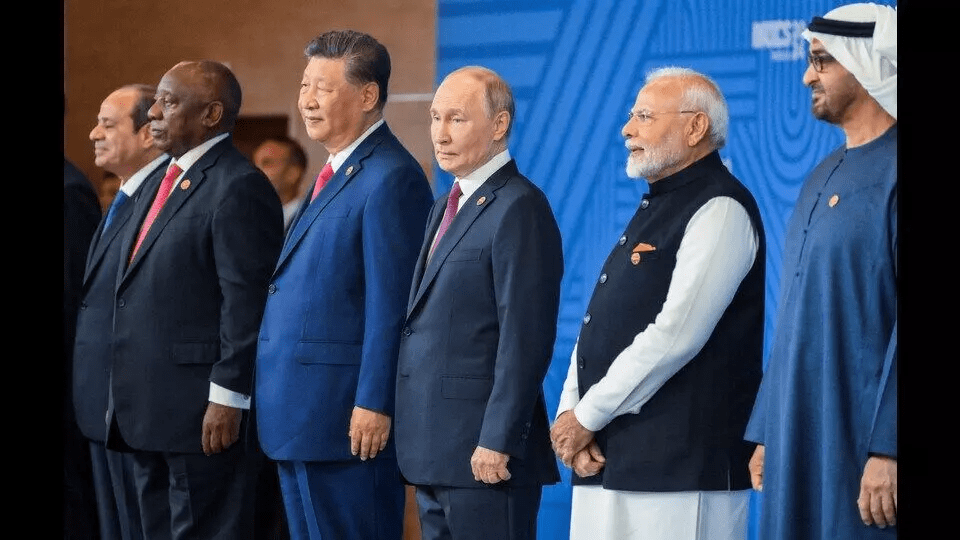
Now the New Delhi conference highlights the newfound scale of the BRICS+ format. Ministers from Egypt, Ethiopia, Iran, and the UAE are joined by Indonesia, the newest member of the organization. Therefore, the presence of these nations underscores the shift toward a more inclusive Global South platform.
Key Representatives in New Delhi:
-
Sergey Lavrov (Russia): Representing a key energy partner and founding member.
-
Abbas Araghchi (Iran): A central figure in the ongoing West Asia conflict.
-
Sugiono (Indonesia): Leading the newest member state into the bloc’s deliberations.
-
Mauro Vieira & Ronald Lamola: Representing Brazil and South Africa, respectively.
First, China is being represented by Ambassador Xu Feihong, as Foreign Minister Wang Yi has remained in Beijing for the Trump-Xi summit. Next, the high-level attendance from the UAE and Iran indicates that BRICS is now the primary theater for regional dispute resolution. Thus, the Bharat Mandapam is serving as a neutral ground for the world’s most sensitive diplomatic dialogues.
Strait of Hormuz: Navigating the 20 Percent Energy Blockade
Now the most pressing economic issue on the agenda is the continued blocking of the Strait of Hormuz. Since early March 2026, Iran has maintained a blockade on this vital artery, which previously handled one-fifth of global oil and LNG shipments. Therefore, the mechanical necessity for a resolution is felt in every capital of the BRICS nations.
First, major importers like India and China are seeing their energy security threatened by the prolonged closure. Next, the ripple effects are driving up fuel prices as far away as Brazil and South Africa. Thus, the “energy crisis” is no longer a regional concern but a global economic burden.
So the BRICS ministers are exploring alternative supply routes and joint energy reserves to mitigate the impact. Meanwhile, the bloc is under pressure to use its collective influence to ensure the freedom of navigation in the Gulf. Therefore, the energy security of the developing world hangs in the balance of these 48 hours in Delhi.
Also Read |Tamil Nadu Voter List Purge: 97 Lakh Names Deleted in SIR Phase 1
Parallel Diplomacy: The Trump-Xi Shadow Over New Delhi
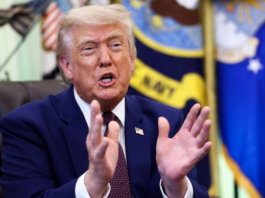
Now the timing of the BRICS meet is strategically aligned with President Donald Trump’s state visit to China. As the ministers meet in Delhi, Trump and Xi Jinping are holding bilateral talks in Beijing. Therefore, the “parallelism” of these two events is shaping the geopolitical narrative of 2026.
First, analysts expect Trump to pressure Xi into using China’s influence over Iran to end the naval dispute in the Gulf. Next, the outcome of the Beijing talks will directly impact the “leverage” the BRICS ministers have in their own deliberations. Thus, the Delhi meet is effectively the other side of a high-stakes superpower coin.
So if Xi can be persuaded to take a more vocal line against the blockade, the BRICS nations may see a faster path to energy stability. Meanwhile, the US-China “G2” dynamic is being closely watched by the emerging economies in the Bharat Mandapam. Therefore, the Delhi meet is a crucial barometer for how the Global South responds to superpower shifts.
BRICS Evolution: From Four Nations to a Multipolar Force
Now it is important to reflect on the journey of this organization. Initially created in 2006 as BRIC (Brazil, Russia, India, and China), the group added South Africa in 2010. Therefore, the 2026 meeting in Delhi represents twenty years of institutional growth and expansion.
First, the primary goal of BRICS has always been to give emerging nations a louder voice in a West-controlled world order. Next, the recent expansion to include Egypt, Ethiopia, and Indonesia has turned it into a massive coordination mechanism for the developing world. Thus, the bloc now represents a significant portion of the global population and GDP.
So the Delhi meet is an opportunity to prove that the organization can function as a multipolar force. Meanwhile, the focus on “resilience and innovation” suggests a move toward deeper intra-bloc economic integration. Therefore, BRICS 2026 is about more than just politics—it is about the economic future of the Global South.
Consensus Challenges: Can the Bloc Move Beyond Sovereignty Debates?
Now reaching a unified statement remains the most difficult task for the foreign ministers. Many analysts have predicted that the “war in Iran” will be a major stumbling block for a joint communiqué. Therefore, the bloc’s traditional difficulty in progressing past simple condemnations of “sovereignty violations” is being tested.
First, the differing interests of members like the UAE and Iran make a shared security vision difficult to draft. Next, the recent history of friction between regional rivals within the bloc complicates the negotiation process. Thus, the “consensus of resilience” requires a level of diplomatic finesse that was missing in April.
So the ministers are working behind closed doors to find common ground on humanitarian aid and energy corridors. Meanwhile, the Russian and Chinese delegations are balancing their own strategic interests with the collective needs of the bloc. Therefore, the Delhi declaration will be a defining document for the multipolar era.
Also Read |Tamil Nadu Voter List Purge: 97 Lakh Names Deleted in SIR Phase 1
India’s Role: Mitigating Friction Between Regional Rivals
Now as the host nation, India is playing a critical role as a mediator within the expanded bloc. The Ministry of External Affairs is working to ensure that the “Delhi Meet” leads to a productive roadmap for the September summit. Therefore, India’s own “economic resilience” is tied to the stability of the BRICS platform.
First, India has been successful in mitigating excessive criticism of various international actions to keep the focus on the energy crisis. Next, by bringing leaders from 10 different countries to Delhi, India is reinforcing its position as a “bridge” between different geopolitical camps. Thus, the Delhi meet is a showcase for India’s diplomatic leadership.
So the focus remains on securing a stable energy future for the developing world. Meanwhile, the local “Seven Appeals” toward austerity in India provide the background for these international deliberations. Therefore, the BRICS Delhi meet is where national policy meets global strategy.
FAQ: Understanding the 2026 BRICS Delhi Ministerial Meet
1. When and where is the BRICS Foreign Ministers’ meet taking place? Now, the meet is being held on May 14-15, 2026, at the Bharat Mandapam in New Delhi, India.
2. Who are the newest members of BRICS attending this meet? First, countries like Egypt, Ethiopia, Iran, the UAE, and Indonesia are part of the expanded bloc present at the conference.
3. What is the main economic issue on the agenda? So the primary focus is on the global energy crisis caused by the blockade of the Strait of Hormuz, which has disrupted 20% of the world’s oil and LNG supply.
4. Why is China’s Foreign Minister not in New Delhi? Next, Foreign Minister Wang Yi remained in Beijing for the high-stakes state visit of President Donald Trump. China is represented in Delhi by Ambassador Xu Feihong.
5. How is the Trump-Xi summit related to the BRICS meet? Now, analysts believe the parallel summits are linked, as Trump may pressure Xi to influence Iran to end the naval blockade, impacting the BRICS nations’ energy security.
6. What was the theme of the BRICS Delhi meet? Finally, the official theme is “Building for Resilience, Innovation, Cooperation, and Sustainability.”
Also Read |Tamil Nadu Voter List Purge: 97 Lakh Names Deleted in SIR Phase 1
End….
Add businessleague.in as a Preferred Source
🙏 Support Independent Journalism
We keep news free for you.
Most readers support with ₹500 ❤️
or scan QR below

Voluntary contribution. No tax benefits.
DISCLAIMER
We have taken all measures to ensure that the information provided in this article and on our social media platform is credible, verified and sourced from other Big media Houses. For any feedback or complaint, reach out to us at businessleaguein@gmail.com