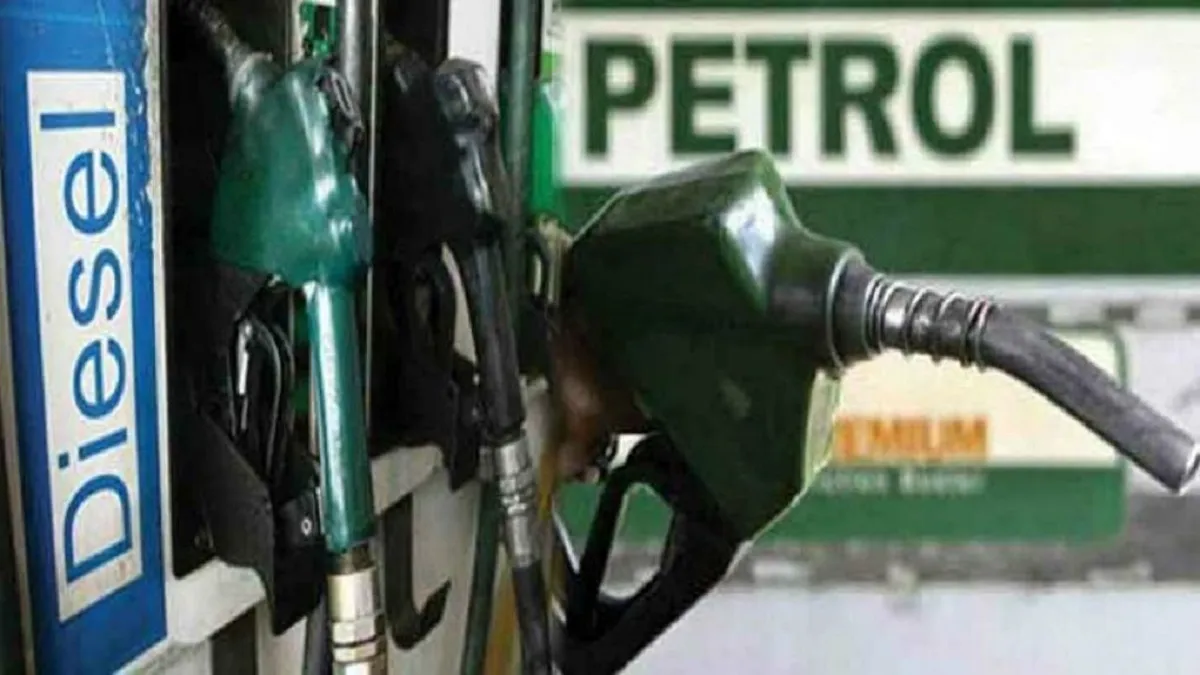
Now state-owned oil marketing companies shocked commuters Monday morning. Officials rolled out another massive fuel price hike India wide. Specifically, petrol prices jumped by ₹2.61 per litre. Meanwhile, diesel rates climbed by ₹2.71 per litre. Therefore, millions of citizens face immediate financial pressure. This revision marks the fourth steep hike within a brief ten-day window.
Add businessleague.in as a Preferred Source


Today, petrol in New Delhi breached the critical ₹100 threshold. The fuel now costs ₹102.12 per litre. Similarly, diesel in the national capital reached ₹95.20 per litre. This quick surge follows an earlier weekend hike on May 23. During that revision, petrol grew costlier by 87 paise. Meanwhile, diesel went up by 91 paise.
Gone are the days of stable pump rates.
Also Read |Tamil Nadu Voter List Purge: 97 Lakh Names Deleted in SIR Phase 1
The Core Crisis: What Changed Monday
Now the latest retail fuel revision marks a historical turning point. Consumers are feeling the heat. Therefore, public anger is mounting across major urban residential hubs. The relentless fuel price hike India is witnessing stems directly from deep geopolitical volatility.
Officials say the domestic price freeze could not continue indefinitely. Before May 15, state fuel firms absorbed massive losses for months. Now, the market must adjust. Thus, pump prices are moving in lockstep with global crude realities.
“The situation is truly unprecedented,” an anonymous energy sector analyst stated. Still, the sudden jump leaves families scrambling.
The Financial Damage
First, consider the direct impact on daily commuters. A standard 30-litre petrol tank refill now costs an extra ₹78. Next, think about heavy commercial vehicle operations. Long-haul transport trucks require hundreds of litres of high-speed diesel daily. Therefore, logistics firms face thousands of rupees in unexpected operational costs.
So who bears the ultimate brunt? The end consumer does.
Notably, commercial operators pass these expenses down the line. As a result, everyday items will soon become costlier. Fruit, vegetables, and milk transport will demand higher freight premiums.
The Global Push
Meanwhile, international oil benchmarks remain incredibly volatile. Brent crude hovered around high price brackets last week. Then, minor diplomatic rumors caused slight dips. Otherwise, the general trajectory points firmly upward.
Because of this, oil marketing companies have few choices left. They must protect their refining margins. Thus, Indian pumps reflect international pain.
Official City-Wise Retail Fuel Rates
Now let’s examine the exact retail selling price across major urban areas. Rates vary across states due to different local value-added taxes. Therefore, some metropolitan zones are experiencing significantly higher price strain.
Petrol Retail Prices
First, Delhi users are paying ₹102.12 per litre. This follows the fresh ₹2.61 premium. Next, Kolkata recorded the highest baseline among the primary four metros at ₹113.51. Meanwhile, Mumbai fuel stations adjusted their petrol boards to ₹111.21. Finally, Chennai motorists face a new price tag of ₹107.77.
| City | New Petrol Price (Per Litre) | Net Single-Day Hike |
| Delhi | ₹102.12 | +₹2.61 |
| Kolkata | ₹113.51 | +₹2.87 |
| Mumbai | ₹111.21 | +₹2.72 |
| Chennai | ₹107.77 | +₹2.46 |
High-Speed Diesel Retail Prices
Next, let us look at diesel figures. Delhi pump stations now charge ₹95.20 per litre. Meanwhile, Kolkata diesel rose sharply to ₹99.82. Mumbai consumers must pay ₹97.83 at the station. Lastly, Chennai rates settled at ₹99.55 per litre.
| City | New Diesel Price (Per Litre) | Net Single-Day Hike |
| Delhi | ₹95.20 | +₹2.71 |
| Kolkata | ₹99.82 | +₹2.80 |
| Mumbai | ₹97.83 | +₹2.81 |
| Chennai | ₹99.55 | +₹2.57 |
So these charts highlight the immediate structural reality. No region escapes the shift.
The Rapid Ten-Day Hike Timeline
Now the current crisis did not emerge overnight. Instead, a series of rapid adjustments occurred over a ten-day span. Therefore, tracing the timeline reveals how fast the situation worsened.
The Four Blows
First, the price cycle broke its long slumber on May 15. On that day, oil firms raised both petrol and diesel by ₹3. Then, a brief pause offered temporary breathing room. Next, the second wave hit on May 19. Rates ticked upward by an additional 90 paise per litre.
Subsequently, the third adjustment arrived on Saturday, May 23. Petrol rose by 87 paise while diesel expanded by 91 paise. Finally, Monday brought the largest single-day shock yet. The massive ₹2.61 and ₹2.71 jumps finalized the current trend.
Thus, the total cumulative increase is staggering. In less than two weeks, fuel prices jumped by roughly ₹7.50 per litre. Think again if you thought this was a minor correction. It represents a massive, sudden structural realignment.
Meanwhile, secondary fuel variants are following a similar upward trend. Private fuel retailers are matching public sector hikes precisely.
Also Read |Tamil Nadu Voter List Purge: 97 Lakh Names Deleted in SIR Phase 1
CNG Squeeze and Commuter Backlash
Now alternative fuel users face an identical dilemma. The fuel price hike India is suffering extends beyond liquid options. Specifically, Compressed Natural Gas providers raised prices in Delhi on Saturday by ₹1 per kg.
Therefore, CNG now costs ₹81.09 per kg in the national capital territory. This marks the third distinct CNG revision within ten days.
Naturally, daily transport operators are furious. Auto-rickshaw drivers and taxi aggregators find their daily profits evaporating.
Voice of the Streets
So how are citizens responding to the crunch? The mood at local fuel stations is decidedly grim.
“We are very upset,” a local taxi driver told reporters at a central Delhi pump. “They are not even giving diesel in many places. This requires urgent public discussion. Taxi drivers will face severe survival problems. The government must lower the rate of diesel.”
Not everyone agrees, however.
Another buyer offered a completely different perspective. “It is fine,” he noted calmly. “The central government should do whatever is required to safeguard our national interests. This entire mess is happening because of the West Asia war.”
Still, a third commuter highlighted the general consensus. “It is incredibly tough for the common man. This specific change impacts absolutely everything. We will wait and see what the authorities can do regarding this.”
Wrong choices now could trigger broader economic stagflation.
The Supply Myth: No Shortage Reported
Now panic buying represents a major secondary threat during fuel hikes. Rumors of incoming pump closures often flood social media networks. Therefore, top energy executives are moving fast to clear the air.
The Official Stance
First, former BPCL Marketing Director Sukhmal Kumar Jain addressed the public Sunday. He stated unequivocally that there is no physical shortage of petrol or diesel anywhere in the country. Instead, public sector oil marketing companies are managing domestic fuel inventories perfectly.
Next, consider the sheer scale of India’s distribution infrastructure. Public firms handle around 85,000 retail outlets nationwide. The country features nearly one lakh total operational fuel stations. Therefore, supply lines remain robust.
“The networks are running at full capacity,” Jain explained during a press interaction. Thus, citizens do not need to hoard fuel out of panic.
The Under-Recovery Problem
Still, smooth supply does not mean cheap operations. Oil marketing companies were previously facing deep financial duress. Before the May 15 price restoration, the three major public firms lost over ₹1,000 crore every single day.
How long can corporate entities sustain such heavy under-recoveries? Not very long.
Therefore, the current price hikes were mathematically inevitable. The state simply shifted the financial weight back to retail points.
The West Asia Conflict Root Cause
Now the ultimate origin of this domestic inflation lies far beyond Indian borders. Geopolitical strife is choking world energy markets. Therefore, local pump stations are simply responding to international blockades.
The Maritime Threat
First, intense military conflict between international forces has disrupted standard global shipping lanes. Crucially, worries persist over the safety of the iconic Strait of Hormuz. This narrow marine passage acts as a vital global transit chokepoint.
Next, remember that a massive share of worldwide crude shipments travels through this single corridor. Any threat of total closure triggers instant market panic. Consequently, insurance premiums for international oil tankers have hit historic highs.
So India faces a tough structural math problem. The nation relies on foreign imports to meet approximately 85% of its crude requirements. Therefore, international market shocks transfer to domestic economies instantly.
The Weak Rupee Factor
Meanwhile, domestic monetary challenges exacerbate the energy crisis. The Indian Rupee recently experienced notable fluctuations against the US dollar. Because global oil trade settles exclusively in dollars, a weaker rupee inflates the total import bill.
Thus, a double-whammy effect hits state oil firms. They are buying costlier global oil using a weaker local currency.
Economic Fallout: What Happens Next
Now the ultimate question shifts to the coming weeks. Will fuel rates continue their climb? Therefore, market specialists are analyzing key threshold points.
The Target Indicators
First, keep a close eye on Brent crude futures. If Brent stabilizes firmly below $100 per barrel, the price hike cycle might pause. Otherwise, expect a fifth consecutive pump revision very soon. Analysts predict that another round of increases remains highly probable.
Next, watch the Reserve Bank of India. Rising transport costs push core inflation indicators higher. Consequently, anticipated interest rate cuts might face delays. That means home and auto loans will stay expensive for a longer period.
Simple as that.
Finally, public pressure is mounting on state governments to slash local fuel taxes. Lowering state VAT could offer instant relief to citizens. Still, regional treasuries rely heavily on oil revenues. Thus, a policy deadlock looks likely.
Meanwhile, the common man continues to pay the price at the pump.
Also Read |Tamil Nadu Voter List Purge: 97 Lakh Names Deleted in SIR Phase 1
End….
Add businessleague.in as a Preferred Source
🙏 Support Independent Journalism
We keep news free for you.
Most readers support with ₹500 ❤️
or scan QR below

Voluntary contribution. No tax benefits.
DISCLAIMER
We have taken all measures to ensure that the information provided in this article and on our social media platform is credible, verified and sourced from other Big media Houses. For any feedback or complaint, reach out to us at businessleaguein@gmail.com