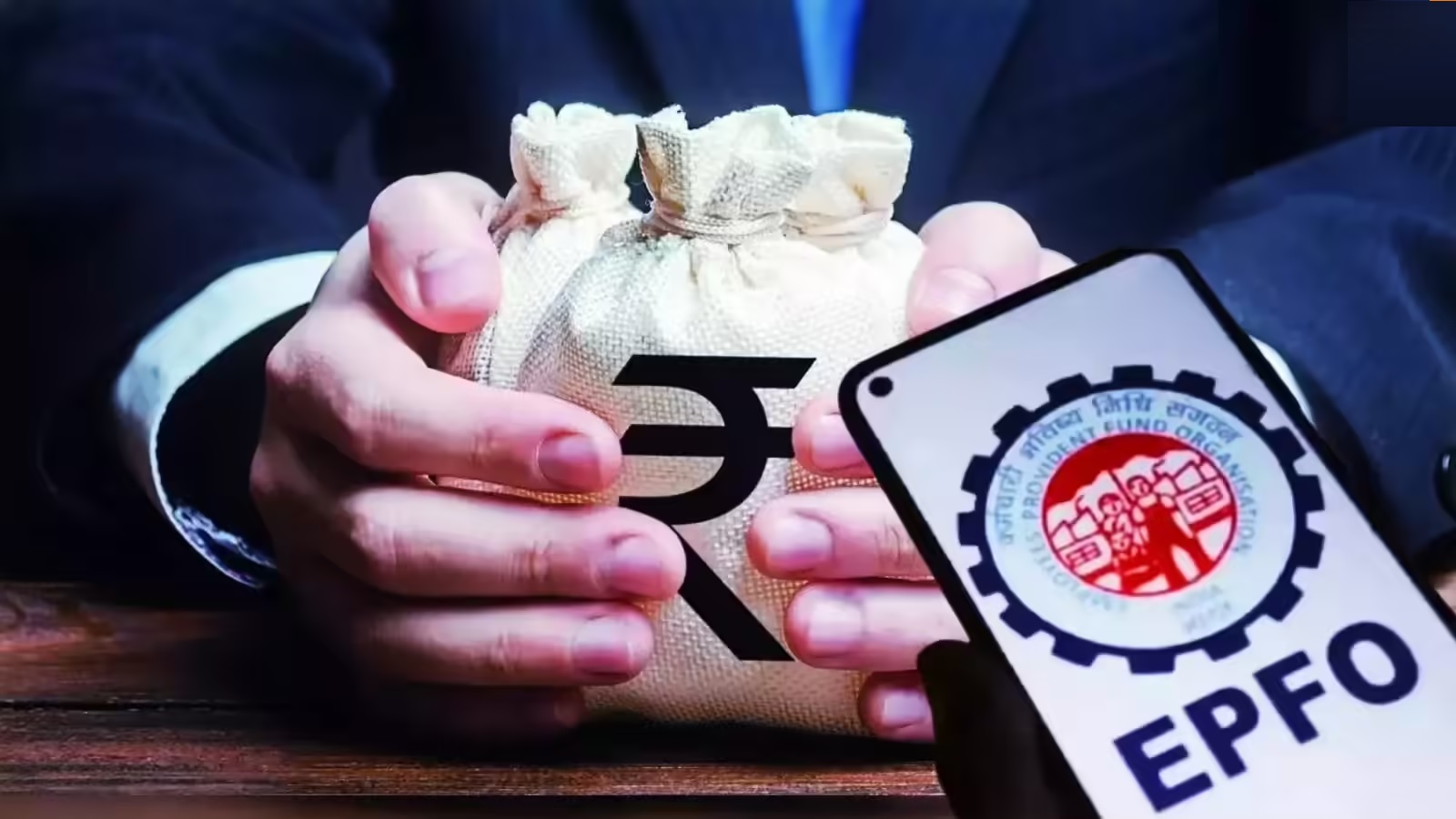
The Employees’ Provident Fund Organisation’s major digital upgrade allows direct ATM and UPI access without employer sign-off. However, premature withdrawal rules and TDS thresholds still apply.
The Employees’ Provident Fund Organisation (EPFO) is on the verge of executing its most significant digital infrastructure overhaul to date, dubbed EPFO 3.0. Under this upgraded tech framework, subscribers will soon be empowered to initiate paperless, near-instantaneous provident fund (PF) withdrawals directly into their verified bank accounts via the Unified Payments Interface (UPI) or by scanning QR codes at UPI-enabled ATMs—completely eliminating traditional employer sign-off bottlenecks and administrative delays.
Add businessleague.in as a Preferred Source


While the upcoming launch drastically improves liquidity access for crores of salaried workers, it has raised questions regarding tax liabilities. Union Labour Minister Mansukh Mandaviya recently confirmed that beta testing for the UPI payment gateway integration has concluded successfully, indicating a nationwide rollout is imminent.
                        [EPFO 3.0 Instant Liquidity Route]
                                        │
         ┌──────────────────────────────┼──────────────────────────────┐
         ▼                              ▼                              ▼
 [System Access]                [Gateway Execution]            [Target Destination]
 • Paperless Authentication     • UPI Payment Architecture     • Direct Member Bank Node
 • No Employer Sign-off Needed  • QR Scanning at Local ATMs    • Auto-Settlement Mechanics
New Structural Limits and the Enhanced Auto-Settlement Cap
The architectural framework of EPFO 3.0 introduces highly defined percentage bands for on-demand withdrawals while expanding safety cushions for emergency financial situations:
-
The Multi-Tier Withdrawal Cap: Depending on specific situational criteria, subscribers can pull out between 50 per cent and 75 per cent of their accumulated EPF corpus.
-
The Mandatory Buffer Rule: To protect long-term retirement security, a strict baseline of at least 25 per cent of the total accumulated contribution must permanently remain within the individual’s active PF account.
-
The Emergency Auto-Settlement Boost: For urgent situations—such as critical medical care, higher education costs, marriages, or home construction—the auto-settlement clearance ceiling has been drastically scaled up to ₹5 lakh from the legacy limit of ₹1 lakh. This modification guarantees direct bank settlement within three business days.
[Legacy Auto-Settlement Limit] ──► Restricted to Max ₹1 Lakh (Up to 10-Day Processing)
                                              │
                                              ▼
[EPFO 3.0 Emergency Pipeline]  ──► Up to ₹5 Lakh Cleared Directly via UPI Within 3 Days
Tax Implications Under the Upgraded Framework
Though the extraction technology has shifted to instant UPI rails, the foundational tax regulations governing your accumulated corpus remain anchored to existing Income-tax Act provisions. The primary tax rules are broken down as follows:
The Five-Year Continuous Service Rule
Your EPF distributions remain entirely tax-free if they are initiated after completing five consecutive years of continuous employment. Periods of service across different companies are counted as continuous if the PF balances were successfully rolled over to the new employer.
Premature Withdrawal and TDS Triggers
If you draw down funds before hitting the five-year work milestone, Tax Deducted at Source (TDS) mechanisms are automatically triggered for amounts exceeding ₹50,000.
Important Exemption Note: No tax liability or TDS deduction will occur if your aggregate total annual income, when combined with the premature EPF withdrawal amount, sits completely below the basic annual income tax exemption threshold.
                    [EPF Pre-5 Year Withdrawal Matrix]
                                    │
    ┌───────────────────────────────┴───────────────────────────────┐
    ▼                                                               ▼
[Exceeds ₹50,000 Total]                                  [Exemptions & Safeguards]
• Automated TDS execution.                               • No tax if total income stays below base bar.
• Linked ID verifies baseline rates.                     • Exempt if due to ill health or business closure.
The High-Earner Contribution Tax
Irrespective of how long you have been employed, any interest earned on annual employee-side contributions that cross ₹2.5 lakh within a single fiscal year remains fully taxable. This specific restriction applies to all contribution streams logged on or after April 1, 2021.
Strategic Structural Transfers
Subscribers retain the ability to transfer their entire accumulated EPF balance directly into the National Pension System (NPS) under Section 80CCD. The Income Tax Department formally treats these actions as exempt transfers, ensuring zero tax leakages during the reallocation process.
FAQ
Q1: Will withdrawing my PF balance using a UPI ATM machine immediately incur extra transaction taxes?
No. Utilizing UPI or an ATM interface is simply a modern distribution mechanism. Your tax liabilities are calculated based on your total years of continuous service and the age of your account, not the digital tool you use to access the cash.
Q2: What happens to my tax status if I am forced to withdraw my PF balance early due to medical issues?
If an employee is forced to make a premature withdrawal before completing five years of continuous service due to documented ill health, the permanent closure of the employer’s business, or other reasons entirely beyond the employee’s control, the withdrawal remains entirely tax-free.
Q3: Does the new ₹5 lakh emergency auto-settlement limit require manual verification from my employer?
No. One of the central pillars of the EPFO 3.0 digital upgrade is the removal of manual employer sign-offs for emergency auto-settlement requests, routing verified data directly through automated validation links instead.
Most Popular : –
- US Trade Representative Jameson Greer to visit India next week as interim trade talks gather pace
- Modi and Trump Meet at G7: Formal Handshake and Stinging Trust Remarks Reveal Deep Rifts
- Mukesh Ambani’s Reliance Jio Set for Historic Stock Market Debut With $4B Offering
- Brent Crude Drops to Lowest Level Since March Ahead of US-Israel-Iran Peace Deal
Add businessleague.in as a Preferred Source
🙏 Support Independent Journalism
We keep news free for you.
Most readers support with ₹500 ❤️
or scan QR below

Voluntary contribution. No tax benefits.
DISCLAIMER
We have taken all measures to ensure that the information provided in this article and on our social media platform is credible, verified and sourced from other Big media Houses. For any feedback or complaint, reach out to us at businessleaguein@gmail.com