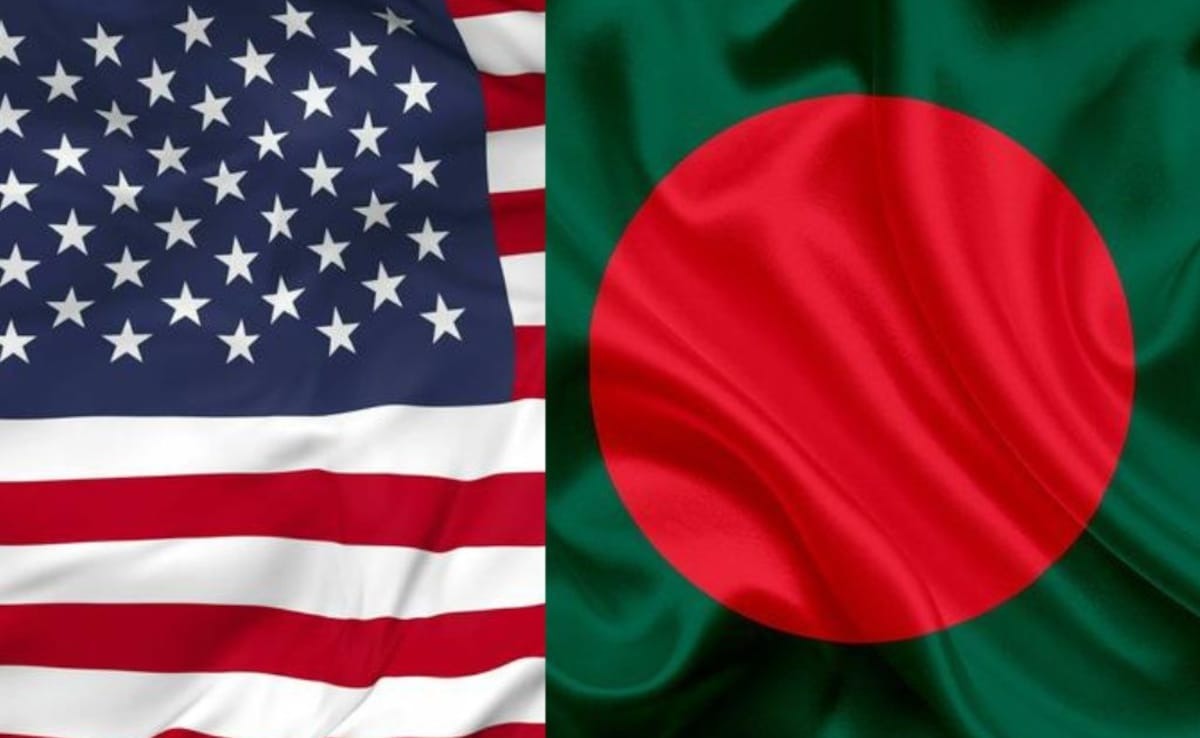
In a move that significantly recalibrates South Asian trade dynamics, the United States and Bangladesh formalized a comprehensive Reciprocal Trade Agreement on Monday, February 9, 2026. Signed in Washington D.C. by US Trade Representative Jamieson Greer and Bangladesh Commerce Adviser Sheikh Bashir Uddin, the deal marks a major victory for the interim government led by Dr. Muhammad Yunus.
Add businessleague.in as a Preferred Source


The pact effectively lowers the barrier for Bangladeshi exporters to the US—their largest market—while securing massive long-term contracts for American aerospace, energy, and agriculture sectors.
Also Read |Tamil Nadu Voter List Purge: 97 Lakh Names Deleted in SIR Phase 1
Strategic Timing: The Pre-Election “Yunus-Trump” Pact
The timing of the signature is being closely watched by geopolitical analysts. With Bangladesh heading to the polls on February 12 to choose a permanent government after 18 months of interim rule, this deal provides a massive economic endorsement for the Yunus administration.
-
The Tariff Glidepath: Last year, the Trump administration initially proposed a 37% tariff on Bangladesh, which was reduced to 20% in August 2025. This latest cut to 19% places Bangladesh on par with regional competitors like Pakistan and Indonesia, and just slightly behind India’s 18% interim rate.
-
Political Capital: The deal is seen as a “pro-reform” signal, aligning Dhaka’s trade policies more closely with Washington just as the nation prepares for its first competitive election since 2009.
The “Golden” Textile Clause: Zero Tariffs for US-Source Apparel
For the Ready-Made Garment (RMG) sector—which contributes 80% of Bangladesh’s exports—the most critical part of the deal is the Annex III mechanism.
-
US Input Incentive: Garments made from US-grown cotton or US-produced man-made fibers will now enter the US market at 0% reciprocal tariff.
-
Supply Chain Integration: This creates a “closed-loop” incentive for Bangladeshi factory owners to switch from Indian or Chinese raw materials to American inputs.
-
Volume Linked: The zero-duty volume will be directly proportional to the quantity of US textile exports to Bangladesh, ensuring a balanced “reciprocal” benefit.
Also Read |Tamil Nadu Voter List Purge: 97 Lakh Names Deleted in SIR Phase 1
Market Access Exchange: What the US Gains in Dhaka
The agreement is far from one-sided. In exchange for tariff relief, Bangladesh has made several high-value commitments to “Buy American.
-
The Boeing Deal: National carrier Biman Bangladesh is finalized to procure at least 14 Boeing aircraft (with some reports suggesting up to 25), a deal valued at approximately Tk 30,000–35,000 crore.
-
Agricultural & Energy Security: Dhaka will purchase $3.5 billion in US wheat, soy, and corn, alongside a massive $15 billion energy contract spanning the next 15 years.
-
Regulatory Alignment: Bangladesh will now accept US Federal safety and emissions standards for motor vehicles and recognize US FDA certifications for pharmaceuticals, removing long-standing non-tariff barriers.
[Image Suggestion: A map showing the new trade corridor between US cotton ports and the Dhaka/Chittagong garment manufacturing hubs]
Also Read |Tamil Nadu Voter List Purge: 97 Lakh Names Deleted in SIR Phase 1
Economic Context: Rebuilding After the 2024 Revolution
This trade deal arrives at a precarious moment for the Bangladeshi economy. The nation is still recovering from the 2024 Student Uprising that toppled the previous regime and caused significant disruptions to the RMG supply chain.
“The reduction of reciprocal tariff will grant further advantage to our exporters, while zero-duty access for specific garments using US inputs will give substantial impetus to our recovery,” stated National Security Adviser Khalilur Rahman, the chief negotiator.
By securing this deal, the interim government has effectively “future-proofed” the textile sector against the 25%–40% tariff threats that have characterized the current US trade era.
Also Read |Tamil Nadu Voter List Purge: 97 Lakh Names Deleted in SIR Phase 1
[COMPARISON: US RECIPROCAL TARIFF RATES – FEB 2026]
| Country | Base Reciprocal Tariff | Special Exemptions |
| India | 18% | 0% on certain tech/energy |
| Bangladesh | 19% | 0% for apparel with US inputs |
| Vietnam | 20% | Negotiating |
| Pakistan | 19% | Limited agriculture |
| China | 60%+ | None |
Next Steps
If you are a garment exporter, you should immediately begin auditing your supply chain to verify the Certificate of Origin for your cotton, as this is now the key to unlocking the 0% tariff. Furthermore, as the February 12 election approaches, you should stay tuned for our live coverage of the polling results, which will determine if the incoming government will uphold these specific trade commitments.
Also Read |Tamil Nadu Voter List Purge: 97 Lakh Names Deleted in SIR Phase 1
End…
Add businessleague.in as a Preferred Source
🙏 Support Independent Journalism
We keep news free for you.
Most readers support with ₹500 ❤️
or scan QR below

Voluntary contribution. No tax benefits.
DISCLAIMER
We have taken all measures to ensure that the information provided in this article and on our social media platform is credible, verified and sourced from other Big media Houses. For any feedback or complaint, reach out to us at businessleaguein@gmail.com