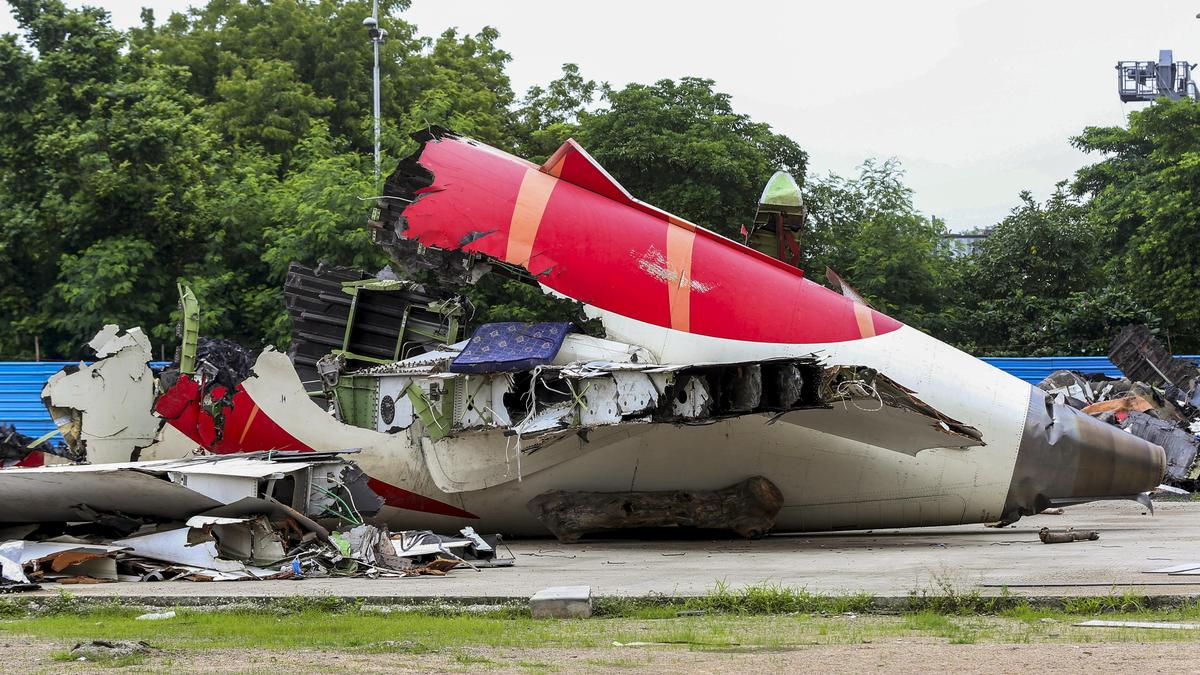
As Union Civil Aviation Minister Ram Mohan Naidu calls for patience, investigators look deeper into a mysterious double-engine fuel cutoff that happened just 32 seconds into the flight.
Add businessleague.in as a Preferred Source


The definitive explanation for the deadliest aviation disaster in modern Indian history remains unfinalized as investigators enter the final analysis phase. Marking the solemn one-year anniversary of the tragedy on Friday, June 12, 2026, the Aircraft Accident Investigation Bureau (AAIB) issued a formal interim statement regarding the Air India AI171 crash final report. The federal agency confirmed that while significant progress has been made, the final document will not be released immediately.
The tragic accident occurred on June 12, 2025, when a London Gatwick-bound Boeing 787-8 Dreamliner (Registration: VT-ANB) lost all thrust shortly after liftoff from Sardar Vallabhbhai Patel International Airport in Ahmedabad.
The aircraft descended rapidly, crashing into a student housing complex at B.J. Medical College in the Meghaninagar area. The disaster claimed 260 lives—including 229 passengers, 12 crew members, and 19 people on the ground—leaving British national Vishwash Kumar Ramesh as the sole survivor of the impact.
Also Read | Viral Trump Lookalike Buffalo Rescue: Saved From Eid Sacrifice
The Cutoff Conundrum: Slicing Through the Black Box Data
The delay in publishing the final report stems from the complex technical and human factors that investigators are trying to piece together. According to the AAIB’s initial findings, the aircraft was functioning normally until it reached an altitude of roughly 600 feet, just three seconds after lifting off the tarmac.
Data from the Flight Data Recorder (FDR) revealed an unexpected anomaly: both engine fuel control switches transitioned from the “RUN” to “CUTOFF” position just one second apart.
This action instantly cut off the fuel supply to both General Electric GEnx engines, causing an immediate loss of power and lift.
While the Cockpit Voice Recorder (CVR) captured a frantic exchange where one pilot asked, “Why did you cut off?” and the other responded, “I did not do so,” the crew attempted a brave restart sequence.
They successfully toggled the switches back to “RUN” within 14 seconds, but the aircraft lacked the altitude and time needed to complete a full jet relight before crashing into the hostel.
Eliminating Variables: Maintenance and the 2018 FAA Warning
To find out exactly why those critical fuel switches moved, the AAIB has worked closely with international technical advisers and aircraft system specialists over the past year to review the plane’s history.
| Investigated System Element | Verified Maintenance Profile | Disclosed Technical Context | Current Investigative Focus |
| VT-ANB Hull Integrity | Clean record; no fuel switch defects reported since 2023. | Carried a valid airworthiness certification up to the crash date. | Examining if physical vibration could cause un-commanded movement. |
| GEnx-1B Engine Hubs | Subjected to high-temperature physical post-crash fires. | Sent to specialized international laboratories for deep analysis. | Awaiting final metallurgical logs to rule out electronic line spikes. |
| Cockpit Switch Controls | Standard dual-switch layout requiring a physical pull-to-turn action. | 2018 FAA Bulletin NM-18-33 warned of loose locking tabs on Boeing models. | Verifying if the mechanical locking pins were worn out or disengaged. |
Note: The 2018 FAA Special Airworthiness Information Bulletin highlighted that some Boeing cockpits had fuel control switches installed with their safety locks disengaged, allowing switches to move more easily under physical contact or severe cabin vibrations.
Union Civil Aviation Minister Ram Mohan Naidu Kinjarapu asked the public and media to avoid spreading unverified rumors while the investigation enters its final stretch.
He noted that given the complexity of the double-engine shutdown and the international reviews required under ICAO Annex 13 guidelines, the final document will likely take another two months to be fully completed.
Also Read | Viral Trump Lookalike Buffalo Rescue: Saved From Eid Sacrifice
Shifting Focus to Technical and Metallurgical Closures
The investigation team is currently waiting on final technical reports from international testing facilities before closing the file.
The AAIB emphasized that the sole purpose of its investigation is to uncover vital safety lessons to prevent future tragedies, rather than to assign legal blame or liability.
By taking the time needed to thoroughly analyze every piece of data, the bureau aims to deliver an independent, clear report that builds international confidence and ensures the long-term safety of passenger flight.
FAQ Section
Why is the Air India AI171 crash final report being delayed?
The final report is delayed because the AAIB is waiting on specialized technical and metallurgical analysis of the engine components and fuel control switches from international laboratories. Given the unique nature of the double-engine shutdown, investigators must review every piece of evidence to ensure the report’s conclusions are backed by solid scientific facts.
What did the black box reveal about the cause of the engine failure?
The flight recorders revealed that just three seconds after liftoff, both engine fuel control switches moved from “RUN” to “CUTOFF” just one second apart. This immediately cut off the fuel flow and shut down both engines. Cockpit audio indicates that this action may have been unintentional, as the flying pilot denied turning the switches.
How has this accident affected Air India’s ongoing operations?
In accordance with international aviation safety protocols, Air India has permanently retired the “AI171” flight number from its active schedules. Additionally, the Directorate General of Civil Aviation (DGCA) ordered comprehensive safety checks across the airline’s remaining fleet of 33 Boeing 787 aircraft to ensure all cockpit switch mechanisms are fully secure.
Also Read | Viral Trump Lookalike Buffalo Rescue: Saved From Eid Sacrifice
End…
Add businessleague.in as a Preferred Source
🙏 Support Independent Journalism
We keep news free for you.
Most readers support with ₹500 ❤️
or scan QR below

Voluntary contribution. No tax benefits.
DISCLAIMER
We have taken all measures to ensure that the information provided in this article and on our social media platform is credible, verified and sourced from other Big media Houses. For any feedback or complaint, reach out to us at businessleaguein@gmail.com