


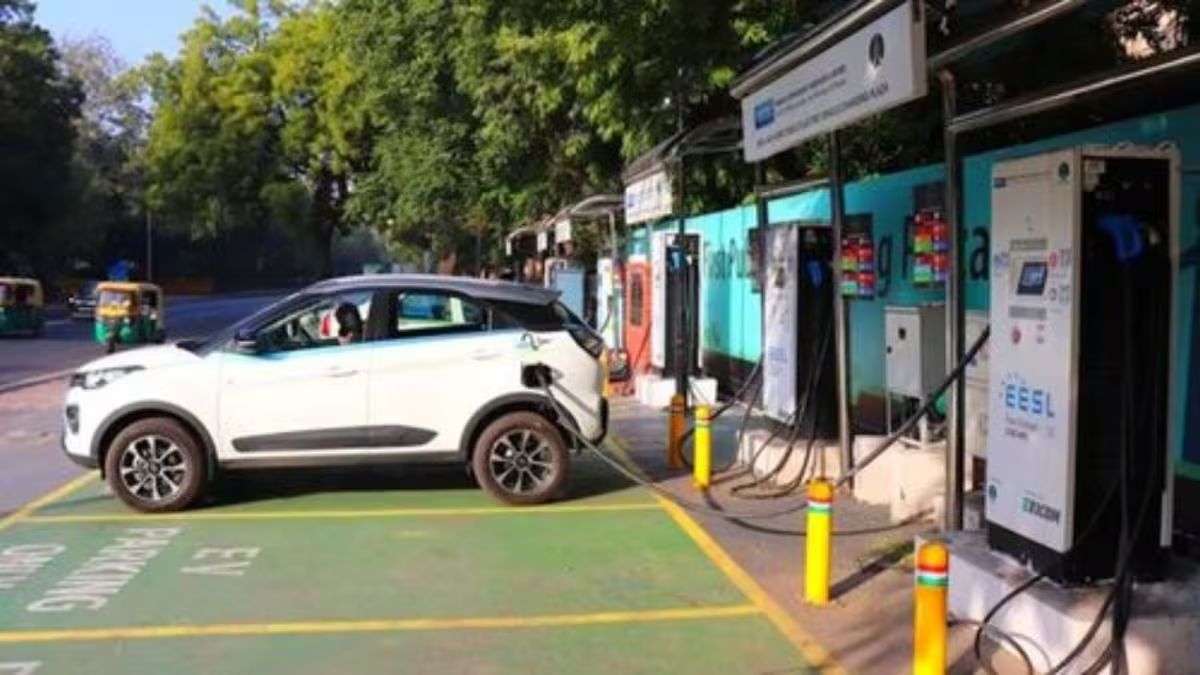
Delhi Cabinet Clears EV Policy 2026: Hybrid Subsidies Completely Dropped as City Mandates Strict EV-Only Deadlines
NEW DELHI — The Delhi Cabinet has officially cleared the highly anticipated Delhi Electric Vehicle (EV) Policy 2026, drawing an unyielding line between zero-tailpipe emission technology and transitional alternatives. Set to go into effect on July 1, 2026, and remain active until March 31, 2030, the final framework explicitly rejects a prior draft proposal that would have extended partial financial incentives to strong hybrid vehicles.
Add businessleague.in as a Preferred Source


By eliminating a planned 50 percent road tax exemption for strong hybrid cars priced under Rs 30 lakh, the state government has directed its entire financial ledger toward battery electric vehicles (BEVs) to counter the national capital’s stubborn vehicular air pollution.
Also Read | Awarapan 2 Teaser: Emraan Hashmi Revives Iconic Heartbroken Lover Role
Phased Deadlines: The End of Internal Combustion Registration
The backbone of the 2026 policy is a collection of rigid, phased transition deadlines targeting the city’s highest-volume vehicle segments. Rather than relying solely on voluntary adoption, the policy enforces hard cutoff dates past which fossil-fuel models will be blocked from initial registration in Delhi.
Delhi EV Policy 2026 - Registration Cutoff Timeline:
├── January 1, 2027
│   └── Mandate: 100% EV-Only Registration for Passenger & Goods Three-Wheelers
├── April 1, 2028
│   └── Mandate: 100% EV-Only Registration for All Two-Wheelers
└── March 31, 2030
    └── Policy Horizon: Target to achieve complete commercial and transport fleet decarbonization
To protect the state’s financial outlays, the cabinet introduced a strict three-year lock-in period on all subsidized purchases. Any electric vehicle buying into these state incentives cannot be legally re-registered or sold into another Indian state for the first 36 months, stopping buyers from flipping subsidized vehicles into outside markets.
Direct Purchase Subsidies & Cash Incentives Breakdown
The policy introduces a sliding scale of direct cash subsidies that taper over a three-year period, encouraging rapid early adoption before the hard registration bans take effect.
Also Read | Awarapan 2 Teaser: Emraan Hashmi Revives Iconic Heartbroken Lover Role
Scrapping Benefit Note: To qualify for the premier Rs 1 lakh four-wheeler scrapping incentive, buyers must scrap a Delhi-registered BS-IV or older fossil-fuel vehicle at an authorized facility. The new electric car must be bought within six months of receiving the official Certificate of Deposit (CoD).
Furthermore, the policy targets commercial freight optimization. The first 1,000 buyers of medium-duty N2 category electric trucks (between 3.5 and 12 tonnes) will get a 10-year total exemption from Delhi’s peak “No Entry” commercial traffic restrictions, provided they log their purchase within 90 days of the policy’s formal notification.
Rs 15,000 Crore Infrastructure Injection
Announcing the finalized roadmap, Chief Minister Rekha Gupta confirmed that the state will inject Rs 15,000 crore over the next four years to anchor the transition. The massive fiscal package will fund the deployment of over 30,000 new public EV charging stations across the territory.
To clear away bureaucratic delays, all purchase incentives and cash paybacks will run through a centralized, online Direct Benefit Transfer (DBT) portal, piping funds straight into checked consumer bank accounts within weeks of vehicle registration.
Also Read | Awarapan 2 Teaser: Emraan Hashmi Revives Iconic Heartbroken Lover Role
FAQ
Why did the Delhi government completely exclude strong hybrid cars from the 2026 EV policy?
While initial drafts proposed cutting road tax and registration fees in half for hybrid cars under Rs 30 lakh, the Cabinet decided to dedicate its entire financial budget strictly to zero-tailpipe emission vehicles. The government’s perspective is that pure battery electric vehicles provide the maximum long-term relief against urban vehicular pollution, whereas hybrids still rely partly on fossil fuels.
Can I buy a subsidized EV in Delhi and immediately register it in Noida or Gurugram?
No. The Delhi EV Policy 2026 applies a strict three-year lock-in period for all vehicles that claim state subsidies. If you accept the government incentive or tax waiver, the vehicle cannot be transferred or re-registered in another state for the first three years of ownership.
How does the new Rs 1 lakh scrapping incentive work for electric cars?
To get the Rs 1 lakh incentive, you must turn in an older, Delhi-registered BS-IV or earlier petrol/diesel vehicle to an authorized scrapping yard. Once you get a Certificate of Deposit (CoD) from the yard, you have exactly six months to buy a new electric car priced under Rs 30 lakh. This incentive is capped, applying only to the first 1,00,000 eligible buyers.
Also Read | Awarapan 2 Teaser: Emraan Hashmi Revives Iconic Heartbroken Lover Role
Add businessleague.in as a Preferred Source

