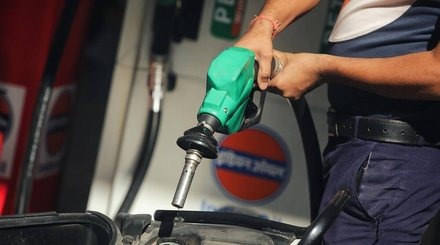
While state-run refiners edge closer to commercial equilibrium on motor fuels due to dropping crude prices, a retail price cut hinges on erasing deep legacy deficits.
NEW DELHI — India’s state-run Oil Marketing Companies (OMCs) are on track to achieve financial break-even on the retail sale of petrol and diesel within the next seven to ten days. The stabilization is contingent on international crude oil benchmarks maintaining their current downward trajectory, which has thrown a lifeline to public sector refiners currently processing cheaper product.
Add businessleague.in as a Preferred Source


However, the operational relief is uneven. Even as fuel margins correct, public sector refiners continue to shoulder heavy under-recoveries, dropping roughly ₹500 on every domestic LPG cylinder sold nationwide.
Also read | Parliament’s Monsoon Session to Begin From July 20: Check Government’s High-Stakes Legislative Agenda
1. The Numbers Behind India’s Energy Deficit
The approach to break-even follows an incredibly brutal quarter for state-backed energy corporations, who collectively absorbed massive financial shocks to insulate domestic consumers from international conflicts:
-
Q1 Collective Losses: Public sector refiners registered a collective deficit exceeding ₹75,000 crore during the first quarter of the current fiscal period.
-
Accumulated Fuel Drag: According to Union Oil Minister Hardeep Singh Puri, the cumulative deficit on petrol, diesel, and subsidized LPG stands exactly at ₹74,781 crore, driven by selling fuel below baseline cost metrics for over four consecutive months.
-
Retail Hike Context: Retail fuel rates across India have scaled up by approximately ₹7.5 per liter since May 15, marking an administrative adjustment trailing two-and-a-half months after the onset of the US-Iran geopolitical conflict.
Also read | Parliament’s Monsoon Session to Begin From July 20: Check Government’s High-Stakes Legislative Agenda
2. Global Crude Benchmarks vs. Domestic Realities
While private entities like Nayara Energy have proactively cut retail prices at their pumps, state-run corporations are prioritizing balance sheet recovery over immediate consumer price cuts.
| Metric Component | Current Price Level | Strategic Outlook |
| Global Brent Crude | ~$72 / barrel | Retreated to a four-month low; matches pre-conflict baselines. |
| Indian Crude Basket | $67 – $68 / barrel | Offers immediate discount advantages for domestic refining margins. |
| Projected Recovery Window | 6 – 12 Months | Timeline required for OMCs to recoup legacy losses if crude stays at ~$75. |
Industry experts emphasize that slashing pump prices before OMCs return to core profitability would function as an unsustainable indirect subsidy. Such an intervention would demand aggressive central budgetary injections or deep rollbacks of existing excise duties. Historically, during periods of depressed global oil pricing, the government has prioritized rebuilding fiscal reserves and strengthening OMC balances over immediate consumer pass-throughs.
3. Supply Intervention: OPEC+ Authorizes Output Hikes
A key catalyst behind the sliding crude prices is the active intervention of the OPEC+ alliance. Led by Saudi Arabia and Russia, the group finalized a virtual resolution to increase global supply volumes.
Despite these aggressive quota expansions on paper, real-world deliveries have faced severe physical blockades. Recent US-Israel exchanges targeting Iranian assets disrupted maritime transport networks traveling through the critical Strait of Hormuz. Previously handling more than 20% of global oil volumes, the bottlenecked waterway has seen traffic ease due to the continuous flow of Iranian crude—settled in US dollars—and supplementary exports emerging from Venezuela.
Also read | Parliament’s Monsoon Session to Begin From July 20: Check Government’s High-Stakes Legislative Agenda
Add businessleague.in as a Preferred Source
🙏 Support Independent Journalism
We keep news free for you.
Most readers support with ₹500 ❤️
or scan QR below

Voluntary contribution. No tax benefits.
DISCLAIMER
We have taken all measures to ensure that the information provided in this article and on our social media platform is credible, verified and sourced from other Big media Houses. For any feedback or complaint, reach out to us at businessleaguein@gmail.com