
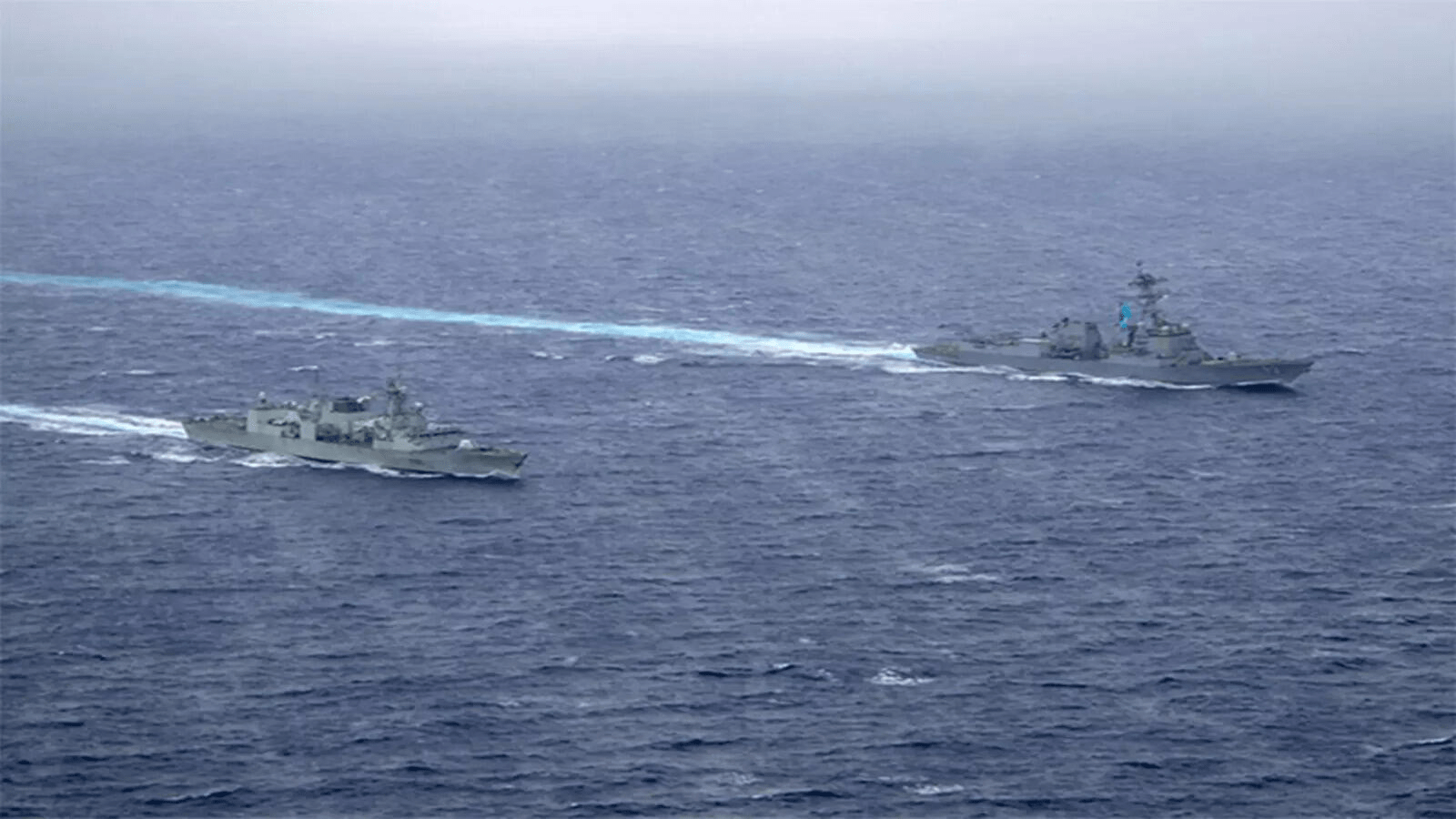
Now the geopolitical chessboard of the 21st century is undergoing a rapid and decisive realignment. On Tuesday, April 28, 2026, the United States formally recognized India as the linchpin of its regional security architecture. Therefore, the US India Indo-Pacific strategy China monitoring has reached a critical peak. In a landmark testimony to lawmakers, US Indo-Pacific Command chief Admiral Samuel Paparo broke his silence, describing the military partnership with New Delhi as one of Washington’s highest priorities. Specifically, the Pentagon is moving beyond traditional exercises into deep-tier cooperation, including intelligence coordination and underwater domain awareness, to counter the “complex security challenges” posed by China’s growing ties with Russia and North Korea.
Add businessleague.in as a Preferred Source


Meanwhile, Washington is positioning India as a “source of stability” that maintains the balance of power across South Asia and the Indian Ocean.
But for the Pentagon, the ultimate goal is a “free, secure, and balanced” region where India’s investments in Sri Lanka and Mauritius act as a bulwark against hostile influence.
Also Read |Tamil Nadu Voter List Purge: 97 Lakh Names Deleted in SIR Phase 1
Admiral Paparo’s Testimony: Why India is Washington’s Priority
Now we must analyze the weight of the words coming out of the Indo-Pacific Command. Admiral Paparo did not mince words when he told lawmakers that India is a “priority” source of stability. Therefore, the US India Indo-Pacific strategy China focuses on is no longer just about trade; it is about total military alignment.
Building the Closest Partnership
First, the Admiral noted that the defense ties between the two nations have become one of the closest military partnerships for the United States. Then, he highlighted that this relationship is the primary “strategic strength” in the region. Thus, the US is looking to India to lead the “southern flank” of its containment strategy. Next, the focus has shifted toward high-end operational coordination in “sensitive regions.” Therefore, Paparo’s testimony signals a definitive end to the era of Washington viewing New Delhi as just a transactional partner.
The MQ-9B SeaGuardian: A Game Changer for Maritime Surveillance
Now, the hardware is catching up with the rhetoric. India’s plan to acquire MQ-9B drones from the United States is being cited as a pivotal moment in defense technology cooperation.
Long-Range Strategic Monitoring
First, the MQ-9B is specifically built for long-range, high-altitude surveillance. Then, these drones will provide the Indian Navy with 24/7 monitoring capabilities over the vast reaches of the Indian Ocean. Thus, India can track the movement of hostile submarines and surface vessels with unprecedented precision. Next, the integration of these platforms will facilitate better joint training and operational synchronization with the US Navy. Therefore, the MQ-9B acquisition is the “technological glue” holding the US India Indo-Pacific strategy China counter-play together.
Underwater Domain Awareness: The New Frontier of Defense
Now, the partnership is moving beneath the surface. Admiral Paparo specifically mentioned “underwater domain awareness” as a growing area of cooperation.
Tracking the Silent Threat
First, China has significantly increased its submarine activity in the Indian Ocean. Then, the US and India are collaborating on advanced sonar technology and data sharing to track these silent threats. Thus, the “underwater frontier” is becoming as contested as the South China Sea. Next, this coordination allows for a “shared operating picture,” where Indian and American sensors work in tandem. Therefore, the US India Indo-Pacific strategy China monitors is now a multi-layered defense shield that covers the seabed to the sky.
Also Read |Tamil Nadu Voter List Purge: 97 Lakh Names Deleted in SIR Phase 1
India’s Indian Ocean Footprint: Sri Lanka and Mauritius
Now, the Pentagon has formally acknowledged India’s role as the “net security provider” in the region. Admiral Paparo pointed to New Delhi’s recent investments as a source of stability.
Outmaneuvering Hostile Influence
First, India’s strategic investments in Sri Lanka have helped stabilize its neighbor’s economy while securing critical port access. Then, the agreements with Mauritius have expanded India’s maritime reach into the southwestern Indian Ocean. Thus, these steps ensure that important maritime infrastructure remains outside the influence of “hostile powers.” Next, the US sees this as India taking the lead in securing its own backyard. Therefore, the strategic alignment allows the US to focus its resources on the Pacific, knowing that the Indian Ocean is under capable supervision.
The Quad and Malabar: Improving Operational Readiness
Now the multilateral framework is being sharpened. The Quad—comprising the US, India, Japan, and Australia—is no longer just a talk shop but a functional military alignment.
Operational Readiness
First, joint exercises like the Malabar naval drills are helping improve the “muscle memory” of coordination between the four navies. Then, these drills focus on shared training and real-world operational readiness. Thus, the partner nations can act as a single cohesive unit during a crisis. Next, the Quad’s focus remains on maintaining a “free and secure” Indo-Pacific. Therefore, the US India Indo-Pacific strategy China concerns are being met with a “unified front” that makes any unilateral aggression by Beijing significantly riskier.
China, Russia, and North Korea: The “Triple Threat” Pivot
Now Admiral Paparo raised serious concerns over the “complex security challenges” emerging from a new axis of power. The growing ties between China, Russia, and North Korea have fundamentally changed the risk assessment.
A Volatile Alignment
First, China’s military activities are no longer isolated incidents but part of a coordinated push with Moscow and Pyongyang. Then, these developments threaten to destabilize the established rules-based order in the Asia-Pacific. Thus, the US-India partnership is being viewed as the “anchor” that prevents this triple threat from dominating the region. Next, the US official emphasized that allies and partners are Washington’s greatest asset in this high-stakes environment. Therefore, the alliance with India is not just a choice, but a requirement for regional peace.
Also Read |Tamil Nadu Voter List Purge: 97 Lakh Names Deleted in SIR Phase 1
Deterring Pakistan: India’s Commitment to Regional Readiness
Now, despite the focus on the Indo-Pacific, Admiral Paparo noted that India remains vigilant on its western border. Traditional disputes with Pakistan have evolved into more complex military situations.
Beyond Traditional Areas
First, recent military situations have gone beyond historical friction points, requiring a broader defense readiness. Then, India has remained committed to maintaining a credible deterrence at the regional level. Thus, the Indian military is effectively managing a “two-front” challenge while simultaneously expanding its naval presence. Next, the US official praised India’s ability to source stability even while dealing with active border tensions. Therefore, the US India Indo-Pacific strategy China is being track is part of India’s larger role as a mature, multi-spectrum regional power.
The Lawmakers’ View: Trust as the Currency of Alliances
Now the political sentiment in Washington is as strong as the military one. During the hearing, US lawmaker Adam Smith emphasized that the strength of the strategy depends entirely on “trust.”
The Reassurance Mandate
First, Smith noted that the US must reassure its allies that it will “stand with them when needed.” Then, this sentiment was echoed across the committee, highlighting a bipartisan consensus on India’s importance. Thus, the strategic alignment is built on a foundation of shared democratic values and common threats. Next, the growing trust between the Pentagon and the Indian Ministry of Defence is the primary driver of this “new era.” Therefore, the US India Indo-Pacific strategy China watches is a reflection of a long-term commitment that transcends individual political administrations.
Common Questions Answered
What is the “New Indo-Pacific Strategy” mentioned by the Pentagon? Now, it describes India as a primary partner to maintain a “free and secure” region. Therefore, it focuses on naval security, intelligence sharing, and countering China’s growing military influence.
How do the MQ-9B drones help the US-India partnership? First, they provide 24/7 long-range surveillance of the Indian Ocean. Thus, India and the US can share data to track hostile submarine and surface movements with high precision.
Why did Admiral Paparo call India a “source of stability”? Next, because India is successfully balancing regional tensions while securing critical infrastructure in Sri Lanka and Mauritius. Therefore, it acts as a “net security provider” in the region.
What is the role of the Quad in this strategy? So, the Quad (US, India, Japan, Australia) works on operational readiness through exercises like Malabar. Thus, it creates a unified front against unilateral aggression in the Indo-Pacific.
What are the main security concerns raised by the Pentagon? Finally, Admiral Paparo raised concerns over China’s military activities and its deepening ties with Russia and North Korea. Therefore, the partnership with India is the primary strategic counter-move.
Also Read |Tamil Nadu Voter List Purge: 97 Lakh Names Deleted in SIR Phase 1
End…
Add businessleague.in as a Preferred Source
🙏 Support Independent Journalism
We keep news free for you.
Most readers support with ₹500 ❤️
or scan QR below

Voluntary contribution. No tax benefits.
DISCLAIMER
We have taken all measures to ensure that the information provided in this article and on our social media platform is credible, verified and sourced from other Big media Houses. For any feedback or complaint, reach out to us at businessleaguein@gmail.com