CBSE Eases Three-Language Rules: One-Time Relaxation for Classes 7 to 9 to Avoid Mid-Session Foreign Language Disruption
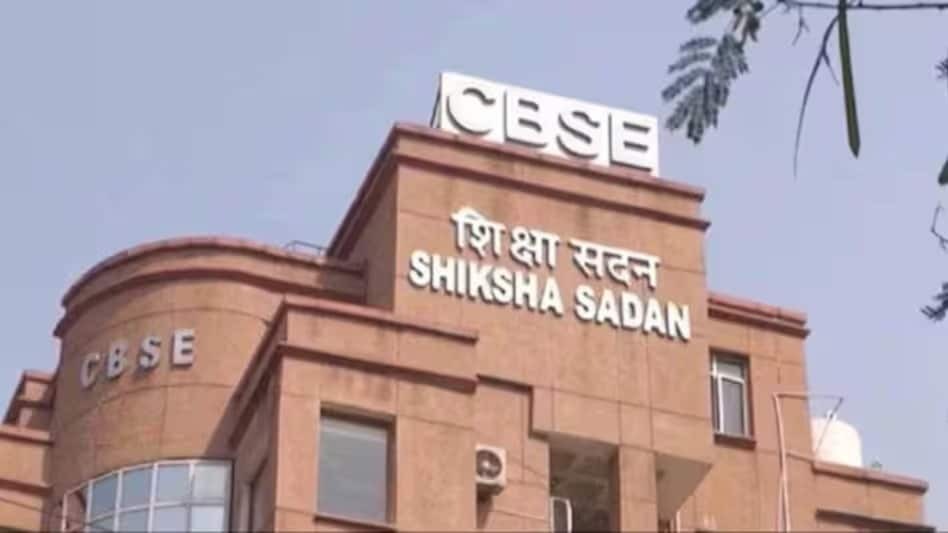
NEW DELHI — In a major administrative pivot that brings massive relief to thousands of students, parents, and educators across India, the Central Board of Secondary Education (CBSE) issued a definitive set of implementation guidelines regarding its mandatory three-language policy on Monday. The updated directive introduces critical, one-time structural relaxations designed to prevent academic disruption for the ongoing 2026-27 academic session.
Add businessleague.in as a Preferred Source


The emergency revisions come on the heels of intense public pushback and political scrutiny. A prior May circular from the board had forced schools to abruptly transition Class 9 students into a strict three-language framework mid-session, requiring at least two languages to be native Indian languages (Bhartiya Bhashas). The sudden move had severely jeopardized students already deeply invested in elective foreign languages like French, German, Japanese, and Spanish.
Strategic Relaxations for Current Batches
Acknowledging these systemic anxieties, Union Education Minister Dharmendra Pradhan clarified that student progression will not be compromised. The board’s revised position balances the core cultural objectives of the National Education Policy (NEP) 2020 while heavily mitigating immediate student distress.
Also Read | Automated Insurance Settlement: Inside the Aarogya Setu 2.0 App Features Architecture
“While CBSE aims to equip learners with competence in multiple Bhartiya Bhashas and promote the vibrancy of language learning, it is equally committed to ensuring that the process of learning and growth remains balanced,” the board stated in an official press release.
CBSE Language Policy Roadmap (2026-27 Session onward):
├── Class 10 (Current Batch)
│   └── Exempted: Continues under old 2-language system. No third language required.
├── Classes 7, 8, & 9 (Current Batches)
│   └── Special Relaxation: Keep foreign languages + add 1 Bhartiya Bhasha. School-level internal evaluation only.
└── Class 6 (Current & Future Batches)
    └── Strict Alignment: 2 Bhartiya Bhashas mandatory. Board examination required when reaching Class 10.
Practical Class 9 Enrollment Scenarios
To clear prevailing operational confusion among school administrators—particularly in regions like Karnataka and Tamil Nadu—the board outlined three specific enrollment scenarios for Class 9 configurations under the 2026-27 academic umbrella:
-
Scenario 1 (Dual Native Base): Students already studying two native Indian languages (e.g., Hindi + Tamil) may freely opt for a third language, choosing either another Bhartiya Bhasha or any non-native elective such as English or French.
-
Scenario 2 (Mixed Base): Students taking one native Indian language and one non-native language (e.g., Tamil + English) are simply required to pick any Bhartiya Bhasha as their third language (R3).
-
Scenario 3 (Dual Non-Native Base): In a crucial, one-time relaxation, students currently studying two non-native languages (e.g., English + French) are permitted to continue with both, provided they introduce one Bhartiya Bhasha into their schedule as a third language.
Also Read | Automated Insurance Settlement: Inside the Aarogya Setu 2.0 App Features Architecture
Exemption Criteria & Evaluation Blueprints
Crucially, for the current batches of Classes 7, 8, and 9, this newly introduced third language will not be subject to heavy central testing. Instead, it will be evaluated strictly via internal, school-based continuous assessments. These specific batches are completely exempt from taking a centralized CBSE Board examination for the third language when they advance to Class 10.
To address severe systemic textbook and staffing shortages reported by institutions in states like Nagaland, the board has authorized highly flexible recruitment models. Schools are actively encouraged to deploy part-time retired instructors, utilize inter-school resources within local Sahodaya clusters, or establish hybrid, virtual classrooms.
Furthermore, targeted text materials for Class 6 across 22 Scheduled Bhartiya Bhashas have been uploaded directly to the NCERT portal, ensuring that long-term multilingual goals remain grounded in accessible, rote-free academic infrastructure.
Also Read | Automated Insurance Settlement: Inside the Aarogya Setu 2.0 App Features Architecture
FAQ
What counts exactly as a “Bhartiya Bhasha” under the new CBSE rules?
Under the central board’s classification guidelines, a Bhartiya Bhasha refers to native Indian languages. This primarily encompasses the languages recognized under the Eighth Schedule of the Constitution, such as Hindi, Sanskrit, Tamil, Telugu, Kannada, Malayalam, Marathi, Bengali, Punjabi, Gujarati, Odia, and Assamese. Non-native languages include English, French, German, Spanish, and Arabic.
Will my child face a board exam for the newly added third language in Class 10?
If your child is currently enrolled in Class 7, 8, or 9 for the 2026-27 academic session, they are completely exempt from a centralized board exam for that third language. Their proficiency will be marked strictly through school-level internal assessments. However, students currently in Class 6 and below will have to appear for a formal CBSE board exam for their third language when they reach Class 10.
How are schools expected to find teachers for these additional Indian languages?
Recognizing that many schools face immediate staff constraints, CBSE has introduced highly flexible resource guidelines. School managements are permitted to utilize existing teachers with functional language proficiencies, hire qualified retired educators, engage postgraduate local scholars, or utilize virtual and hybrid learning platforms via Sahodaya school networks to share language instructors.
Also Read | Automated Insurance Settlement: Inside the Aarogya Setu 2.0 App Features Architecture
Add businessleague.in as a Preferred Source
🙏 Support Independent Journalism
We keep news free for you.
Most readers support with ₹500 ❤️
or scan QR below

Voluntary contribution. No tax benefits.
DISCLAIMER
We have taken all measures to ensure that the information provided in this article and on our social media platform is credible, verified and sourced from other Big media Houses. For any feedback or complaint, reach out to us at businessleaguein@gmail.com