


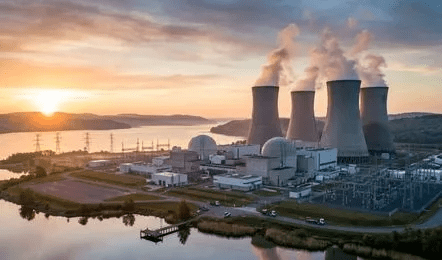
Now the geopolitical and energy landscape of South Asia has reached a historic turning point. On Thursday, April 30, 2026, Bangladesh officially began the fuel loading process at its first nuclear power plant in Rooppur, marking its entry into the prestigious global nuclear club. Therefore, the Bangladesh Rooppur nuclear plant India impact is being closely analyzed by strategic experts in New Delhi. Specifically, the facility utilizes Russia’s state-of-the-art VVER-1200 Generation III+ pressurized water reactor technology. Located in Pabna, approximately 160 kilometers from Dhaka, this $13 billion project represents one of the largest infrastructure investments in the nation’s history.
Add businessleague.in as a Preferred Source


Meanwhile, while the plant promises to provide up to 12 percent of Bangladesh’s electricity needs, it also tightens the strategic embrace between Moscow and South Asia.
But for India, the development is particularly significant because the same advanced Russian technology is currently being considered for the next phase of expansion at the Kudankulam nuclear site.
Also Read |Tamil Nadu Voter List Purge: 97 Lakh Names Deleted in SIR Phase 1
Rooppur Unit 1: The Critical Fuel Loading Milestone
Now we must understand the technical gravity of “fuel loading.” It is the definitive transition from a construction site to a live nuclear facility. Therefore, the Bangladesh Rooppur nuclear plant India impact is now a physical reality.
The First Step to Fission
First, the fuel loading indicates that Unit 1 has passed its structural and mechanical tests. Then, the reactor will gradually be brought to a stable and controlled power level through a series of “criticality” tests. Thus, the plant is on its way to becoming a permanent part of the national grid. Next, the formal handover of the first unit is planned for the end of 2026. Therefore, Bangladesh has successfully navigated the complex regulatory and technical hurdles required to manage a high-tech nuclear asset.
Russian VVER-1200 Tech: The Shared Link Between Dhaka and Delhi
Now, the use of the VVER-1200 reactor in Rooppur has created a technological bridge across the subcontinent. This reactor is part of Rosatom’s latest line, offering enhanced passive safety systems.
Standardizing South Asian Nuclear Power
First, the VVER-1200 is designed to withstand extreme external impacts, including aircraft crashes. Then, it offers a higher efficiency rate and a longer service life compared to previous models. Thus, both Bangladesh and India are effectively standardizing their long-term nuclear energy on Russian designs. Next, Rosatom has confirmed that technical work is already underway for new plants in India based on this exact VVER-1200 blueprint. Therefore, the success of the Rooppur project serves as a live “case study” for India’s own future nuclear expansion.
Energy Security: Reducing Reliance on Indian Electricity Imports
Now, the primary driver for Dhaka is energy independence. For years, Bangladesh has been a significant importer of electricity from India to sustain its industrial growth.
Shifting the Trade Balance
First, Science and Technology Minister Fakir Mahbub Anam stated that Rooppur will strengthen national security by diversifying the energy mix. Then, once fully operational, the plant will contribute 10 to 12 percent of the country’s total power. Thus, while Bangladesh will continue to import Indian electricity in the short term, the volume is expected to reduce significantly over time. Next, this allows the country to insulate its industrial sector from the price volatility of the global fuel market. Therefore, the Bangladesh Rooppur nuclear plant India impact will eventually be felt in the cross-border energy trade balance.
Also Read |Tamil Nadu Voter List Purge: 97 Lakh Names Deleted in SIR Phase 1
Strategic Financing: Moscow’s $13 Billion Loan for Bangladesh
Now we must analyze the financial architecture that made this possible. Nuclear plants are notoriously capital-intensive, and Russia has provided a massive lifeline.
The 90 Percent Loan
First, the Russian government is financing nearly 90 percent of the $13 billion project cost through a state-backed loan. Then, this arrangement allows Bangladesh to build a world-class facility without immediate catastrophic pressure on its foreign exchange reserves. Thus, Moscow has secured a decades-long relationship with Dhaka through fuel supply and maintenance contracts. Next, this financial commitment mirrors Russia’s approach with India’s Kudankulam project. Therefore, the Rooppur plant is as much a diplomatic victory for Moscow as it is a technical one for Dhaka.
Safety and Efficiency: What Makes Generation III+ Different?
Now, following global concerns over nuclear safety, the VVER-1200 was built to the highest international standards. It is categorized as a “Generation III+” system.
Redundant Safety Layers:
-
Passive Heat Removal: A system that works without power to cool the reactor in an emergency.
-
Double Containment: Two layers of reinforced concrete to prevent radiation leaks.
-
Core Catcher: A device designed to safely contain the core melt in the unlikely event of an accident.
First, these features were integrated to ensure the plant can operate safely in the densely populated Pabna region. Then, the plant’s high efficiency ensures that the cost per unit of electricity remains competitive. Thus, the Bangladesh Rooppur nuclear plant India impact includes a shared regional safety protocol for Russian reactors. Next, the VVER-1200 is specifically designed to be “walk-away safe” for extended periods during a power failure. Therefore, the project aims to set a new benchmark for nuclear reliability in the Global South.
Kudankulam Comparison: India’s Roadmap for Russian Reactors
Now, India’s Kudankulam plant in Tamil Nadu is the precursor to the Rooppur project. India currently operates VVER-1000 units, which have been commercially active since 2014.
The Expansion Path
First, India is currently working on Units 3 through 6 at Kudankulam. Then, for the proposed fourth phase of expansion (Units 7 and 8), India is expected to skip the VVER-1000 and move directly to the larger, more advanced VVER-1200 design seen in Rooppur. Thus, Bangladesh is currently “testing” the very technology that will become the backbone of India’s next-gen nuclear fleet. Next, this shared technology allows for regional cooperation in training, spare parts, and nuclear waste management. Therefore, New Delhi is keeping a close watch on the Rooppur commissioning process to gather vital operational data.
Also Read |Tamil Nadu Voter List Purge: 97 Lakh Names Deleted in SIR Phase 1
Commissioning Phase: The Road to Full Power by 2027
Now, although fuel loading has begun, the lights in Dhaka won’t be powered by nuclear energy overnight. The commissioning phase is a slow and meticulous process.
The Timeline to 2027
First, the reactor must reach stable and controlled power levels through low-power testing. Then, the steam turbines will be synchronized with the national grid to begin trial electricity generation. Thus, full-scale commercial output is only expected by mid-2027 after several stages of calibration. Next, the plant will go through a series of “stress tests” to ensure the cooling systems are operating perfectly. Therefore, the Bangladesh Rooppur nuclear plant India impact will be a gradual shift in the regional energy market rather than a sudden shock.
Regional Stability: Nuclear Energy in a Volatile Market
Now, finally, we must consider the broader South Asian context. Bangladesh joining the nuclear club is a signal of the region’s growing industrial ambition.
Industrial Development
First, nuclear energy provides the base-load power required for heavy industries and a “technology-driven” economy. Then, it reduces the pressure on the national grid, which has long struggled with imported fuel costs. Thus, Bangladesh is setting a precedent for other developing nations in the region. Next, the plant’s 2.4-gigawatt capacity will be a game-changer for the Pabna industrial belt. Therefore, the Rooppur project is a definitive statement that Bangladesh is no longer just a garment-exporter but a rising regional energy power.
Common Questions Answered
What technology is being used in the Rooppur nuclear plant? Now, the plant uses Russia’s latest VVER-1200 Generation III+ pressurized water reactor. Therefore, it is among the most advanced safety-rated reactors in the world.
Why is India alert regarding this development? First, because India is also planning to use the same VVER-1200 technology for its future expansion at Kudankulam. Thus, Bangladesh’s project serves as an operational blueprint.
Will Bangladesh stop importing electricity from India? Next, the report suggests that while imports will continue, the volume will likely reduce once the 2.4GW plant is fully operational. Therefore, it changes the trade dynamic.
How much does the Rooppur project cost? So, the total cost is approximately $13 billion, with Russia financing 90 percent of the amount through a state loan.
When will the Rooppur plant begin full commercial operations? Finally, while fuel loading has started today in April 2026, full-scale commercial output is expected in 2027 after rigorous testing.
Also Read |Tamil Nadu Voter List Purge: 97 Lakh Names Deleted in SIR Phase 1
End…
Add businessleague.in as a Preferred Source

