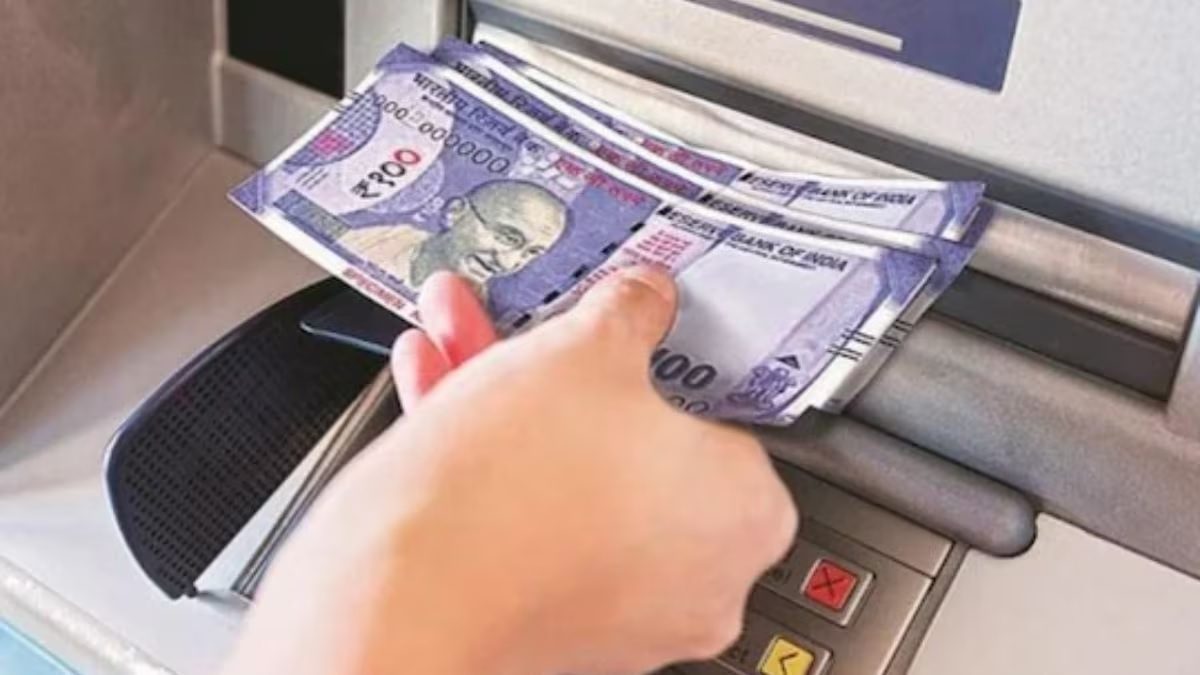
ATM Cash Shortage: ATMs across the country are currently grappling with a cash crunch. India has a record ₹ 42.54 lakh crore in currency circulation. Despite this, ATMs may experience cash shortages as operators are facing challenges refilling the machines.
Add businessleague.in as a Preferred Source


ATM Cash Shortage: The coming days could be very troublesome for the common citizens of the country. A major crisis is looming over India’s ATM network, which may make it difficult for you to withdraw money in the coming time. According to Reserve Bank of India (RBI) data, the total value of currency in circulation as of May 22 was a record ₹ 42.54 lakh crore, which is about 12% more than a year ago. Despite this, ATM operators are warning that some machines may run out of cash.
The Confederation of ATM Industry (CATMi), an organization representing ATM operators, cash logistics companies, and service providers, has indicated a significant shortage of cash available to replenish ATMs. According to a report in Business Standard, industry estimates indicate that operators received only 64% of their cash needs in March and 57% in April.
In such a situation, the question arises that if there is more cash in the system than before, then why is there a problem in withdrawing cash from ATM?
Why are ATM operators warning of cash shortage?
According to CATMi, ATM operators needed approximately ₹ 94,000 crore to replenish cash in both March and April. However, only ₹ 61,000 crore was received in March and ₹ 54,000 crore in April. This means that only 64% of the cash needs were met in March and 57% in April.
Operating an ATM is proving to be expensive.
Operating an ATM network is proving to be expensive . Each machine requires periodic cash replenishment, transportation, security, maintenance, and monitoring. These costs have risen sharply over the past few years. Fuel prices are high, wages have increased, and the cost of transporting cash has also become more expensive.
ATM usage is declining
RBI data shows that ATM transactions fell to 446.5 million in May from 498.4 million a year earlier, a drop of more than 10%. Total withdrawals also fell from approximately ₹ 2.64 trillion to ₹ 2.5 trillion. This means operators are handling fewer transactions, while incurring higher operating costs.
This trend has accelerated due to the rapid adoption of UPI . Although ATM usage has declined due to digital payments, operators still have to maintain the same infrastructure for customers who still rely on cash.
Who is likely to be most affected?
This is likely to have the greatest impact on those who rely on cash for their daily needs . For many people in large cities, an ATM running out of cash can be a minor inconvenience. They can usually find another ATM nearby or use UPI and other digital payment methods instead. However, the situation can be more difficult for the elderly, pensioners, beneficiaries of government schemes, farmers, and small businesses, as they rely heavily on cash withdrawals.
Rural and semi-urban areas may be most affected. Many people in these areas use ATMs to withdraw pensions, government benefits, and other payments that come directly into their bank accounts. If an ATM runs out of cash, the nearest alternative may be far away. Digital payments are becoming more common, but they may not always be an option due to poor internet connectivity or limited use in some areas.
Can banks be fined if ATMs run out of cash?
Yes.
If an ATM runs out of cash for longer than a certain period of time, the RBI can impose penalties. Banks are expected to replenish ATMs in a timely manner and ensure customers have easy access to cash. However, occasional ATM cash outages are less likely to result in penalties. The RBI focuses on recurring or prolonged cash shortages that affect a large number of customers. If cash shortages occur frequently or on a large scale, banks may face regulatory action.
Should customers worry?
No, not really.
Warnings from ATM operators do not mean that your deposits are at risk. Your money remains safe in your bank account, whether or not cash is available at ATMs on a given day. It also does not mean that there is a currency shortage across the economy. In fact, RBI data shows that cash in circulation is steadily increasing. However, customers may occasionally experience difficulties withdrawing cash, especially in smaller towns and rural areas, where ATM refills may be affected.
An easy way to deal with this is to avoid relying solely on cash or a single ATM. Keep digital payment options like UPI active and consider keeping a small amount of cash on hand for emergencies. This way, even if the nearest ATM goes cashless for a while, your daily transactions are less likely to be disrupted.
Read More: Masked as Omani Fuel: US Exposes the Multi-Million Dollar Shell Network Buying Iranian Gas
Add businessleague.in as a Preferred Source
🙏 Support Independent Journalism
We keep news free for you.
Most readers support with ₹500 ❤️
or scan QR below

Voluntary contribution. No tax benefits.
DISCLAIMER
We have taken all measures to ensure that the information provided in this article and on our social media platform is credible, verified and sourced from other Big media Houses. For any feedback or complaint, reach out to us at businessleaguein@gmail.com