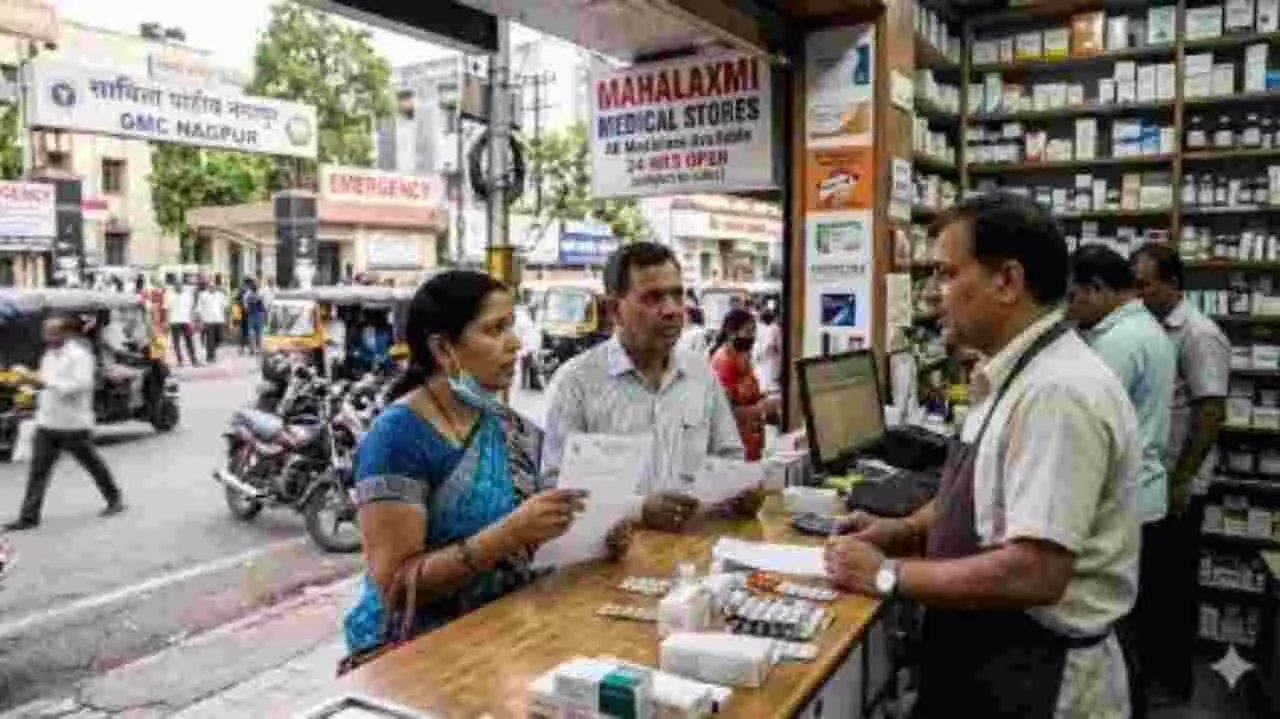
Now the nationwide distribution network supplying critical healthcare formulations across the country is preparing for a highly contentious, single-day administrative freeze. The All India Organisation of Chemists and Druggists (AIOCD) has formally called for a massive nationwide chemist strike on Wednesday, May 20, 2026. Therefore, chronic disease patients and local emergency care managers are actively checking regional stock files to protect treatment schedules. Meanwhile, the core industrial grievance targets the aggressive pricing models and deep discounts used by leading online electronic pharmacy channels. Following explicit policy choices by multiple state-level pharmaceutical bodies to pull out from the shutdown entirely, the final impact of the bandh is expected to remain highly localized.
Add businessleague.in as a Preferred Source


Also Read |Tamil Nadu Voter List Purge: 97 Lakh Names Deleted in SIR Phase 1
At a Glance: Medical Store Operational Status (May 20, 2026)
| PHARMACY OUTLET SECTOR | ANTICIPATED STATUS TIER | ALTERNATIVE LOGISTICS SAFETY NODE |
| Hospital Pharmacy Counters | Fully Operational (Open) | Uninterrupted emergency treatment access lines |
| Jan Aushadhi Kendras | Fully Operational (Open) | Stable supplies of essential generic alternatives |
| Corporate Pharmacy Chains | Fully Operational (Open) | Standard digital billing and inventory tracking |
| AMRIT Pharmacy Stores | Fully Operational (Open) | Specialized oncology and cardiovascular access |
| Independent Local Chemists | Partial Disruptions (Varies) | High compliance risk across striking urban centers |
| Wholesale Drug Distributors | High Disruption (Closed) | Temporary freezes impacting stock deliveries |
The Core Grievance: Unpacking the E-Pharmacy Price War Contradictions
Now the underlying commercial tension driving traditional medical store owners to lock their display shutters centers on a massive digital pricing gap. Small neighborhood pharmacies operate with fixed brick-and-mortar overhead costs that severely limit their capability to adjust retail prices dynamically. Therefore, traditional trade groups are launching public campaigns to call out the aggressive financial strategies used by app-based competitors.
First, look at the margin pressures: digital distribution networks routinely offer massive price cuts ranging from 20 to 50 per cent on everyday maintenance drugs. Next, this aggressive undercutting has systematically redirected high-volume customer lines away from physical local marketplaces straight onto smartphone screens. Thus, local operators argue that the unregulated expansion of digital pharmacies creates a highly uneven playing field.
So the resulting drop in daily cash volumes threatens the financial survival of thousands of independent pharmacists positioned across tier-2 and tier-3 towns. This financial squeeze explains why traditional neighborhood distributors are joining the unified protest call so aggressively. Meanwhile, consumer rights groups are highlighting that internet discounting tools provide a valuable shield for low-income families managing high medical expenses. Therefore, the core pricing dispute sets up a highly complex policy challenge for central trade regulators.
The Regulatory Loopholes: Demystifying GSR 220(E) and GSR 817(E)
Now crossing over to the specific legal documentation driving this national-level gridlock reveals deep complaints regarding state administrative rules. The AIOCD has centered its entire legal platform on a fierce rejection of two primary government notifications. Therefore, the association is challenging the current statutory boundaries in court to demand an overhaul of the sector’s tracking systems.
First, the organization highlights the historical language contained within statutory decrees GSR 220(E) and GSR 817(E). Next, corporate lawyers for the association argue that these specific definitions created massive gaps that allow online portals to deliver medicines without matching traditional safety inspections. Thus, the mechanical necessity of enforcing strict prescription checks is frequently bypassed by automated checkout screens.
[Government Notifications: GSR 220(E) & 817(E)] ──► Created Early Framework Parameters for E-Pharmacies
                                                             │
                                                             ▼ (AIOCD Legal Challenge)
[Perceived Structural Enforcement Loopholes]     ──► Allows App-Based Portals to Avoid Local Licensing Checks
                                                             │
                                                             ▼
[May 20 Nationwide Shutdown Protest]             ──► Demands immediate Legislative Overhauls to Level the Market
So the lack of a single, unified legal blueprint exposes the broader consumer population to real quality risks from unverified vendors. Local regulatory desks emphasize that passing complex compounds through unregulated delivery networks complicates standard drug traceability efforts during public recalls. Meanwhile, web platforms maintain that their automated data logging setups provide better records than old-school paper books. Therefore, the battle over the GSR notifications remains a central pillar of tomorrow’s industrial strike.
Also Read |Tamil Nadu Voter List Purge: 97 Lakh Names Deleted in SIR Phase 1
The Sovereign Shield: Why Government and Chain Pharmacies Stay Open
Now despite the massive scale of the protest call published by the central organization, patients will not experience a complete collapse in access. The central government has taken strategic steps to secure public medical availability by keeping its state-backed distribution chains running normally. Therefore, the public can bypass striking local shops by using government-supported networks across all urban areas.
-
Operational Emergency Outlets (Staying Open):
-
Jan Aushadhi Kendras: The nationwide generic drug network will preserve standard retail hours.
-
AMRIT Pharmacy Hubs: Specialized counters handling critical oncology and heart conditions will run normally.
-
Hospital-Adjacent Stores: Direct physical pharmacies operating inside public and private clinics face zero closures.
-
Corporate Multi-State Chains: Modern retail brands have ordered their branch operators to ignore the strike commands.
-
First, keeping these core networks active guarantees that emergency medical allocations remain instantly available to patients during critical windows. Next, the state-backed portals utilize independent delivery channels that operate completely separate from the traditional wholesale cartels. Thus, this sovereign distribution layout acts as a vital security buffer to protect public health throughout the action.
The Regional Divide: Mapping the Twelve States Shunning the Shutdown
Now analyzing the geographic tracking maps reveals a massive division in participation that weakens the absolute execution of the bandh. Official intelligence briefs confirmed that at least twelve major states and Union Territories have formally distanced themselves from the strike orders. Therefore, the day-to-day retail environment across these major economic areas will remain relatively calm.
-
Primary Non-Participating Regions:
-
Western Growth Hubs: Maharashtra’s regional pharmacy councils have pulled out from the shutdown completely.
-
Northern Border Lines: Uttar Pradesh and Punjab will maintain normal operations across their main retail centers.
-
Southern Strategic Belts: Karnataka and Kerala have ordered local associations to secure standard client access.
-
Eastern Trading Sectors: West Bengal’s administrative lines have guaranteed that local drug supply networks stay active.
-
First, this regional split shows that state-level chemist associations are increasingly prioritizing daily citizen convenience over central union demands. Next, local administration heads have issued strict warnings that pulling down shutters on essential services could trigger regulatory reviews of trade licenses. Thus, the fear of losing operational permits has forced many local business owners to preserve standard opening routines.
The Wholesale Bottleneck: Evaluating Supply Chain Interruption Metrics
Nowhere does tomorrow’s protest action introduce higher real-world friction than within the primary wholesale procurement networks. While everyday consumers can find open counters at corporate chains, independent local shops rely completely on regional wholesale yards to reload their daily inventories. Therefore, a complete freeze across these master distribution networks could create a significant supply squeeze later this week.
First, look at the supply logistics: wholesale medicine storage blocks in major trade towns are planning a total freeze on outgoing deliveries. Next, this delivery halt blocks the normal movement of bulk pharmaceutical inputs from major factory floors down to localized retail shelves. Thus, the mechanical necessity of maintaining continuous inventory rotation is temporarily broken for standalone chemists.
So while individual retail outlets can typically ride out a single-day supply pause by using their current shelf stocks, an extended dispute would rapidly deplete emergency lines. Local clinic directors are checking their local storage units to verify that they possess enough baseline accessories to manage typical surgical schedules. Meanwhile, central logistics apps are maximizing their transport runs to load extra inventory into non-striking corporate hubs before the morning lockouts take effect. Therefore, managing the wholesale bottleneck remains a primary concern for hospital operations teams.
Also Read |Tamil Nadu Voter List Purge: 97 Lakh Names Deleted in SIR Phase 1
Patient Mitigation Protocols: How to Secure Essential Prescriptions Securely
Now despite the complex corporate arguments separating traditional shops from modern digital portals, individual health safety must remain your top consideration. Adopting a structured personal preparation strategy allows you to easily protect your family’s medication needs from unexpected store closures. Therefore, executing these simple safety protocols ensures that your health management remains completely stable throughout tomorrow’s strike.
First, check your existing medicine drawers immediately to ensure you hold an adequate supply to cover at least the next forty-eight hours. Next, if you require immediate refills for critical cardiac, diabetic, or neurological prescriptions, use open government Jan Aushadhi hubs or visit your nearest major hospital pharmacy. Thus, verifying that you hold a valid, physical copy of your doctor’s latest prescription sheet remains a baseline requirement to guarantee hassle-free checkout service.
So always remember to check the localized operating status of your neighborhood pharmacy before traveling out into summer heatwaves. Utilizing open corporate digital apps can also provide an exceptional backup option to schedule direct home delivery runs in non-participating states. Meanwhile, healthcare networks are instructing public support teams to remain highly alert to guide arriving families toward open state-backed dispensaries. Therefore, staying informed and planning ahead ensures that your family’s health security remains fully protected during this changing retail environment.
FAQ: Vital Clarifications on the May 20 National Pharmacy Strike
1. On what exact date is the nationwide chemist strike scheduled to take place? Now, the All India Organisation of Chemists and Druggists (AIOCD) has called for a one-day nationwide strike tomorrow, Wednesday, May 20, 2026.
2. Why are traditional independent chemists organizing this mass strike action? First, traditional chemists are protesting against unregulated online medicine sales and the steep 20 to 50 per cent price discounts offered by major e-pharmacy platforms.
3. Will all medical stores across India remain closed tomorrow? So, no. All government Jan Aushadhi stores, AMRIT pharmacies, hospital-based counters, and major corporate pharmacy chains will remain fully open.
4. Which specific states have officially distanced themselves from the strike? Next, at least twelve states and UTs—including Maharashtra, Uttar Pradesh, Punjab, Kerala, West Bengal, and Karnataka—have pulled out from the strike.
5. What are the specific regulatory notifications that the AIOCD is protesting against? Now, the protest focuses heavily on government notifications GSR 220(E) and GSR 817(E), which critics claim created legal loopholes for e-pharmacies.
6. Where should a patient go tomorrow if their local neighborhood chemist is closed? Finally, patients can securely obtain their medications by visiting the nearest public or private hospital pharmacy counter, which will operate with normal hours.
Also Read |Tamil Nadu Voter List Purge: 97 Lakh Names Deleted in SIR Phase 1
End…
Add businessleague.in as a Preferred Source
🙏 Support Independent Journalism
We keep news free for you.
Most readers support with ₹500 ❤️
or scan QR below

Voluntary contribution. No tax benefits.
DISCLAIMER
We have taken all measures to ensure that the information provided in this article and on our social media platform is credible, verified and sourced from other Big media Houses. For any feedback or complaint, reach out to us at businessleaguein@gmail.com