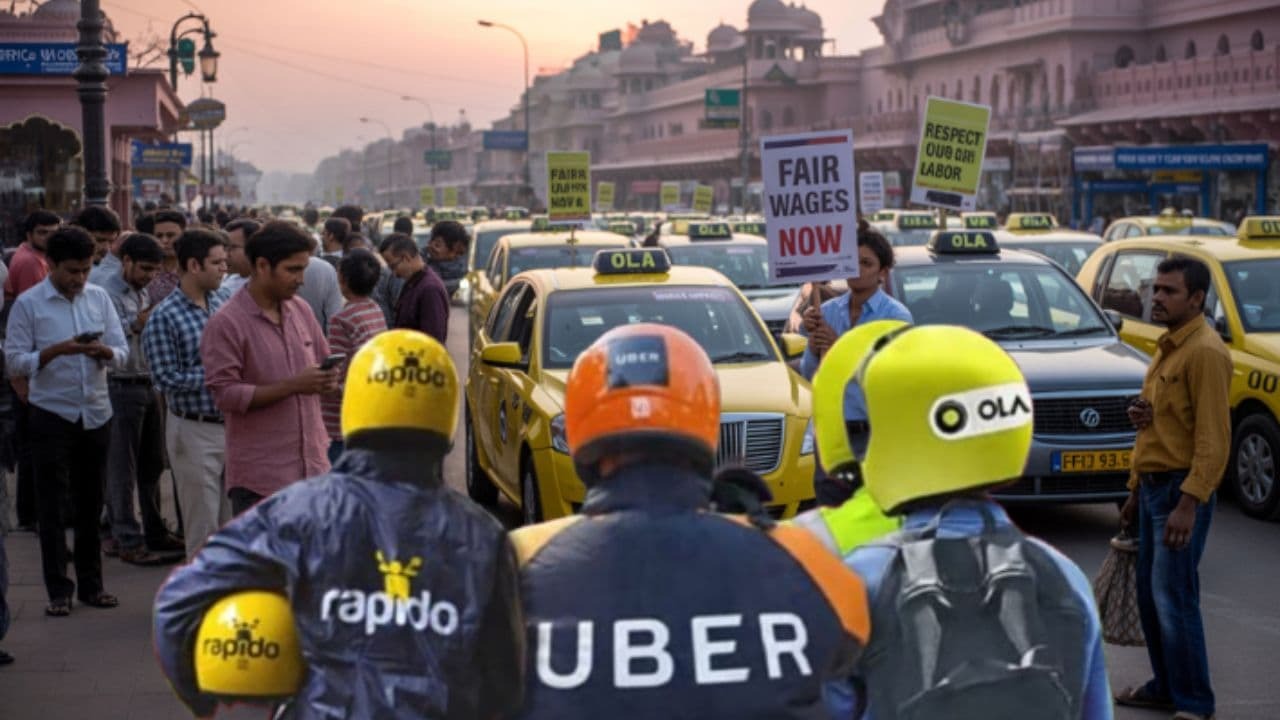
Urban commuting across India is set to face a massive hurdle on Saturday, February 7, 2026. Drivers associated with major ride-hailing aggregators, including Uber, Ola, Rapido, and Porter, have announced a coordinated nationwide strike dubbed the “All India Breakdown.” Led by the Telangana Gig and Platform Workers Union (TGPWU) and backed by several national labor bodies, the protest aims to paralyze app-based transport for at least six hours to protest “endless exploitation.”
Add businessleague.in as a Preferred Source


Also Read |Tamil Nadu Voter List Purge: 97 Lakh Names Deleted in SIR Phase 1
The “All India Breakdown”: Why Drivers Are Logging Off
The decision to log off simultaneously is a “survival signal” from a workforce that underpins urban mobility. Despite the booming gig economy—now involving over 1.2 crore workers in India—the drivers claim their take-home pay has plummeted.
The strike follows a series of protests, including a major disruption on December 31, 2025. This time, however, the focus has shifted from mere pay to regulatory enforcement. Unions argue that while aggregator companies continue to expand, millions of drivers are being pushed toward urban poverty.
Key Demands: Fare Regulation and Social Security
In a formal letter to Union Minister Nitin Gadkari, the unions have outlined a “non-negotiable” list of demands:
-
Notification of Minimum Base Fares: Drivers are demanding a fixed rate per kilometer (roughly ₹25-30 in metros) to prevent apps from lowering prices during demand slumps at the driver’s expense.
-
Commission Caps: A strict limit on the commissions pocketed by aggregators, which currently range between 25% and 40%.
-
Social Security Implementation: Immediate activation of the 2020 Social Security Code, providing accident insurance, health cover (ESI), and provident fund benefits.
-
Algorithmic Transparency: A demand for human evaluation in cases of ID blocking and an end to “algorithm bias” in ride allocation.
Also Read |Tamil Nadu Voter List Purge: 97 Lakh Names Deleted in SIR Phase 1
The Economic Crunch: Why Drivers Are in the “Red”
The financial math for an average driver has become increasingly grim. According to a 2025 Fairwork India report, nearly 85% of drivers log more than 10 hours a day just to make ends meet.
-
Fuel Costs: Petrol and diesel prices have risen by approximately 25% since 2023.
-
Maintenance: Spare parts and service costs now consume nearly 30% of a driver’s gross earnings.
-
Daily Earnings: Average daily income for many cab drivers has stagnated at ₹800-1,000, while survival costs in cities like Delhi or Bengaluru exceed ₹1,500 for a family.
The “White Board” Controversy: Commercial vs. Private Vehicles
A major point of contention in the February 7 strike is the “illegal” use of private, non-commercial (white-plate) vehicles for bike taxis and goods delivery. Licensed commercial drivers argue that these private vehicles bypass commercial taxes and insurance requirements, allowing aggregators to offer lower rates that undercut professional drivers. The unions are demanding a strict ban or a compulsory commercial conversion for all vehicles operating on these platforms.
Affected Regions: Which Cities Will Feel the Pinch?
While the strike is nationwide, metropolitan hubs are expected to bear the brunt of the disruption:
-
Delhi-NCR & Mumbai: High density of gig workers suggests a severe shortage of cabs and autos.
-
Bengaluru & Hyderabad: Strong union presence via TGPWU and local forums like TADF will likely lead to widespread outages.
-
Kolkata & Pune: Expect significant wait times and potentially high “surge pricing” from the few drivers who remain online.
Also Read |Tamil Nadu Voter List Purge: 97 Lakh Names Deleted in SIR Phase 1
Reality Check: Are Aggregators Violating 2025 Guidelines?
The core of the legal argument rests on the Motor Vehicle Aggregator Guidelines, 2025. These rules were meant to bring transparency to pricing. However, unions claim that aggregators are exploiting Clause 17.3, which allows platforms to price rides up to 50% below the base fare. In fact, some unions allege that platforms use this loophole to systematically suppress driver earnings while maintaining their own profit margins.
Commuter Safety: What to Expect on Saturday
If you have travel plans on February 7, here is what you should prepare for:
-
App Blackouts: During the core 6-hour strike window (likely 10 AM to 4 PM), finding a ride may be nearly impossible.
-
Surge Pricing: Drivers not participating in the strike may see massive surges, often exceeding 2x or 3x the normal fare.
-
Alternative Options: It is highly recommended to use Metro services, local buses, or pre-booked private rentals.
Next Steps
Watch for an official response from the Ministry of Road Transport and Highways (MoRTH) later tonight. You should also check for “Service Advisories” within the Uber or Ola apps by Friday evening. Finally, keep an eye on the launch of “Bharat Taxi,” a new cooperative model being piloted in Delhi-NCR as a “strike-proof” alternative for both drivers and passengers.
Also Read |Tamil Nadu Voter List Purge: 97 Lakh Names Deleted in SIR Phase 1
End…
Add businessleague.in as a Preferred Source
🙏 Support Independent Journalism
We keep news free for you.
Most readers support with ₹500 ❤️
or scan QR below

Voluntary contribution. No tax benefits.
DISCLAIMER
We have taken all measures to ensure that the information provided in this article and on our social media platform is credible, verified and sourced from other Big media Houses. For any feedback or complaint, reach out to us at businessleaguein@gmail.com