

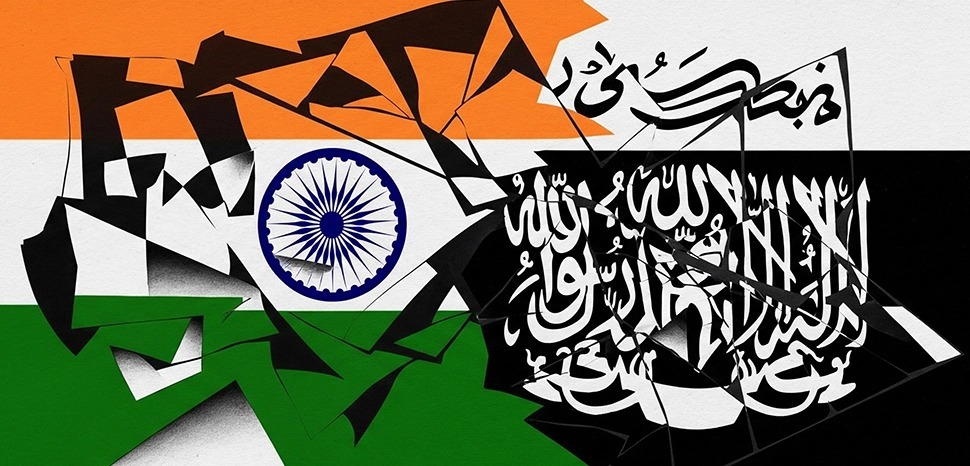
As New Delhi prepares to host world leaders and tech CEOs for the India AI Impact Summit 2026, a sobering new report has cast a shadow over the government’s “AI for All” narrative. Released on Wednesday, February 11, the joint study by the Internet Freedom Foundation and CSOH argues that India is currently a testing ground for AI-driven “democratic backsliding.”
Add businessleague.in as a Preferred Source


While the government promotes AI as a driver for inclusive growth, digital watchdogs warn that the technology is being increasingly weaponized to target religious minorities and automate mass surveillance without legal guardrails.
Also Read |Tamil Nadu Voter List Purge: 97 Lakh Names Deleted in SIR Phase 1
The Report: AI as a Tool for “Democratic Backsliding”
The 60-page report highlights a shift from traditional disinformation to “synthetic hate.” It argues that generative AI tools—often lacking safety guardrails in local Indian languages—are being used to create content that dehumanizes the Muslim community.
-
Platform Failure: The study claims that Meta AI, ChatGPT, and Microsoft Copilot have frequently responded to “harmful prompts,” generating imagery that reinforces violent stereotypes in the Indian social context.
-
Opaque Governance: Unlike the European Union or the US, India lacks a comprehensive AI regulation framework, allowing the state to deploy algorithmic systems for welfare and policing without public oversight.
Case Study: The Assam “Point-Blank Shot” Video Controversy
The report centers on a recent flashpoint in Assam. On February 7, 2026, the official X (formerly Twitter) handle of the Assam BJP uploaded an AI-generated video featuring Chief Minister Himanta Biswa Sarma.
-
The Visuals: The clip depicted the CM symbolically aiming a rifle at two men wearing beards and skullcaps, titled “No Mercy” and “Point-Blank Shot.”
-
The Fallout: Following a massive uproar and a criminal FIR by the Congress party, the BJP deleted the video and expelled its social media co-convenor, Ron Bikash Gaurav, on February 11, claiming the post did not reflect official policy.
-
The Impact: Watchdogs cite this as a prime example of how AI lowers the cost of producing “genocidal rhetoric” that can go viral before platforms can intervene.
Also Read |Tamil Nadu Voter List Purge: 97 Lakh Names Deleted in SIR Phase 1
Maharashtra’s Linguistic AI: Can Software Detect Nationality?
Another major concern flagged is the Maharashtra government’s partnership with IIT Bombay to develop an AI tool that identifies “illegal Bangladeshi and Rohingya immigrants.”
-
Speech Analysis: Announced by Devendra Fadnavis in January 2026, the ₹3-crore tool aims to analyze “speech patterns, tone, and linguistic usage” to verify nationality.
-
The Expert Consensus: Linguistic experts quoted in the report state that distinguishing between an Indian Bengali and a Bangladeshi national via AI is scientifically impossible due to the overlap of dialects and shared history.
-
Risk of Profiling: The report warns this tool will likely be used to harass legal Indian migrant workers from Assam and West Bengal.
The Surveillance State: Facial Recognition and Welfare Exclusion
The report concludes by highlighting the “silent” deployment of AI in daily life:
-
Facial Recognition (FRT): Indian police forces are increasingly using FRT systems with high error rates, which the report claims leads to wrongful detentions.
-
Welfare Deletions: Algorithmic errors in state databases have led to the unwarranted exclusion of millions from food subsidies and pension schemes.
-
Voter Disenfranchisement: The use of opaque software to “clean” electoral rolls has allegedly flagged valid voters as “suspected duplicates,” shifting the burden of proof onto the citizen.
Also Read |Tamil Nadu Voter List Purge: 97 Lakh Names Deleted in SIR Phase 1
[AI GOVERNANCE: GLOBAL VS. INDIA (2026)]
| Regulatory Feature | EU AI Act | US Executive Order | India (Current) |
| Banned AI Uses | Biometric Categorization | Restricted | No Restrictions |
| Transparency | Mandatory for High-Risk | Recommended | Voluntary |
| Grievance Redressal | Judicial Right | Agency-level | None (Burden on Citizen) |
| Hate Speech Guardrails | Strict (Local Languages) | Strict | Weak (Language Gap) |
Next Steps
If you are attending the India AI Impact Summit at Bharat Mandapam (Feb 16-20), you should look for the Civil Society side-events where these report findings will be debated. Furthermore, if you are a digital rights advocate, you should monitor the upcoming Supreme Court hearing regarding the use of FRT in public protests, which is expected to cite this report’s data on error rates and profiling.
Also Read |Tamil Nadu Voter List Purge: 97 Lakh Names Deleted in SIR Phase 1
End….
Add businessleague.in as a Preferred Source

