


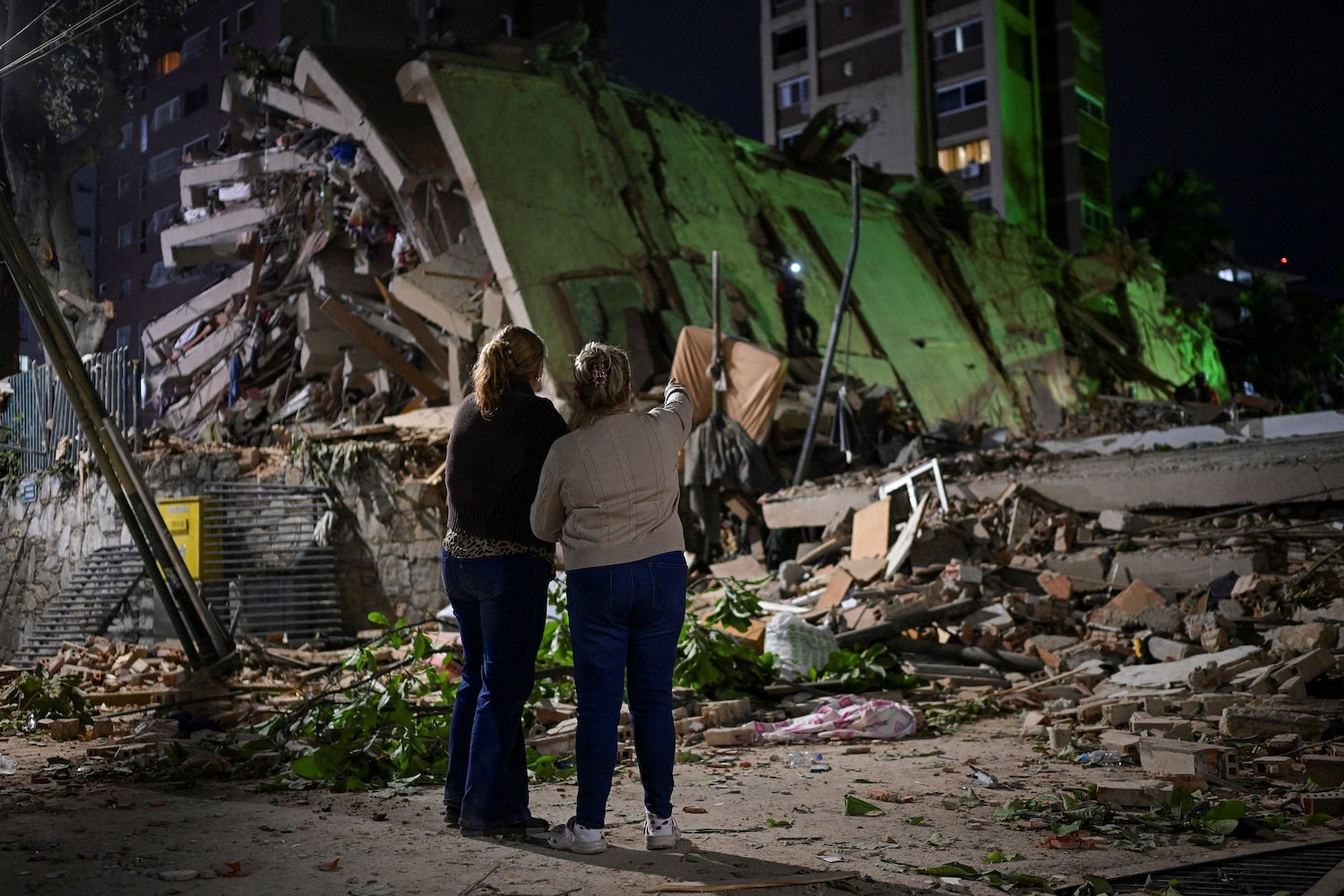
As a powerful 5.4 magnitude aftershock adds further structural stress across the coastal disaster zone of La Guaira, two heavy-lift IAF C-17 Globemasters depart with 35 tonnes of emergency supplies.
Add businessleague.in as a Preferred Source


The international disaster networks, long-range military transport squadrons, and rapid-response medical protocols that govern global humanitarian assistance have entered an intensive deployment cycle. Following a catastrophic series of earthquakes in northern Venezuela that claimed hundreds of lives, the Government of India officially initiated the Operation Amistad India field hospital Venezuela mission on Friday. Moving with extreme speed under the civilizational doctrine of Vasudhaiva Kutumbakam (The World is One Family), the Ministry of External Affairs (MEA) has dispatched two heavy-lift Indian Air Force (IAF) C-17 Globemaster III aircraft laden with specialized trauma equipment and survival assets.
The emergency air bridge launches during a highly critical rescue window for the South American nation.
A fresh, powerful aftershock measuring 5.4 on the Richter scale struck the coastal state of La Guaira on Friday, triggering panic and fracturing already damaged buildings.
The new tremor hit less than 48 hours after Wednesday’s devastating seismic “doublet”—a rare event where two massive earthquakes, measuring 7.2 and 7.5 respectively, ruptured the Caribbean-South American plate boundary within 40 seconds of each other.
With thousands of citizens still missing under collapsed infrastructure, local authorities are racing against time to find survivors.
Also Read | Viral Trump Lookalike Buffalo Rescue: Saved From Eid Sacrifice
The Strategy Architecture: Unpacking India’s Scale-Up Disaster Intervention
The logistical layout of the rescue operation relies on a highly advanced, portable medical setup engineered to operate entirely independent of local utility grids.
1. The 60 Para Field Medical Unit
The human core of the deployment features a highly trained 41-member specialized medical team drawn directly from the Indian Army’s legendary 60 Para Field Hospital.
The group contains nine trauma doctors, orthopedic specialists, and emergency surgeons who can set up operational beachheads under severe environmental conditions.
The personnel are carrying nearly six tonnes of specialized critical care medication, surgical toolsets, and intensive care assets provided directly by the MEA.
2. The BHISHM Modular Hospital Cubes
Concurrently, the mission marks a major real-world test for India’s cutting-edge BHISHM Cube systems (Bharat Health Initiative for Sahyog, Hita & Maitri).
These portable, modular medical kits can be unfolded and fully set up in under an hour inside a disaster zone.
Each compact cube contains independent power generation units, portable ventilators, diagnostic imaging equipment, and operating theaters.
Together, the two deployed cubes create a fully functioning field hospital capable of treating up to 300 trauma patients concurrently.
Slicing Through the Evolving Venezuela Tectonic Disaster Grid
The continuous seismic activity across the north-central coast has severely disrupted local response efforts, requiring massive international support:
| Monitored Disaster Zone Attribute | Pre-Disaster Infrastructure Baseline | Current Post-Earthquake Impact Status | Direct Operational Consequence |
| Sovereign Casualty Log | Active municipal center. | 164+ Confirmed Dead; 970+ Injured. | Casualty figures are rising rapidly as teams dig out deep rubble. |
| Seismic Event Pattern | Stable coastal crust tracking. | Twin 7.2 and 7.5 shocks (40 seconds apart). | Classed by the USGS as a rare, highly destructive seismic doublet. |
| La Guaira Structural State | Prime maritime trading gateway. | Declared an absolute disaster zone. | Over 346 large buildings destroyed, including the Red Cross base. |
| Caracas Transit Gateway | High-volume global airport hub. | Simón Bolívar International closed down. | Forces arriving international relief flights to route to backup tracks. |
| Indian Air Support Profile | Domestic staging airfield. | Two C-17 Globemaster flights active. | Saps over 35 tonnes of medical cargo across a 14,300-km air route. |
Also Read | Viral Trump Lookalike Buffalo Rescue: Saved From Eid Sacrifice
The 14,300-Kilometer Flight Path: Overcoming Global Transit Challenges
Moving a complete military field hospital across continents requires careful logistical planning.
External Affairs Minister S. Jaishankar highlighted that the dual C-17 aircraft departed from Hindon Air Force Station carrying more than 35 tonnes of humanitarian aid.
Because the heavy-lift transport planes are traveling at maximum weight capacities, the 14,300-kilometer journey cannot be completed non-stop.
Since the aircraft are operating without mid-air refueling tanker support for this specific route, flight planners have coordinated multi-nation refueling stops across friendly countries.
Prime Minister Narendra Modi sent his condolences to the South American nation, stating that India stands fully prepared to provide further medical aid and technical assistance as recovery operations advance.
Five Sequence Steps Emergency Crews Execute to Deploy a BHISHM Cube Unit
To ensure the modular portable hospital cubes open smoothly inside a disaster area, preventing equipment issues and securing a clean clinical environment within minutes, setup teams follow this sequence:
Ultimately, navigating global emergencies requires combining deep international empathy with flawless logistical execution. While domestic financial desks track short-term market changes—such as the Sensex and Nifty logging flat, marginal gains during volatile derivative settlement sessions this week—the country’s defense units are focused on executing vital life-saving missions overseas.
By utilizing advanced portable field hospitals, deploying elite medical teams quickly, and maintaining solid long-haul flight capabilities, the nation continues to fulfill its role as a reliable global first responder.
Following these international relief updates closely keeps your understanding of global policy perfectly accurate, showing how rapid technological innovation supports real-world humanitarian leadership on the global stage.
FAQ Section
What is the primary purpose behind India’s Operation Amistad deployment?
India launched the mission to deliver rapid, high-capacity disaster relief to Venezuela following a series of devastating earthquakes. The operation has dispatched two IAF C-17 aircraft carrying a complete Indian Army 60 Para Field Hospital Unit and 35 tonnes of specialized emergency supplies.
What unique capabilities do the BHISHM Cubes bring to a disaster zone?
The indigenous BHISHM Cubes are portable, highly advanced modular field hospital blocks under the Aarogya Maitri initiative. They can be set up in under an hour to treat up to 300 patients concurrently, operating completely independent of local infrastructure by utilizing built-in power generators, surgical suites, and oxygen systems.
Why does the flight route require scheduled refueling stops across friendly countries?
The heavy-lift C-17 Globemaster III aircraft are carrying maximum cargo loads across an immense 14,300-kilometer journey. Because the transport fleet is operating without active mid-air refueling tanker support for this specific trans-oceanic flight path, scheduled stops are required to take on fuel safely.
Also Read | Viral Trump Lookalike Buffalo Rescue: Saved From Eid Sacrifice
End…
Add businessleague.in as a Preferred Source

