


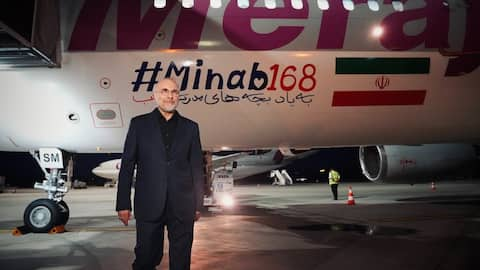
Parliament Speaker Mohammad Bagher Ghalibaf confirms a 14-point memorandum with Washington that secures the release of frozen funds and oil sanctions relief while asserting Tehran’s terms over global energy lanes.
Add businessleague.in as a Preferred Source


The strategic maritime frameworks and international security protocols that govern the planet’s primary energy transit channels have entered a permanent state of restructuring. Speaking directly to state broadcaster Press TV on Monday evening, June 22, 2026, Iranian Parliament Speaker Mohammad Bagher Ghalibaf announced a major rewrite of the Iran Strait of Hormuz maritime policy 2026 handbook. Returning immediately from intensive technical negotiations in Switzerland, the senior official made it clear that administration of the vital chokepoint will never return to pre-war rules, declaring that the waterway will now be run strictly on Tehran’s terms.
The aggressive policy update lands at a critical turning point for global shipping markets.
The declaration followed a first round of face-to-face technical talks with United States representatives, held under a newly established 14-point bilateral memorandum of understanding.
While the speaker confirmed that international shipping codes would technically be respected, he stated plainly that the era of open, unmonitored Western naval operations inside the Persian Gulf has officially ended.
Also Read | Viral Trump Lookalike Buffalo Rescue: Saved From Eid Sacrifice
The Swiss Protocol: Inside the 14-Point West Asia Realignment
The sudden diplomatic pivot in Switzerland shows a highly pragmatic approach, linking maritime security directly to economic concessions.
According to the legislative brief, the initial round of technical meetings has already yielded tangible economic wins for the country.
In exchange for joining a High-Level Committee tasked with plotting a path out of regional conflicts, Tehran secured a substantial relaxation of oil export caps alongside the immediate release of frozen state funds held in foreign banks.
However, despite these early gains, Ghalibaf remained highly critical of Washington, stating that it remains entirely reasonable to maintain deep, permanent distrust toward American promises.
Slicing Through the Evolving Strait of Hormuz Operational Status
The new maritime regulations look to replace long-standing international transit norms with a multi-layered local verification system:
| Monitored Transit Attribute | Pre-War International Standard Baseline | Post-War 2026 Iran Operational Terms | Direct Consequence for Global Trade |
| Sovereign Transit Clearance | Automatic under open sea rights rules. | Requires advanced data logs to Tehran. | Adds logistical friction for international oil carriers. |
| Sanctions Enforcement | Strict Western banking bans applied. | Broad rollbacks active on oil exports. | Reopens supply lines to top global markets. |
| Naval Security Escorts | Open deployment of US strike groups. | Restriced to external deep ocean zones. | Shakes up the security landscape across West Asia. |
| Bilateral Diplomatic Pacing | Fragmented back-channel messages. | High-Level 60-day committee rules. | Ties regional ceasefire terms to water transit safety. |
Also Read | Viral Trump Lookalike Buffalo Rescue: Saved From Eid Sacrifice
The Power Shift: Digital Defiance and Domestic Realignment
Beyond the shipping lanes, the speaker struck a confident tone regarding Tehran’s diplomatic leverage, highlighting an incident where Iranian negotiators pressured Washington into taking down an aggressive social media post by President Donald Trump within an hour of its publication.
Ghalibaf framed this quick deletion as solid proof of the nation’s newfound leverage on the global stage.
The underlying text of the state broadcast shows that the decision to engage in the Swiss meetings was driven by a strategic need to protect regional assets.
The speaker noted that if Iranian teams had bypassed the meetings, significantly more blood would have been shed among allied groups in Lebanon.
Concluding his address on a strict domestic note, the speaker called for absolute political unity, stating that all final choices across both domestic and foreign policy rest solely with the Supreme Leader, Ayatollah Seyyed Mojtaba Khamenei.
Five Sequence Steps Navies and Shippers Must Execute to Pass the Strait
To successfully navigate the new shipping rules, prevent cargo detentions, and ensure safe passage through the reshuffled Persian Gulf shipping lanes, vessel operators must follow this compliance routine:
Ultimately, adapting to the major updates detailed in the Iran Strait of Hormuz maritime policy 2026 dispatch requires recognizing that the geopolitics of international energy logistics have permanently shifted. While global tech groups like OpenAI recruit top advisors to secure frontier AI models, maritime nations are reshaping physical chokepoints to claim sovereign leverage.
By linking the safety of vital shipping lanes to sanctions relief and regional ceasefires, Tehran has permanently altered the economics of global energy transport.
Following these international policy shifts closely ensures your logistical planning stays perfectly accurate, keeping your global supply networks insulated from sudden disruptions as West Asia transitions into this new operational era.
FAQ Section
What is the core takeaway from the newly stated Iran Strait of Hormuz maritime policy 2026?
Parliament Speaker Mohammad Bagher Ghalibaf officially declared that administration of the Strait of Hormuz will never return to pre-war rules. While international shipping regulations will be respected, the waterway will henceforth be administered entirely on Tehran’s terms, marking a major shift in how the strategic chokepoint is managed.
What economic concessions did Tehran secure during the recent technical talks in Switzerland?
The initial round of talks, run under a bilateral 14-point memorandum of understanding, yielded immediate economic relief for the country. The technical agreements secured the release of substantial blocks of frozen sovereign funds alongside an immediate relaxation of Western oil export sanctions.
How does the domestic leadership transition shape these new maritime policy updates?
The updated policy runs on explicit directives to consolidate political power at home during a vital transition period. The administration has ordered absolute alignment under the newly established Supreme Leader, Ayatollah Seyyed Mojtaba Khamenei, confirming that his words and policy choices serve as the absolute final authority for the state.
Also Read | Viral Trump Lookalike Buffalo Rescue: Saved From Eid Sacrifice
End….
Add businessleague.in as a Preferred Source

