


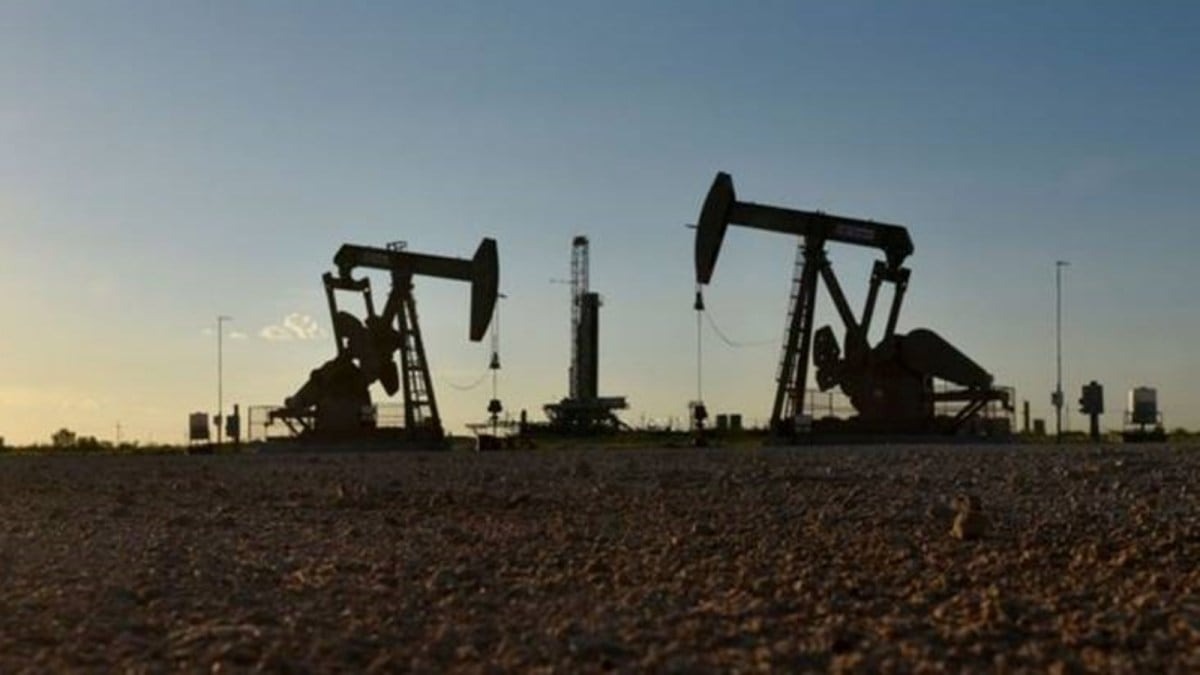
The primary theater of the Third Gulf War isn’t just the skies over Tehran or Tel Aviv—it’s a 1,200-kilometer stretch of steel pipes beneath the Arabian sand. As of Monday, March 9, 2026, the global economy is holding its breath as Saudi Arabia and the UAE attempt a high-stakes “bypass” of the Strait of Hormuz.
Add businessleague.in as a Preferred Source


Iran’s strategy is transparent: weaponize the energy market to force President Trump into an early withdrawal. However, the “Battle of the Pipelines” has begun, with Riyadh and Abu Dhabi frantically diverting crude to the Red Sea to keep the world’s engines running.
Also Read |Tamil Nadu Voter List Purge: 97 Lakh Names Deleted in SIR Phase 1
The East-West Pipeline: A 45-Year-Old Contingency
Built four decades ago specifically for a moment like this, the Saudi East-West Pipeline (Petroline) is now the world’s most important piece of infrastructure.
-
Capacity: It can transport up to 5 million barrels per day from the Persian Gulf to the Red Sea port of Yanbu.
-
Current Status: On Sunday, Saudi Aramco was seen simultaneously loading three Very Large Crude Carriers (VLCCs) at the Yanbu and Al Muajjiz terminals.
-
The Gap: While massive, it still only covers a fraction of the 20 million barrels usually flowing through the now-blocked Strait.
The UAE Alternative: Bypassing to Fujairah
The United Arab Emirates offers the second major relief valve via the Habshan-Fujairah pipeline.
-
Direct Access: This conduit leads directly to the Gulf of Oman, completely avoiding the Hormuz chokepoint.
-
Emergency Push: While rated for 1.5 million barrels, ADNOC is reportedly pushing the system toward 2 million barrels per day to meet the emergency demand.
The “Battle of the Atlantic” Parallel
Energy analysts are increasingly comparing this conflict to World War II’s Battle of the Atlantic.
-
Supply Lines: Just as Germany tried to starve Britain by sinking merchant ships, Iran is attempting to starve the global economy by “locking” the Gulf.
-
Counter-Strategy: The pipelines serve as the “convoys” of 2026, attempting to deliver essential commodities under the shadow of potential aerial interception.
Also Read |Tamil Nadu Voter List Purge: 97 Lakh Names Deleted in SIR Phase 1
Security Tightrope: The Risk of Drone Strikes
By using these pipelines to help Washington, Saudi Arabia and the UAE are effectively entering the conflict.
-
Tehran’s Warning: Iran has indicated that any infrastructure used to bypass their blockade could be viewed as a legitimate military target.
-
The Drone Threat: There is extreme nervousness in Riyadh that the pumping stations along the East-West line could be targeted by Iranian-made suicide drones, which would instantly end the “bypass” experiment.
Reality Check
The pipelines are a temporary cushion, not a permanent solution. Still, the current oil price of ~$117 is technically lower than the inflation-adjusted peaks of 2008 ($205 in today’s money). Therefore, while the 20% surge is brutal, the global economy hasn’t “broken” yet. In fact, Trump’s strategy hinges entirely on the war ending in days; if this turns into a month-long siege, the limited capacity of these pipelines will be exposed as inadequate.
The Loopholes
The White House says prices will “come down very fast.” In fact, this is a “Logistics Loophole”—even if the pipelines work, the ports at Yanbu and Fujairah are not designed to handle the sheer “armada” of 25+ supertankers at once. Therefore, we may see a tanker bottleneck at the Red Sea that keeps prices high even if the oil is physically moving. Still, the “Refining Loophole” remains; much of the oil moving through these pipes is crude, but with regional refineries under threat, the world may face a shortage of refined products (gasoline/diesel) even if crude supply is stable.
Also Read |Tamil Nadu Voter List Purge: 97 Lakh Names Deleted in SIR Phase 1
What This Means for You
If you are worried about the economy, watch the “Red Sea Loading Data” more than the front lines. First, realize that as long as the Yanbu terminals are active, the “worst-case” scenario of $200 oil is being delayed. Then, if you are an investor, understand that shipping and logistics stocks (specifically those with VLCC fleets) are now high-volatility assets.
Finally, understand that the era of cheap energy is paused. You should expect the March 7 LPG and fuel hikes to be just the first wave. Before you assume the war is “almost over,” look for any reports of attacks on Saudi pumping stations; that is the signal that the “Battle of the Pipelines” has shifted in Iran’s favor.
What’s Next
The first diverted VLCCs are expected to complete loading at Yanbu by Tuesday night. Then, look for a statement from the UAE regarding the security of the Fujairah port. Finally, expect President Trump to deliver a “Mission Update” by Wednesday, which will likely correlate with whether oil prices have stabilized or continued their climb toward the $140 mark.
Also Read |Tamil Nadu Voter List Purge: 97 Lakh Names Deleted in SIR Phase 1
End…
Add businessleague.in as a Preferred Source

