A relentless multi-year shift from short-term subsidies to extensive capital infrastructure has transformed the country from a vulnerable market into a self-reliant powerhouse.
Add businessleague.in as a Preferred Source


The structural evolution of the Indian subcontinent’s domestic marketplace stands as one of the most significant achievements in modern economic history. Barely a year before the current administration took command in 2014, Wall Street investment giant Morgan Stanley issued a bleak assessment, grouping India into the notorious “Fragile Five”—a collection of vulnerable emerging markets burdened by unstable currencies, high inflation, and twin deficits.
Fast forward 12 years, and that narrative has been completely rewritten. Through a consistent policy framework known as “Modinomics,” India has successfully shaken off those labels to become the world’s fastest-growing major economy. The scale of this expansion is clearly visible in the nation’s nominal GDP, which has doubled over the past decade, climbing from approximately $2.1 trillion in 2015 to around $4 trillion today, creating a resilient platform for Modinomics global macro economy growth.
Also Read | Viral Trump Lookalike Buffalo Rescue: Saved From Eid Sacrifice
The Capex Engine: Reengineering the Nation’s Logistics Arteries
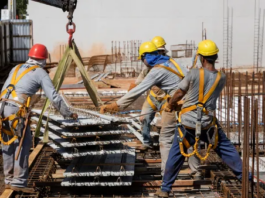
The foundational pillar of this macroeconomic turnaround is a deliberate, multi-year shift away from consumer subsidies in favor of long-term public capital expenditure (capex). Central budgetary data reveals a striking six-fold increase in infrastructure spending, expanding from roughly ₹2 lakh crore in FY15 to a budgeted ₹12.2 lakh crore for FY27. This aggressive funding push has raised effective capital spending from its pre-pandemic average of 2.7% of GDP to a solid 4% baseline.
These sustained capital injections have completely transformed India’s physical logistics grid. Beyond modernizing transportation networks, this infrastructure blitz has delivered iconic national symbols, including the New Parliament building, the Bharat Mandapam convention center, and the vast Yashobhoomi urban complex. These landmarks serve as modern representations of a rising, self-reliant nation on the global stage.
Manufacturing and Self-Reliance: The PLI Success Story
Perhaps the most consequential strategy of the past 12 years has been a deliberate push into industrial manufacturing. Through the Make in India initiative and the broader principle of Aatmanirbharta (self-reliance), the government set out to prove that India could move past its traditional identity as a purely services-led economy and manufacture its way up global value chains.
The primary driver of this industrial push has been the Production Linked Incentive (PLI) scheme. By matching performance targets with direct capital rewards, the policy has attracted substantial private investment across 14 critical sectors:
| Core Industrial Performance Vector | Documented Cumulative Scale (By March 2026) | Long-Term Structural Economic Impact |
| Realized Private Investments | Crosses ₹2.16 Lakh Crore | Fuels construction of high-tech production centers in rural states. |
| Generated Marketplace Sales | Exceeds ₹20 Lakh Crore | Replaces expensive component imports with locally processed alternatives. |
| Sovereign Export Shipments | Logged at ₹8.3 Lakh Crore | Significantly narrows the national trade deficit across international corridors. |
| Direct Employment Creation | Over 12 Lakh Structured Jobs | Migrates rural agricultural workers into higher-paying industrial roles. |
| Manufacturing FDI Inflow | Surges to ₹15 Lakh Crore | Compares to just ₹4.9 lakh crore recorded between 2002 and 2014. |
The ultimate proof of concept for this strategy is visible in the electronics sector. Within a five-year window, India transformed from a net importer of mobile phones into the world’s second-largest manufacturer. Domestic smartphone production more than doubled, climbing from ₹2.14 lakh crore in FY20 to ₹5.5 lakh crore in FY25.
Concurrently, mobile exports experienced a massive, 163-fold cumulative increase, surging from ₹0.27 lakh crore to ₹2 lakh crore. By the close of the recent cycle, overall electronics exports crossed $47 billion (growing at a 37% year-on-year pace), locking in smartphones as India’s single largest export commodity.
Also Read | Viral Trump Lookalike Buffalo Rescue: Saved From Eid Sacrifice
The Digital and Technological Frontiers
Looking to the future, Modinomics is pivoting toward the next generation of deep-tech industrial development. Under the Semicon India program, the government has cleared 12 advanced semiconductor projects, attracting an investment inflow of ₹1.64 lakh crore to establish a domestic silicon and chipmaking ecosystem
This industrial growth is supported by a booming digital startup ecosystem. India now boasts 2.2 lakh registered startups, which have collectively generated more than 23 lakh jobs, embedding entrepreneurship deep within the country’s tier-2 and tier-3 cities.
To sustain this momentum, New Delhi has aggressively overhauled its trade diplomacy, signing 9 comprehensive Foreign Trade Agreements (FTAs) spanning 38 countries, while bypassing slow-moving multilateral frameworks to favor fast-tracked, bilateral market access.
Backed by an expanding tax base that brought in ₹27 lakh crore in direct tax collections in 2024-25, and supported by over ₹70 lakh crore in cumulative Foreign Direct Investment (FDI) over the past decade, India’s economic foundation enters the late 2026 cycle highly resilient. The country’s diversified, modern economy is well-positioned to withstand the global cross-winds that once defined its vulnerabilities.
FAQ Section
What does “Modinomics” mean within the global macro economy?
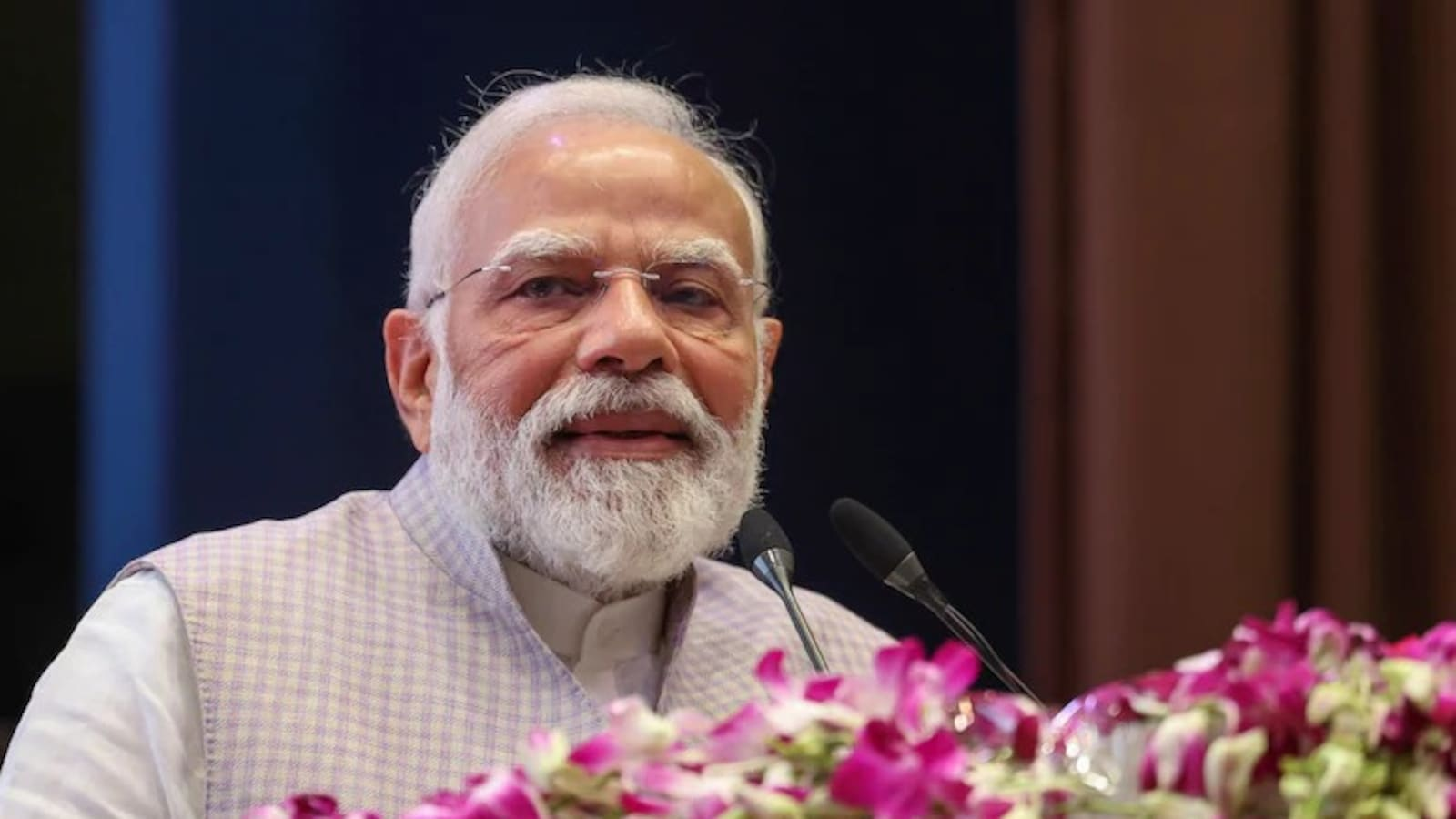
Modinomics refers to the economic policy doctrine deployed by PM Narendra Modi’s administration over the past 12 years. It prioritizes long-term public capital expenditure on infrastructure and targeted manufacturing incentives over consumer subsidies, aiming to transform India into a self-reliant, export-driven global manufacturing hub.
How has India’s GDP scale shifted over the past decade?
India’s nominal GDP has effectively doubled over the past ten years. The economic footprint expanded from approximately $2.1 trillion in calendar year 2015 to around $4 trillion in 2026, solidifying the nation’s position as the world’s fastest-growing major economy.
What is the PLI scheme, and how has it changed Indian manufacturing?
The Production Linked Incentive (PLI) scheme is a flagship policy that provides direct financial rewards to companies based on their incremental sales growth across 14 strategic sectors. By March 2026, the framework had drawn over ₹2.16 lakh crore in realized private investments, generated over ₹20 lakh crore in sales, and created more than 12 lakh direct manufacturing jobs.
Also Read | Viral Trump Lookalike Buffalo Rescue: Saved From Eid Sacrifice
End….
Add businessleague.in as a Preferred Source
🙏 Support Independent Journalism
We keep news free for you.
Most readers support with ₹500 ❤️
or scan QR below

Voluntary contribution. No tax benefits.
DISCLAIMER
We have taken all measures to ensure that the information provided in this article and on our social media platform is credible, verified and sourced from other Big media Houses. For any feedback or complaint, reach out to us at businessleaguein@gmail.com