


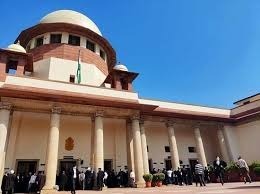
The power struggle between state sovereignty and judicial oversight over police leadership reached a boiling point on Thursday, March 12, 2026. The Supreme Court issued a stern warning to six states, labeling their failure to consult the Union Public Service Commission (UPSC) for the appointment of Director Generals of Police (DGP) as prima facie contempt of court.
Add businessleague.in as a Preferred Source


The bench, comprising CJI Surya Kant, Justice Joymalya Bagchi, and Justice Vipul M. Pancholi, made it clear that until a state enacts a valid, constitutional law that aligns with the landmark Prakash Singh judgment, the UPSC-led empanelment process remains the only legal route to appointing a police chief.
Also Read |Tamil Nadu Voter List Purge: 97 Lakh Names Deleted in SIR Phase 1
The UPSC Standoff: Six States in the Crosshairs
Following a February 12 order, the UPSC submitted a report naming the states that ignored requests for vacancy recommendations.
-
Non-Responsive States: Punjab, Himachal Pradesh, Arunachal Pradesh, Goa, Manipur, and Mizoram.
-
The Bench’s Stance: “These states have not forwarded any proposals… Prima facie, these states are in contempt,” the CJI remarked, giving them two weeks to explain their silence.
Prakash Singh Judgment: The Constitutional Baseline
The 2006 Prakash Singh judgment was designed to insulate the police from political interference by ensuring a transparent selection process through the UPSC.
-
UPSC’s Role: The commission proposes a panel of three eligible officers; the state must select one as DGP.
-
2019 Clarification: The court reminded states of its 2019 order, which stated that any state law running counter to the 2006 judgment must remain in abeyance.
Punjab’s Legal Limbo and the President’s Assent
Representing Punjab, Senior Advocate Abhishek Manu Singhvi argued that the state did pass its own law, but it is currently stalled because the President of India refused to grant assent.
-
The Court’s Rebuff: The bench was unmoved, stating that a law without assent cannot be used as an excuse. “If you have a law, follow it. If you don’t, follow our judgment,” the court noted.
Also Read |Tamil Nadu Voter List Purge: 97 Lakh Names Deleted in SIR Phase 1
The UP and Jharkhand Exception
Uttar Pradesh and Jharkhand took a different stance, claiming they have already enacted valid laws that utilize a committee headed by a former judge.
-
Judicial Skepticism: The court questioned if any state can frame a law that is fundamentally contrary to the Supreme Court’s directions, warning the states not to “create an embarrassing position for themselves.”
Reality Check
The friction between the Center (via UPSC) and States over police appointments is a decades-old battle. Still, the UPSC’s role remains the only mechanism that prevents states from appointing “favorite” officers as acting DGPs to circumvent the two-year fixed tenure rule. Therefore, while states argue for federal autonomy, the Supreme Court views the UPSC as the only “central authority” with the credibility to handle empanelment. In fact, the court’s sharp comment about West Bengal sending its former DGP to the Rajya Sabha highlights the judiciary’s growing concern over the “politicization of the uniform.”
The Loopholes
The states say they are “enacting their own laws.” In fact, this is a “Legislative Loophole”—by drafting local laws that remove the UPSC from the equation, states attempt to regain total control over who leads the police force. Therefore, the “independence” of the DGP is often sacrificed for political alignment. Still, the “Abeyance Loophole” remains; the SC’s 2019 ruling means that even if a state passes a law, if it clashes with the 2006 judgment, it is effectively “frozen,” forcing the state back to the UPSC anyway.
Also Read |Tamil Nadu Voter List Purge: 97 Lakh Names Deleted in SIR Phase 1
What This Means for You
If you live in one of the six named states, expect a shift in police leadership soon. First, realize that a “regular” DGP (appointed via UPSC) has a fixed two-year tenure, which usually leads to more stable law and order policies. Then, if you are a follower of constitutional law, understand that this case defines the limits of state power regarding the “Police” subject under the State List vs. the Judiciary’s power to enforce reform.
Finally, understand that acting DGPs are now under scrutiny. You should watch if your state continues to appoint “Ad-hoc” or “Acting” chiefs, as the SC is likely to ban this practice entirely in the next hearing. Before the next date in two weeks, check if your state government submits the names to UPSC to avoid the “Contempt” tag.
What’s Next
The six states must file their responses within 14 days. Then, look for the Supreme Court to hear the Amicus Curiae’s proposal to let High Courts monitor state-wise implementation. Finally, expect a definitive ruling on the validity of the UP and Jharkhand laws which could set a new precedent for all Indian states.
Also Read |Tamil Nadu Voter List Purge: 97 Lakh Names Deleted in SIR Phase 1
End….
Add businessleague.in as a Preferred Source

