
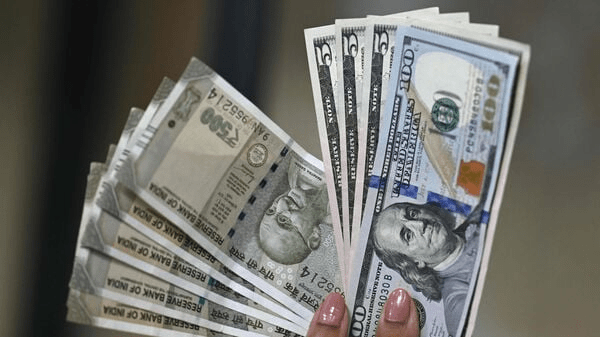
Now the Indian financial landscape is witnessing a morning of significant recalibration. The Indian Rupee opened marginally stronger at 95.52 against the US dollar this Wednesday, May 13, 2026, showing a slight recovery from Tuesday’s close of 95.63. Therefore, while the currency finds a temporary floor, the commodities market is experiencing intense volatility. Gold and silver prices have surged nearly 6 per cent each on the Multi Commodity Exchange (MCX), driven by a massive spike in safe-haven demand. Meanwhile, the jewellery industry is bracing for a fundamental shift in operations. Following the government’s recent duty hike, experts anticipate a substantial reduction in gold imports for the current fiscal year.
Add businessleague.in as a Preferred Source


Also Read |Tamil Nadu Voter List Purge: 97 Lakh Names Deleted in SIR Phase 1
Currency Resilience: Analyzing the Rupee’s 95.52 Opening
Now the Indian Rupee is attempting to find stability in a volatile global environment. Opening at 95.52 against the US dollar, the currency has gained 11 paise from Tuesday’s close. Therefore, the “marginally stronger” start provides some relief to importers who have been grappling with currency depreciation throughout the quarter.
First, the recovery is being supported by a slight softening of the dollar index in early Asian trade. Next, domestic equities are showing cautious movements, which is preventing a sharper gain for the local unit. Thus, the Rupee’s performance remains a mechanical necessity for balancing the rising costs of imported commodities.
So while the opening is positive, traders remain cautious about the long-term trend given the geopolitical tensions in West Asia. Meanwhile, the Reserve Bank of India (RBI) is expected to continue its interventionist stance to prevent any sudden volatility. Therefore, the 95.52 level is the key psychological benchmark to watch today.
Bullion Surge: Why Gold and Silver Jumped 6 Percent
Now the Multi Commodity Exchange (MCX) is seeing a vertical move in precious metals. Gold and silver prices have surged by nearly 6 per cent each in the early session. Therefore, the demand for safe-haven assets has reached a seasonal peak as global uncertainty continues to unsettle traditional equity investors.
First, the primary catalyst remains the government’s decision to hike import duties, which has immediately inflated the domestic landing price. Next, international spot prices are also showing strength as investors move away from tech-heavy portfolios. Thus, the “6 percent jump” reflects both regulatory changes and a shift in global sentiment.
So the domestic price of gold is now factoring in a long-term period of high duties. Meanwhile, silver is benefiting from its dual role as an industrial metal and a safe-haven asset. Therefore, bullion remains the most attractive asset class for conservative investors in the current 2026 market.
Industry Impact: How the Duty Hike Affects Gold Imports
Now the jewellery sector is facing a period of forced contraction in volume. Industry executives are indicating that the recent duty hike will likely result in a 10-15 per cent reduction in gold imports going ahead. Therefore, the government’s goal of reducing the current account deficit is already seeing early results in industry forecasts.
First, the higher cost of importing fresh gold is making bullion a luxury for many smaller players. Next, organized retailers are preparing for at least a year of high import duties, adjusting their sourcing strategies accordingly. Thus, the “volume drop” in imports is becoming a reality for the FY27 outlook.
So while the volume may decrease, the value of the trade remains high due to inflated prices. Meanwhile, the government is closely monitoring the impact on domestic demand to ensure the duty doesn’t encourage unauthorized channels. Therefore, the industry is entering a “wait and watch” phase regarding the long-term viability of high duties.
Also Read |Tamil Nadu Voter List Purge: 97 Lakh Names Deleted in SIR Phase 1
Consumer Shifts: The Rise of Old-for-New Gold Exchanges
Now a significant change in consumer behavior is emerging at retail storefronts. With fresh gold becoming more expensive, customers are increasingly expected to exchange their “old gold” for new jewellery purchases. Therefore, the secondary market for gold is becoming the primary driver of retail sales.
Key Trends in Consumer Behavior:
-
Recycling Gold: High preference for exchanging old ornaments over buying new ones.
-
Value Focus: Consumers are moving toward lower-carat jewellery to manage costs.
-
Investment Shift: Growing interest in Digital Gold and Gold ETFs.
First, this shift helps retailers maintain their margins without needing to import large quantities of fresh metal. Next, it provides consumers with a way to refresh their collections without the full burden of the 15% duty. Thus, the “exchange model” is the mechanical necessity for sustaining retail footfalls in 2026.
FY27 Guidance: Why Jewellery Players Remain Confident
Now despite the elevated duties and expected import drop, major jewellery companies remain optimistic. Most leading players have maintained their FY27 value growth guidance of 20-25 per cent. Therefore, the higher price of the metal is actually helping maintain high top-line revenues even as volumes remain flat.
First, the “value growth” is supported by a rising premium on hallmarked and designer jewellery. Next, the wedding season in India continues to provide a non-negotiable floor for demand. Thus, the industry is proving to be resilient in the face of significant fiscal pressure.
So the confidence of the industry is built on the belief that gold remains the preferred store of value for Indian households. Meanwhile, the expansion of organized retail into Tier-2 and Tier-3 cities is opening fresh markets. Therefore, the 20-25% growth target remains achievable through a combination of price appreciation and market penetration.
Global Sentiment: Fading AI Enthusiasm in Asian Markets
Now the global stock market momentum is seeing a noticeable cooling period. Asian markets traded mixed in early deals this Wednesday. Therefore, the record-setting rally on Wall Street is finally slowing down as investors question the current valuations of tech giants.
First, the “fading enthusiasm” around AI stocks is a global phenomenon. Next, investors are looking for more tangible earnings data rather than speculative growth. Thus, the broader market is entering a “sideways” phase as it looks for the next catalyst.
So Japan’s Nikkei 225 was little changed, inching up less than 0.1 per cent. Meanwhile, South Korea’s Kospi managed a 0.9 per cent rise after sharp losses earlier this week. Therefore, regional markets are struggling to find a clear direction in the absence of a strong lead from the US tech sector.
Also Read |Tamil Nadu Voter List Purge: 97 Lakh Names Deleted in SIR Phase 1
Tech Momentum: Slowdown on Wall Street Hits Regional Stocks
Now the redistribution of AI-driven corporate windfall gains is a major concern for Asian economies. Specifically in South Korea, concerns over how these gains are shared have triggered sharp losses for tech companies. Therefore, the “AI bubble” is facing its first major reality check in the 2026 cycle.
Asian Market Opening Snapshot:
-
Kospi (South Korea): Up 0.9% (Recovering from earlier losses).
-
S&P/ASX 200 (Australia): Declined 0.3%.
-
Hang Seng (Hong Kong): Slipped 0.4%.
-
Shanghai Composite: Largely flat.
First, the slowdown in Australia and Hong Kong reflects a cautious approach to high-growth sectors. Next, the flat trade in China indicates a lack of fresh stimulus to drive market sentiment. Thus, the “mixed opening” is a reflection of a global economy in transition.
FAQ: Understanding the Rupee and Gold Price Trends
1. What was the Rupee’s opening price today? Now, the Rupee opened marginally stronger at 95.52 against the US dollar, compared to Tuesday’s close of 95.63.
2. Why are gold and silver prices rising on MCX? First, the surge is due to continued demand for safe-haven assets and the impact of recent duty hikes on precious metals.
3. How much is the expected reduction in gold imports? So industry executives anticipate a 10-15 per cent reduction in gold imports for the current fiscal year.
4. Why are Asian markets trading mixed today? Next, the mixed trade is a result of fading enthusiasm around AI and technology stocks, which has slowed Wall Street’s momentum.
5. Are jewellery companies cutting their growth targets? Now, no. Despite high duties, major players are sticking to their FY27 value growth guidance of 20-25 per cent.
6. What is the impact on consumers? Finally, consumers are increasingly expected to exchange old gold for new jewellery instead of making fresh purchases at current high rates.
Also Read |Tamil Nadu Voter List Purge: 97 Lakh Names Deleted in SIR Phase 1
End…
Add businessleague.in as a Preferred Source
🙏 Support Independent Journalism
We keep news free for you.
Most readers support with ₹500 ❤️
or scan QR below

Voluntary contribution. No tax benefits.
DISCLAIMER
We have taken all measures to ensure that the information provided in this article and on our social media platform is credible, verified and sourced from other Big media Houses. For any feedback or complaint, reach out to us at businessleaguein@gmail.com