


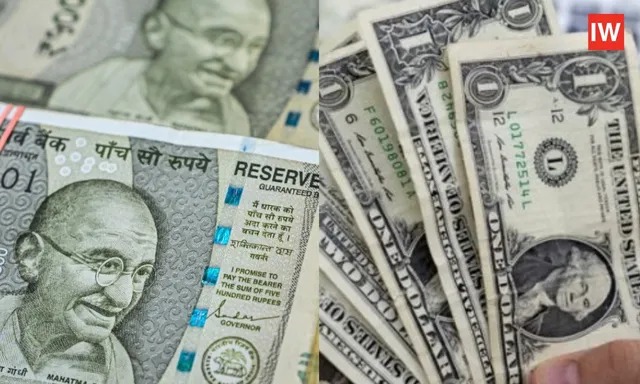
This is the absolute mess at the center of the global economy: how does the fastest-growing major economy have a currency (the rupee, or INR) that keeps hitting all-time lows (around ₹90 for $1)?
Add businessleague.in as a Preferred Source


Here are the field notes on the chaos, breaking down why the rupee is sinking despite India’s stellar GDP performance.
Rupee vs. Dollar: The Great Economic Puzzle
The Indian Paradox (INR Side of the Story)
The domestic picture looks great: Q3 GDP growth hit 8.2%, and inflation is near zero (October CPI was just 0.25%). This “Goldilocks” scenario led the RBI to cut the repo rate to 5.25%.
But every time the RBI cuts rates, X happens. And then the rupee weakens.
-
Reduced Attractiveness: Lower Indian interest rates make Indian bonds less appealing to Foreign Institutional Investors (FIIs). They pull their money out to seek higher yields elsewhere. They sell rupees and buy dollars.
-
Structural Import Dependence: India is a net importer, heavy on crude oil, gold, and electronics. A booming 8% GDP economy needs more energy and more capital goods. We buy more. But our exports aren’t keeping pace. This widens the trade deficit, putting constant, homegrown pressure on the rupee.
-
FII Outflow (The Vicious Cycle): Look at the stock market. FIIs have been continuous net sellers for the last six months. They earn returns in rupees, but they calculate their real earnings in dollars. If the rupee weakens by 3%, their effective USD return also drops by 3%. This hits their confidence, they pull out more money, and then the rupee weakens further.
Read More: New plan for millions of Jio users, SIM will remain active for 365 days
The Global Squeeze (USD Side of the Story)
The rupee is not operating in a vacuum. It’s caught in a global crosscurrent where the dollar is king, or nothing.
-
The High-Yield Dollar: The US Federal Reserve has kept its rates high, meaning US bond yields remain very attractive. Investors seek safety and fixed returns, so they pile into dollars. This globally strong dollar pulls down all emerging market currencies, including the INR.
-
The Safe-Haven Factor: The USD has a dual personality. If the US economy shows cracks (soft job numbers, recession fears), markets panic. And then investors buy more dollars, not sell them. This flight to safety always weakens the rupee, regardless of how well India is performing.
-
The Oil Tariff Twist: India has been reducing its heavily discounted Russian crude imports due to new US tariffs. This forces India back onto the standard global oil market, where all payments are strictly in USD. This exerts a steady, unavoidable downward pressure on our currency.
How This Hurts Ordinary Indians
The falling rupee is not catastrophic, but it absolutely shows up in ways that matter to everyday life.
-
Costlier Imports: Imported electronics, industrial machinery, and app-store purchases (priced in USD) get more expensive.
-
Double Whammy on Gold: When the rupee falls, gold gets pricier even if global gold prices stay flat. If international gold prices rise and the rupee falls? The effect doubles. This is why buying gold is seen as a currency hedge in India.
-
Eroding Export Advantage: While exporters should benefit from a weak rupee, many rely on imported inputs (chemicals, components). When the rupee drops, the cost of those imported inputs jumps, and then the theoretical export advantage evaporates. Only a narrow band (like software services) gets the clean benefit.
The rupee’s slide is not a failure of India’s growth engine, but a nudge. It highlights the cracks: high oil dependence and a manufacturing sector that relies too heavily on imports. What happens next depends on structural reforms, or nothing changes.
Read More: New plan for millions of Jio users, SIM will remain active for 365 days
Add Businessleague.in as a Preferred Source 
Add businessleague.in as a Preferred Source

