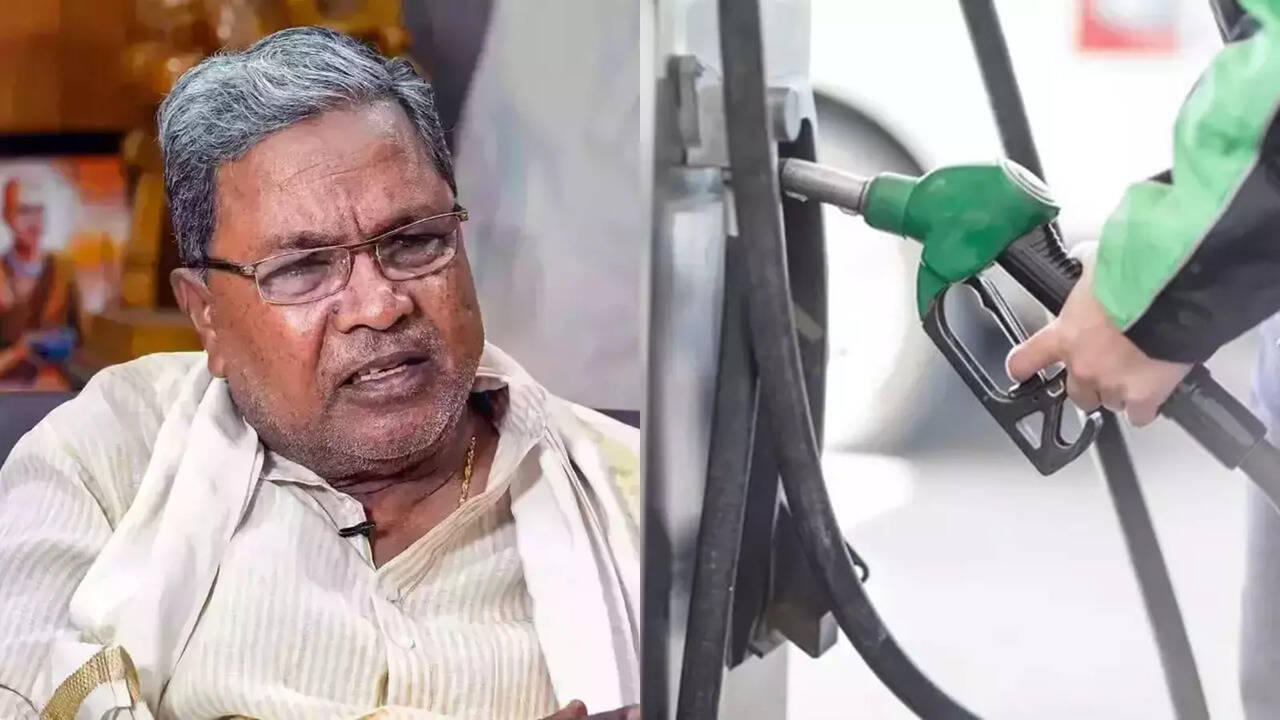
Now an aggressive rhetorical battle over climbing pump metrics has triggered a massive national row today. The ongoing retail fuel price war reached a freezing point Monday morning. Specifically, the latest wave of price revisions pushed petrol rates past historic thresholds across the country. The Congress party launched immediate, fierce attacks against the central administration over consumer inflation burdens. Meanwhile, the ruling party countered instantly by exposing the massive Value Added Tax rates implemented by opposition-ruled states.
Add businessleague.in as a Preferred Source


Today, local fuel buyers are facing heavily distorted pricing sheets depending on regional borders. Petrol has touched a staggering ₹118 per litre inside Telangana. Similarly, motorists in neighboring Karnataka are shelling out ₹110 at local stations.
Uniform pricing across state lines is officially a dead concept.
Also Read |Tamil Nadu Voter List Purge: 97 Lakh Names Deleted in SIR Phase 1
The Flashpoint: Instability Hits Local Pumps Again
Now the operational dynamics of the domestic energy counters altered for the fourth time in less than two weeks. The current deployment of the retail fuel price war follows an intentional series of incremental price steps. Therefore, commercial fleet operators are shifting their fleet assets to minimize cross-border purchasing runs.
Officials say the international market squeeze left domestic suppliers with zero alternatives. Before Monday’s sharp jump, state-run oil marketing corporations bore heavy marketing losses for multiple quarters. Now, pump valuations must mirror international realities. Thus, local consumers are bearing the immediate brunt of global supply blocks.
“The public cannot absorb these continuous steps,” a regional transport union leader noted bitterly. Still, the underlying tax structures generate the true variations between different cities.
The State Variations
First, consider how local state assemblies utilize fuel transactions to generate baseline revenues. The central excise framework applies a completely static charge across the entire map. Next, look at the variable percentage models favored by provincial finance ministries. Therefore, regional borders alter final pump costs significantly.
So the consumer experience changes completely at state borders.
Notably, an identical barrel of imported crude produces vastly different retail bills between neighboring provinces. In this instance, the intense retail fuel price war highlights these hidden domestic financial boundaries. As a result, commercial drivers are actively planning long-distance trips around low-tax jurisdictions.
The Station Environment
大量 of daily commuters queued at local fueling stations early today tobeat the morning software updates. Because of the high stakes, even a minor variance of two rupees drastically alters weekly household logistics budgets.
Otherwise, the political headquarters maintained a rigid focus on shifting the ultimate accountability to their rivals. Managers refused to concede any ground regarding policy mistakes. Thus, the pricing debate transforms into a permanent televised conflict.
Congress Accuses the Center of Massive Financial Fraud
Now the opposition leadership is launching blistering verbal broadsides against the current cabinet setup. The escalating retail fuel price war has provided the party with massive political leverage ahead of summer sessions. Therefore, senior organizational managers are labeling the recent price revisions as a calculated assault on the middle class.
The Pocket Picking Claim
First, Congress General Secretary Randeep Singh Surjewala led the charge with a highly combative press briefing today. He asserted that petrol has crossed the ₹110 mark for the first time in 78 years of national independence. Next, he claimed that the central administration has executed an immense wealth drain over the past decade.
So the opposition is framing the pricing cycle as an intentional criminal act.
The Impact Description
Meanwhile, Surjewala described the last eleven days as catastrophic for the pockets of the salaried class and farmers. He noted that small businesses and homemakers are facing back-breaking financial duress due to these revisions.
Consequently, the current narrative surrounding the retail fuel price war targets the core credibility of central planners. The opposition claims that defrauding everyday citizens has become standard practice for the ruling elite. Thus, regional party workers are organizing street protests across multiple state capitals.
The Inflation Man Label: Gandhi Warns of Storms
Now the rhetorical offensive extended directly into the highest echelons of opposition strategy. Leader of the Opposition Rahul Gandhi deployed sharp personal monikers to challenge the Prime Minister today. Therefore, his official comments are dominating the primary digital trends across the subcontinent.
The Installment Strategy
First, Gandhi openly labeled the Prime Minister as the “Inflation Man” during an afternoon communication rollout. He alleged that authorities raise petrol and diesel prices in small installments deliberately. Next, he argued that this pattern aims to quietly fleece citizen pockets without triggering sudden mass demonstrations.
So the opposition claims the timing of the hikes reveals deep political manipulation.
The Economic Warning
“I have been warning the public for months about an incoming economic storm,” Gandhi reminded his followers. He claimed that the executive branch stayed completely busy with regional election tracking while risks mounted.
Think again if you think the current price hikes will stop at the ₹118 boundary. In reality, the opposition predicts that further upward revisions will happen consistently throughout the summer. Therefore, the political front line remains highly volatile.
Also Read |Tamil Nadu Voter List Purge: 97 Lakh Names Deleted in SIR Phase 1
BJP Exposes the Southern State Tax Matrix
Now the ruling party is executing a highly calculated counter-offensive based on official mathematical sheets. The central command is accusing the opposition benches of peak political dishonesty. Therefore, the retail fuel price war has shifted into an aggressive public tax accounting match.
The Base Uniformity
First, BJP leader Amit Malviya clarified that central excise duties remain entirely uniform from coast to coast. Next, he pointed out that local value-added taxes alone determine why pump rates vary so drastically between major metros.
So the corporate managers of the party are shifting the spotlight back to regional assemblies.
| State Government | Current Petrol Rate | Ruling Political Entity |
| Telangana | ₹118.3 / Litre | INDIA Bloc / Regional Opposition Coalition |
| Kerala | ₹114.9 / Litre | Left Democratic Front Alliance |
| Karnataka | ₹110.3 / Litre | Indian National Congress Administration |
| Gujarat | ₹102.1 / Litre | Bharatiya Janata Party Governance |
Gone are the days of blaming New Delhi for local administrative choices.
How Diesel Taxation Harms the Agricultural Workspace
Now the economic fallout from opposition tax choices represents a major theme for treasury analysts today. The retail fuel price war carries profound consequences for the core logistics and farming networks of the nation. Therefore, the taxation of heavy industrial diesel requires careful scrutiny.
The Freight Burden
First, diesel serves as the primary energy source for interstate trucking fleets and regional irrigation pumps. Opposition-ruled states have chose to tax this specific commercial fuel significantly harder than their northern peers. Next, this localized tax pressure inflates the operating costs of small transport operations instantly.
Thus, food transit networks face immediate inflationary strain.
The Defensive Balance
“BJP-governed states have deliberately kept diesel VAT lower to protect farming costs,” Malviya asserted during his presentation. This strategy aims to insulate the essential goods market from external oil shocks.
Currently, the variable metrics of the retail fuel price war show a clear split in fiscal priorities. Opposition hubs continue to extract maximum revenues from heavy transport fuels. Therefore, local logistics firms must navigate high structural overheads.
The March Fiscal Precedent: Passing Down Central Relief
Now historical policy choices are providing the ruling party with powerful ammunition today. Financial experts are pointing back to specific central interventions executed earlier in the spring. Therefore, previous compliance records are shaping the current political debate.
The Duty Cut
First, the central government reduced its own excise duty by a flat ₹10 per litre back in March 2026. This intervention cost the federal treasury more than ₹1 lakh crore in foregone revenue collections. Next, look at how different provincial assemblies handled that massive fiscal window.
So a clear divergence in execution emerged instantly.
The Refusal to Comply
Subsequently, BJP-governed states passed that central tax relief directly to the retail pump screens. Conversely, Congress and INDIA bloc administrations refused to implement matching cuts on their own local VAT margins.
“They chose corporate greed over citizen relief,” a central treasury brief noted this afternoon.
Think again if you think local governments lack the power to lower your bills. In reality, opposition capitals kept their high tax baselines intact to fund local populist programs. Therefore, the central command is labeling their current public complaints as pure political melodrama.
Also Read |Tamil Nadu Voter List Purge: 97 Lakh Names Deleted in SIR Phase 1
Melodrama Versus Math: The Reality of State Vaults
Now the ultimate trajectory of the retail fuel price war depends on civic awareness of state budget mechanisms. Central officials are demanding that regional capitals stop blaming national actors for their own local tax choices. Therefore, the final baseline figures remain highly contested.
The Local Extraction
First, the ruling party asserts that the Bengaluru government is actively milking local consumers through record state taxes. Next, they claim that opposition leaders use international oil volatility as a convenient screen to hide local incompetence.
So the structural data highlights a clear case of regional fiscal extraction.
The Stable Frontiers
Meanwhile, provinces like Gujarat, Uttar Pradesh, and Assam continue to maintain retail petrol rates around ₹102 or lower. They achieve these stable metrics strictly by maintaining thin state tax margins.
Simple as that.
The current escalation of the retail fuel price war shows that local policy choices dictate your final checkout bill. Thus, the country watches a prolonged struggle over tax collection rights while filling their tanks at the pump.
Meanwhile, the pricing boards continue to flash.
Also Read |Tamil Nadu Voter List Purge: 97 Lakh Names Deleted in SIR Phase 1
End…
Add businessleague.in as a Preferred Source
🙏 Support Independent Journalism
We keep news free for you.
Most readers support with ₹500 ❤️
or scan QR below

Voluntary contribution. No tax benefits.
DISCLAIMER
We have taken all measures to ensure that the information provided in this article and on our social media platform is credible, verified and sourced from other Big media Houses. For any feedback or complaint, reach out to us at businessleaguein@gmail.com