


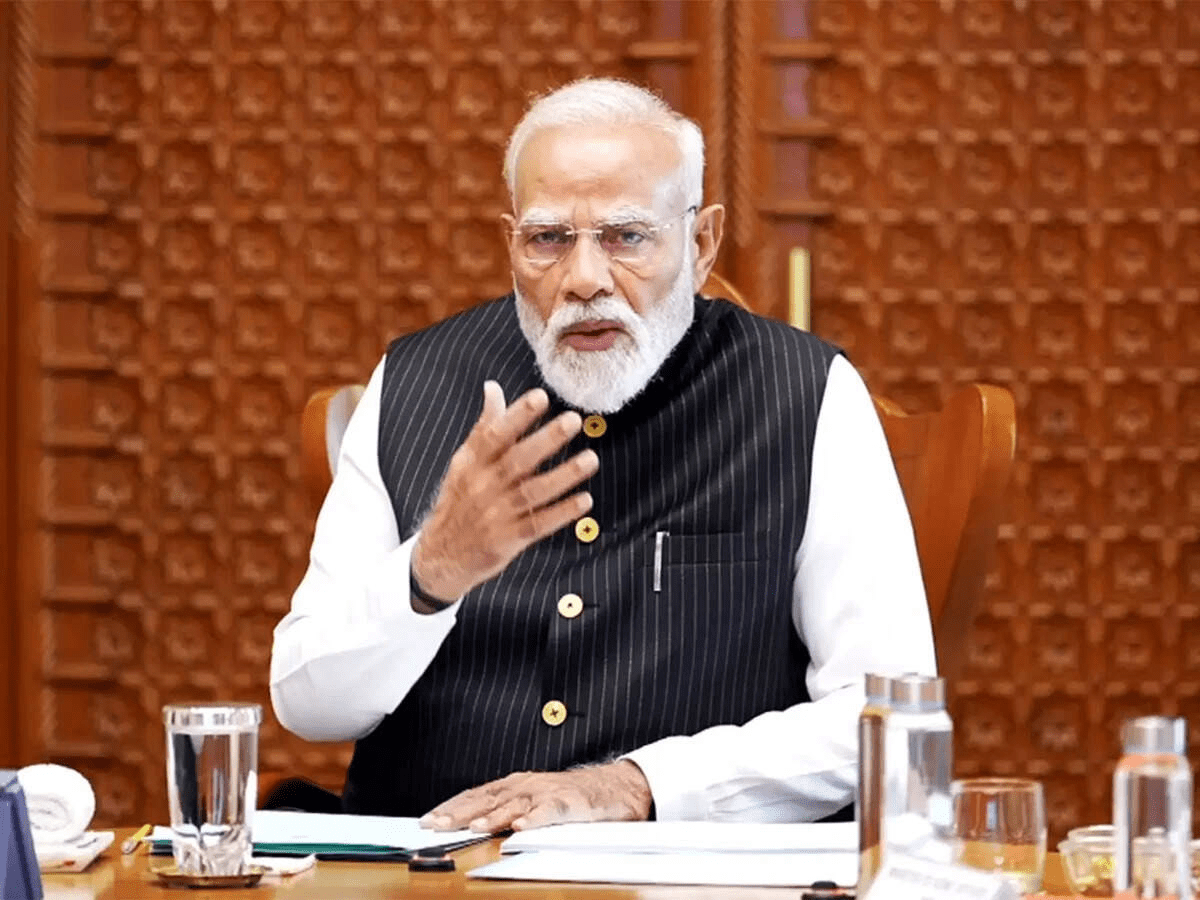
Now the Indian government is reaching back into its crisis-management playbook to navigate the escalating conflict in West Asia. As the war enters its fifth week, Prime Minister Narendra Modi is scheduled to hold a high-level virtual meeting with all Chief Ministers on Friday, March 27, 2026. Therefore, the goal is to stabilize the domestic economy as the blockade of the Strait of Hormuz threatens global energy flows. Currently, the Prime Minister is calling for a return to the “Team India” spirit—a model of intense Centre-State cooperation last seen during the COVID-19 pandemic six years ago. Thus, by aligning state governments with federal energy policies, India aims to ensure that the supply of essential commodities remains “uninterrupted” despite global volatility.
Add businessleague.in as a Preferred Source


Also Read |Tamil Nadu Voter List Purge: 97 Lakh Names Deleted in SIR Phase 1
At a Glance: The ‘Team India’ Resurgence
| Feature | COVID-19 Crisis (2020) | West Asia War (2026) |
| Primary Goal | Track, Test, Treat, & Vaccinate | Secure Energy & Commodity Supply |
| Strategy | National Lockdown & State Autonomy | Federal Support & Strategic Reserves |
| Key Message | “Teamwork is the Key” | “Federal in Form, Unitary in Spirit” |
In This Article:
-
The Friday Summit: Reviewing India’s Fuel and Commodity Resilience
-
Lessons from 2020: How the Pandemic Built the “Team India” Framework
-
Beyond “One Size Fits All”: The New Model of Reforms and Incentives
-
Geopolitical Repercussions: Why States are Critical to Energy Security
-
Frequently Asked Questions (FAQs)
The Friday Summit: Reviewing India’s Fuel and Commodity Resilience
Now the Prime Minister is emphasizing that the current crisis requires a “balanced approach” between the Centre and the states. Because the blockade of the Strait of Hormuz has direct implications for local fuel prices and inflation, the Friday meeting is designed to create a unified defensive front.
First, PM Modi will review the specific arrangements each state has made to prevent the disruption of essential goods. Next, he is expected to caution CMs about the “prolonged repercussions” of the conflict, which has already pushed global oil prices above $100. Thus, the meeting serves as a platform to synchronize the distribution of fuel from India’s strategic reserves. Currently, the administration is focusing on a coordinated response rather than a “one size fits all” mandate.
Also Read |Tamil Nadu Voter List Purge: 97 Lakh Names Deleted in SIR Phase 1
Lessons from 2020: How the Pandemic Built the “Team India” Framework
Now the historical parallels to the 2020 health crisis are being drawn directly by the Prime Minister. Because the COVID-19 pandemic proved that India’s federal structure could handle global shocks, the government is leaning on those established communication channels.
First, just as in March 2020, the Centre is hosting regular virtual briefings to ensure “Centre-State bhagidari” (partnership). Next, the Prime Minister recalled how the “unlock” process was determined based on suggestions from the states, rather than top-down orders. Thus, the “Team India” model is being rebranded as a tool for economic warfare and energy stability. So, the upcoming CM meet is an attempt to replicate the success of the 2021 vaccination drive through smoother commodity coverage.
Beyond “One Size Fits All”: The New Model of Reforms and Incentives
Now the government is touting a unique polity that is “federal in form and unitary in spirit.” Because different states have varying levels of energy dependence and storage capacity, the response must be nuanced.
First, the Prime Minister has expressed faith in the robustness of the federal polity to manage their own local economies. Next, he is introducing a model of “reforms by conviction and incentives,” encouraging states to implement fuel-saving measures in exchange for federal support. Thus, the Centre is acting as a facilitator rather than a regulator. Currently, this partnership is seen as the only way to prevent “panic buying” and maintain public order across diverse regions like Uttar Pradesh and Assam.
Also Read |Tamil Nadu Voter List Purge: 97 Lakh Names Deleted in SIR Phase 1
Geopolitical Repercussions: Why States are Critical to Energy Security
Now the war in West Asia has entered a phase that directly impacts the Indian “Aam Aadmi” (common man). Because the Strait of Hormuz is a critical chokepoint for 90% of India’s LPG imports, the state-level distribution machinery must be flawless.
First, while the Centre manages diplomatic reprieves and high-sea logistics, the states control the “last-mile” delivery of fuel and gas. Next, the Prime Minister’s clarion call is meant to prevent state-level hoarding or price gouging during the supply crunch. Thus, by working in tandem, the “Team India” model aims to absorb the shock of rising global crude prices. So, as the nation readies itself for a prolonged conflict, this collaborative tone is the cornerstone of India’s 2026 economic defense strategy.
Frequently Asked Questions (FAQs)
What is the ‘Team India’ model PM Modi is referring to?
It is a collaborative governance strategy where the Centre and state governments work as partners to tackle national crises, a model famously used during the COVID-19 pandemic.
Why is PM Modi meeting with Chief Ministers today?
The meeting is to review and coordinate the supply of fuel and essential commodities as the West Asia war impacts India’s energy imports through the Strait of Hormuz.
Is there a lockdown being discussed in this meeting?
No. Union Minister Hardeep Singh Puri has officially stated that rumors of a lockdown are “entirely false.” The meeting focuses on supply chain resilience, not restrictions.
How does the ‘Team India’ spirit help with the fuel crisis?
It ensures that state governments align their local logistics and price controls with federal strategies, preventing “one size fits all” solutions that might not work in every region.
What lessons were learned from the 2020 pandemic for this crisis?
The government learned that frequent virtual consultations and “reforms by conviction” allow states to manage their economies effectively during global supply chain disruptions.
Also Read |Tamil Nadu Voter List Purge: 97 Lakh Names Deleted in SIR Phase 1
End……
Add businessleague.in as a Preferred Source

