


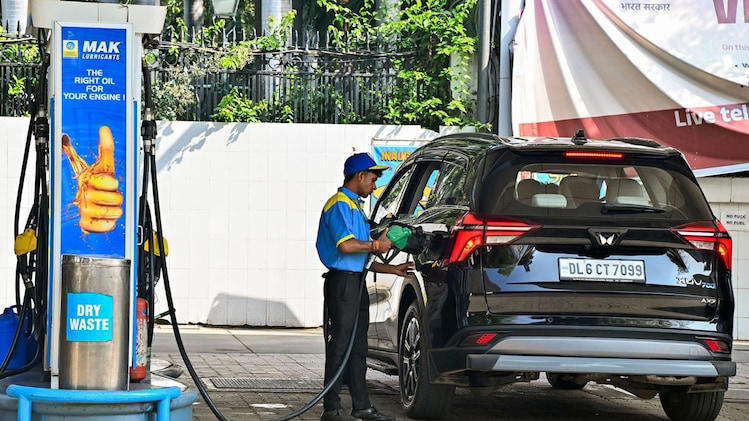
Now the retail consumer transport network across the subcontinent is encountering another immediate wave of inflationary pressure. State-run Oil Marketing Companies (OMCs) have formally implemented a sharp retail price hike for both petrol and diesel on Tuesday, May 19, 2026. Therefore, commuting budgets for logistics fleets and daily motorists are facing a direct vertical correction effective immediately. Meanwhile, oil sector analysts clarify that this sudden 90 paise per litre hike marks the second consecutive price revision executed this week. Following the severe geopolitical disruptions active in West Asia, which have pushed international Brent crude values past historic caps, adjusting retail distribution margins has evolved into an absolute necessity for domestic refiners.
Add businessleague.in as a Preferred Source


Also Read |Tamil Nadu Voter List Purge: 97 Lakh Names Deleted in SIR Phase 1
At a Glance: Revised Metro Fuel Tariffs (May 19, 2026)
| URBAN CENTER METRO | NEW PETROL RATE (PER LITRE) | PRE-HIKE BASE TARIFF | NEW DIESEL RATE (PER LITRE) |
| New Delhi | ₹98.64 | ₹97.77 | ₹91.58 |
| Kolkata | ₹109.70 | ₹108.80 | ₹96.07 |
| Mumbai | ₹107.59 | ₹106.69 | ₹94.08 |
| Chennai | ₹104.49 | ₹103.59 | ₹96.11 |
| Hyderabad | ₹111.88 | ₹110.98 | ₹99.95 |
| Patna | ₹108.92 | ₹108.02 | ₹94.97 |
The Tuesday Revision: Unpacking the 90-Paise Domestic Fuel Hike
Now the physical billing codes at fuel retail outlets across all twenty-eight states updated seamlessly at the stroke of midnight. The decision by state boards to pass processing costs directly down to commercial vehicle operators reflects an aggressive shift in downstream pricing strategies. Therefore, transport associations are issuing urgent advisories regarding upcoming freight tariff adjustments.
First, this latest retail market action successfully applies a flat 90 paise increase to every single litre of motor spirit pumped. Next, the rapid double-hike sequence caught multiple fleet logistics dispatchers completely off guard before their morning routes began. Thus, the quick sequence highlights a total lack of standard stabilization buffers inside the national fuel matrix right now.
So transport workers are watching their operational margins experience instant compression as fuel bills expand vertically. This retail volatility matches the sharp corrections recorded parallelly across international energy derivative boards. Meanwhile, regional administrative heads are tracking how these changing utility metrics will alter local consumer spending indexes. Therefore, the Tuesday morning breakdown establishes a highly defensive environment for the domestic retail network.
The West Asia Overhang: How Geopolitics Drives Retail Energy Tariffs
Now the underlying macro-level trigger accelerating this retail price explosion remains tied entirely to international military developments. Severe ongoing friction across critical Persian Gulf shipping blocks continues to limit the normal transit of crude tankers toward Asian refinery ports. Therefore, domestic supply chains are forced to pay high spot-market premiums to guarantee physical inventory delivery.
First, look at the supply corridors: international benchmark Brent crude has achieved a multi-month high due to the widening West Asia conflict. Next, continuous maritime safety alerts around prominent maritime chokepoints have forced maritime lines to choose longer routes around Africa. Thus, the mechanical necessity of pricing in these extended global transport times impacts the domestic pumps directly.
So local refining teams must continuously purchase expensive raw fuel stocks to protect national reserve levels from dropping. This imported economic burden cannot be absorbed entirely by the internal cash reserves of local distributing corporations. Meanwhile, public sector energy desks are coordinating with international suppliers to secure long-term alternative crude options. Therefore, the West Asia situation remains the primary driver behind today’s pricing strain.
Also Read |Tamil Nadu Voter List Purge: 97 Lakh Names Deleted in SIR Phase 1
The Capital Grid: Tracking Delhi’s Climb Toward the ₹99 Milestone
Nowhere does the immediate consumer impact manifest more visibly than within the dense public transport framework of the national capital. Within the New Delhi municipal grid, the retail price of petrol scaled up significantly from a previous baseline of ₹97.77. Therefore, station operators spent early morning hours recalibrating digital display panels to reflect the updated ₹98.64 rate.
First, this vertical move positions the primary fuel tier mere paise away from breaching the psychologically significant ₹99 barrier. Next, the corresponding diesel ledger experienced an identical parallel adjustment, rising from ₹90.67 up to an active ₹91.58 marker. Thus, the twin price extensions increase the daily running overheads of thousands of commercial delivery fleets simultaneously.
So local consumer forums are warning that prolonged retail price surges will naturally drive up the costs of essential daily groceries. The local auto-rickshaw and app-based taxi networks are already demanding immediate upward revisions to their standard base fares. Kansans and working professionals across the capital are exploring alternative public metro lines to cut their monthly transport expenditures. Therefore, the Delhi tracking metrics show that the capital is feeling the direct weight of international energy stress.
The NCR Satellite Corridors: Comparative Pricing Across Noida and Gurugram
Now as millions of daily commuters transition across provincial state lines, the structural differences in local taxation become highly apparent. The National Capital Region utilizes distinct state-level value-added tax (VAT) layers that create varying fuel price brackets across borders. Therefore, motorists routinely alter their refueling patterns to exploit minor regional savings.
The Regional NCR Fuel Pricing Matrix:
-
Noida Petrol Base: Locked firmly at ₹98.04 per litre following the 90-paise state tax alignment.
-
Noida Diesel Base: Settled at ₹90.99 per litre to track adjacent industrial transport lanes.
-
Gurugram Petrol Base: Operating at a slightly elevated tier of ₹98.47 per litre under Haryana adjustments.
-
Gurugram Diesel Base: Positioned at ₹90.94 per litre, offering a minor 5-paise drop against Noida.
First, these localized price variations influence where corporate logistics companies choose to locate their central distribution parks. Next, the close pricing parity between Noida and Gurugram proves that provincial finance boards are adjusting their tax levers to maintain revenue stability. Thus, navigating these regional price sheets remains an active challenge for cross-border transport operators.
Southern and Western Scalelines: Mumbai, Bengaluru, and Hyderabad Metrics
Now moving the analytical lens away from the northern plains reveals even higher retail price caps across alternative state economic engines. Western and southern metropolitan hubs systematically record higher absolute fuel costs due to their distance from main ports and localized tax laws. Therefore, corporate entities running national supply grids encounter highly diverse operational expenses depending on the location.
-
Extended Regional Price Markers:
-
Mumbai Sector: Petrol commands a punishing ₹107.59 per litre, while diesel hovers at ₹94.08.
-
Kolkata Sector: Petrol trades heavily at ₹109.70 per litre, with diesel tracking at ₹96.07.
-
Hyderabad Grid: Leads the absolute pricing metrics with a high petrol baseline of ₹111.88.
-
Bengaluru Area: Petrol scales comfortably to ₹107.12 per litre, paired with diesel at ₹95.04.
-
First, the high ₹111 Hyderabad benchmark demonstrates how structural provincial surcharges can amplify broader global market movements. Next, Mumbai’s ₹107 petrol rate adds a significant transport cost to the commercial financial center. Thus, managing these high input thresholds remains a critical requirement for companies trying to control distribution costs.
Also Read |Tamil Nadu Voter List Purge: 97 Lakh Names Deleted in SIR Phase 1
Corporate Downstream Reactions: Financial Resilience Shifts Among OMCs
Now the financial tracking boards monitoring India’s primary public sector energy units are showing immediate strategic adjustments. Shares of leading entities, including Indian Oil Corporation (IOCL) and Bharat Petroleum (BPCL), experienced defensive volume movements following the morning price declarations. Therefore, institutional investors are analyzing whether these retail hikes are enough to protect quarterly profit margins.
First, technical analysts note that passing these costs down helps prevent the accumulation of severe under-recoveries on state corporate balances. Next, the ongoing margin optimization protects the long-term technical excellence of domestic refining networks by safeguarding capital improvement budgets. Thus, the mechanical necessity of maintaining healthy corporate cash flows is successfully achieved despite high import stress.
So the unified pricing approach chosen by the OMCs indicates close strategic coordination with central ministerial tracking bureaus. This administrative synchronization prevents individual distribution brands from undercutting rivals and causing market imbalances. Meanwhile, private sector refining networks are matching these public retail prices to maintain sector stability. Therefore, the corporate response demonstrates a unified effort to protect the structural health of the domestic energy grid.
Alternative Capital Allocations: LIC Shareholders Approve 1:1 Bonus Issue
Now amid the intense focus on rising commodity inputs, a massive corporate finance announcement has re-energized domestic equity tracking desks. The Life Insurance Corporation of India (LIC) has officially secured critical shareholder approvals required to execute a historic 1:1 bonus share issue. Therefore, retail portfolio tracking structures are adjusting their capital calculations to prepare for the massive equity expansion.
First, look at the structural mechanics: the approved arrangement rewards existing investors with one fully paid supplementary share for every single share currently held. Next, this landmark liquidity-boosting initiative aims to democratize equity ownership while enhancing the long-term trading volume of the public financial giant. Thus, the capital expansion serves to provide a strong positive counterweight to broader market volatility this week.
So the formal confirmation has triggered an immediate wave of optimistic accumulation across institutional wealth desks. This massive corporate action demonstrates that India’s premier financial institutions retain robust core balances despite complex global environments. Meanwhile, retail brokerages are fast-tracking their internal adjustment scripts to handle the massive distribution of new shares smoothly. Therefore, the LIC bonus issue stands as a major financial milestone for the current trading quarter.
FAQ: Navigating the May 19 Domestic Retail Energy Price Adjustments
1. By how much did petrol and diesel prices increase today? Now, state-run Oil Marketing Companies (OMCs) implemented a flat retail price hike of 90 paise per litre for both petrol and diesel.
2. What are the official revised fuel prices for New Delhi today? First, with today’s price rise, petrol rates in Delhi have advanced to ₹98.64 per litre, while diesel has risen to ₹91.58 per litre.
3. Why did OMCs implement a second consecutive fuel price hike this week? So, the price hike was driven by the ongoing West Asia conflict, which has disrupted international shipping lines and pushed global Brent oil benchmarks higher.
4. Which Indian metro city currently records the highest fuel rates? Next, Hyderabad leads the primary metropolitan pricing metrics, tracking a high petrol baseline of ₹111.88 per litre and diesel at ₹99.95.
5. What are the current fuel rates across the Noida and Gurugram satellite corridors? Now, petrol in Noida sits at ₹98.04 (diesel at ₹90.99), while adjacent Gurugram tracks petrol at ₹98.47 (diesel at ₹90.94).
6. What major corporate update did LIC announce parallel to the fuel price hike? Finally, the Life Insurance Corporation (LIC) officially secured key shareholder approvals to execute a historic 1:1 bonus share issue to boost equity liquidity.
Also Read |Tamil Nadu Voter List Purge: 97 Lakh Names Deleted in SIR Phase 1
End…
Add businessleague.in as a Preferred Source

