


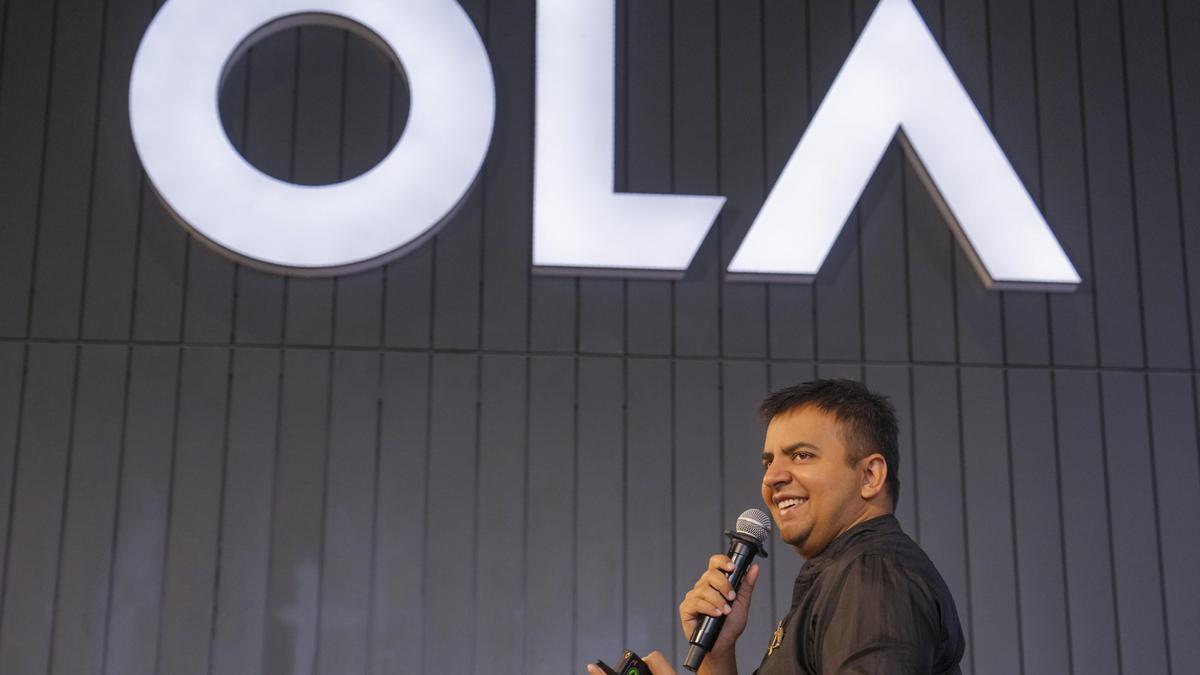
Ola Electric Hits Fresh Low: Bhavish Aggarwal Offloads ₹324 Crore Stake in Three-Day Sell-Off
-
The Bulk Deal Breakdown: Why the Founder is Cashing Out
Add businessleague.in as a Preferred Source


-
Debt-Free Promoters: The Silver Lining of “Zero Pledge” Status
-
Market Sentiment vs. Business Reality: Why Investors are Spooked
-
Revenue and Market Share Cracks: A Rough 2025 for the EV Giant
-
What’s Next: Can Ola Rebound from the 52-Week Low?
Ola Electric is having a rough week on the charts. The thing is, shares of the EV maker didn’t just slip—they’ve been in a steady downward spiral, hitting a fresh 52-week low of ₹30.76 on Thursday.
Actually, the big trigger was founder Bhavish Aggarwal selling a massive chunk of his own shares. Specifically, he offloaded about 9.62 crore shares over three consecutive days.
As a result, the market felt a huge surge in supply while demand was already shaky. Consequently, the stock has now corrected nearly 63% in 2025 alone (let’s be real, that’s a painful ride for anyone who bought in at the IPO price of ₹76).
And here’s the kicker. The company says this is actually a good thing for the long run.
Basically, Aggarwal used the ₹324 crore from these sales to fully repay a ₹260 crore personal loan. Instead of having a “pledge overhang” where banks could seize his shares if the price dropped, he is now debt-free at the promoter level. And then Y followed. Ola Electric now operates with “zero promoter pledge,” which usually makes institutional investors breathe a little easier (those too).
[Table showing Ola Electric’s 3-day stake sale: Dec 16 (2.6cr shares), Dec 17 (4.19cr shares), Dec 18 (2.83cr shares)]
-
Market Position: Ola has slipped to 5th place in the electric two-wheeler market as of November 2025. Actually, they used to be number one.
-
Volume Drop: Monthly registrations plunged to around 8,400 units in November, a nearly 50% month-on-month drop.
-
Financial Stress: The company reported a net loss of ₹418 crore for the September quarter. Specifically, revenue also took a 43% hit year-on-year.
-
Investor Advice: Most analysts are sticking to a “caution” tag. Basically, they want to see the service network stabilize before calling a bottom.
Moreover, the timing of the sale couldn’t have been worse for optics. Specifically, selling shares while the stock is at an all-time low usually screams “red flag” to retail investors.
Actually, the company re-iterated that there is no dilution of promoter control—they still own about 34%. As a result, the stock actually saw a small 9% “dead cat bounce” early Friday morning as the selling pressure finally paused. Consequently, while the “pledge” risk is gone, the “business” risk of falling sales remains the elephant in the room.
The thing is, Ola isn’t just a scooter company anymore; they’re betting big on “Krutrim AI” and their new Gigafactory. In fact, Aggarwal’s loan was reportedly tied to funding these side ventures.
Basically, the market is pricing in a slower growth phase. Instead of the hyper-growth promised at the IPO, we’re seeing a company fighting for market share against giants like Bajaj and TVS. And then Y followed. Whether the stock can climb back to the ₹40-50 range depends entirely on December’s delivery numbers.
Add businessleague.in as a Preferred Source


