


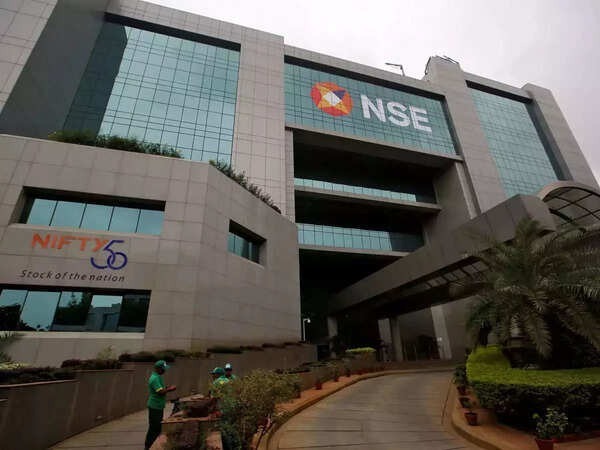
The National Stock Exchange is tightening the screws on financial intermediaries to ensure that every rupee of tax collected from investors reaches the government coffers. On Tuesday, March 10, 2026, following a direct communication from the Joint Commissioner of Income Tax, the NSE issued a stern circular. It targets brokers and sub-brokers who allegedly collected STT in excess of the statutory requirements but “retained” those funds instead of remitting them to the government.
Add businessleague.in as a Preferred Source


This move follows a similar disclosure request made in March 2025, suggesting that the Income Tax Department is now moving into a more aggressive recovery phase to close accounting gaps from previous financial years.
Also Read |Tamil Nadu Voter List Purge: 97 Lakh Names Deleted in SIR Phase 1
The I-T Crackdown: Flagging “Retained” Taxes
The Income Tax Department (Range 7(1)) flagged that a segment of the brokerage community has been holding onto excess tax.
-
The Allegation: Some brokers calculated STT higher than the prescribed rates or failed to refund excess collections to clients, keeping the balance in their own accounts.
-
The Scope: The audit covers FY 2023-24 and all years prior, with a specific focus on the balance sheet as of March 31, 2023.
Compliance Protocol: Seven-Day Deadline
The NSE has left little room for delay.
-
Reporting: Members must submit details under the caption “Excess STT Retained – NSE”.
-
Timeline: Information must be furnished directly to the exchange within seven days.
-
Intimation: Brokers are also required to keep the Income Tax Department informed of their disclosures and subsequent remittances.
Interest & Remittance: The 1% Monthly Hit
The cost of retention is high. To discourage further delays, the NSE has mandated:
-
Interest Charge: A penalty of 1% per month for the entire duration the excess STT was withheld.
-
Collection Flow: The exchange will act as the aggregator, collecting the principal plus interest from brokers before depositing the total amount into the government account.
Also Read |Tamil Nadu Voter List Purge: 97 Lakh Names Deleted in SIR Phase 1
STT Growth Trend: FY22 to FY26 Estimates
The urgency of this recovery is underlined by the massive scale of STT revenue.
-
FY22: ₹23,191 crore
-
FY24: ₹33,778 crore
-
FY25 (Revised): ₹52,197 crore (a sharp 54% jump)
-
FY26 (Estimated): ₹63,670 crore
Reality Check
The NSE’s move is a clear signal that “tax retention” will no longer be tolerated as a “float” for brokerage operations. Still, the 1% monthly interest is a relatively soft landing compared to the potential penalties for tax evasion under the Income Tax Act. Therefore, while this is a recovery exercise, it serves as a final warning before more severe legal actions are taken. In fact, for many smaller sub-brokers, calculating “excess STT” from several years ago may prove to be a significant administrative nightmare.
The Loopholes
The NSE says brokers must “furnish details.” In fact, this is a “Self-Disclosure Loophole”—the exchange is currently relying on brokers to honestly report how much they overcharged. Without a granular third-party audit of every trade, it is difficult for the NSE to know if a broker is disclosing the full amount of retained tax. Still, the “Interest Loophole” remains; by paying the 1% interest now, brokers might avoid much heavier “wilful defaulter” labels that could jeopardize their trading licenses.
Also Read |Tamil Nadu Voter List Purge: 97 Lakh Names Deleted in SIR Phase 1
What This Means for You
If you are an active trader, check your contract notes from FY24. First, realize that if you were overcharged STT, that money belongs to the government (or should have been refunded to you), not your broker. Then, if you use a smaller or discount broker, understand that their compliance costs are about to rise; you should ensure your broker is NSE-compliant to avoid any sudden disruptions in service.
Finally, understand that STT is a “leaking” cost for your portfolio. You should track the “Total Tax” column in your annual global P&L statement to ensure it aligns with the 0.1% (delivery) or 0.025% (intraday) statutory rates. Before you open a new account, check the broker’s transparency record regarding tax remittances.
What’s Next
The seven-day window for disclosure ends next Tuesday. Then, look for a summary report from the NSE on the total amount of “recovered” STT. Finally, expect the Income Tax Department to launch targeted audits on members who failed to disclose any excess, potentially using the data from the ₹52,000 crore FY25 collections to find outliers.
Also Read |Tamil Nadu Voter List Purge: 97 Lakh Names Deleted in SIR Phase 1
End…
Add businessleague.in as a Preferred Source

