


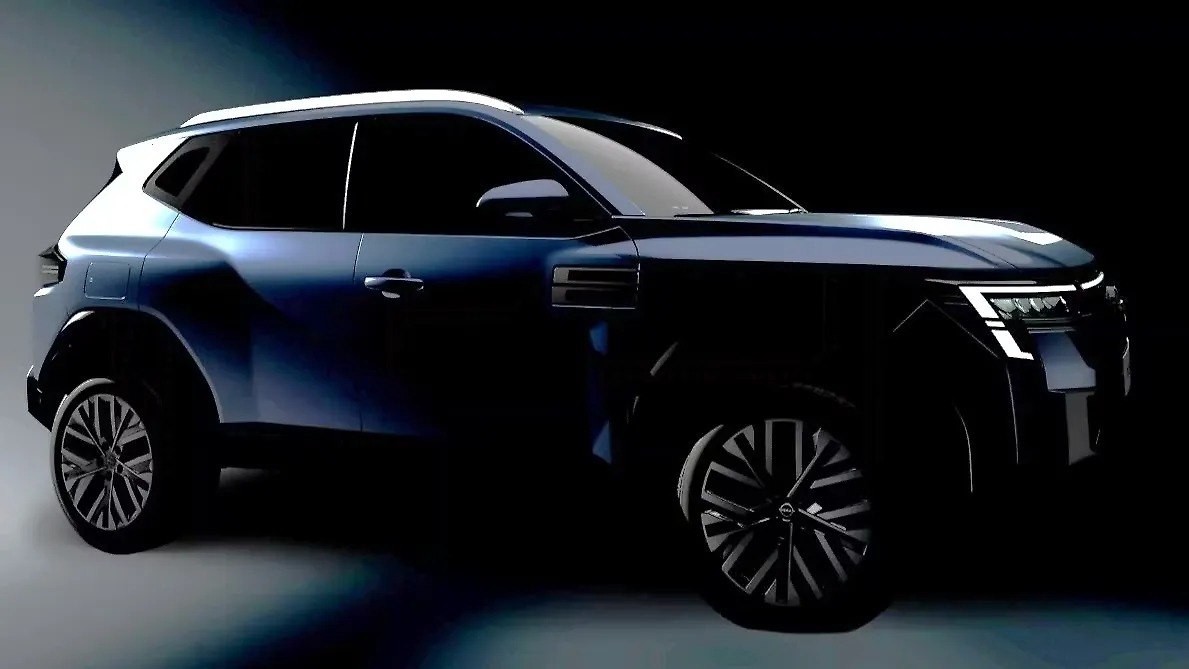
Nissan is finally going on the offensive. For years, the Japanese automaker has relied on a single-product strategy in India, with the Magnite carrying the entire brand on its shoulders. However, the upcoming Nissan Tekton launch in mid-2026 signals a massive shift. This high-stakes SUV is designed to move the needle from survival to dominance.
Add businessleague.in as a Preferred Source


Also Read |Tamil Nadu Voter List Purge: 97 Lakh Names Deleted in SIR Phase 1
The Resurrection Strategy: Moving Beyond the Magnite
The first reason the Tekton is critical is its role in Nissan’s comeback. Relying on one model is a dangerous game in the fast-paced Indian market. Consequently, the Tekton is the spearhead of a multi-product roadmap. By entering the mid-size segment, Nissan is attempting to shed its “budget-only” image and reclaim a premium status.
Global Hub: India’s Role in the “One Car, One World” Plan
The Tekton isn’t just for Indian roads. It will be manufactured at the Renault-Nissan Alliance plant in Chennai, serving as a global export hub for both left-hand and right-hand drive markets. This aligns with the “One Car, One World” strategy, where locally developed products must meet global quality standards. Therefore, the Tekton’s success is a litmus test for India’s capability as a manufacturing powerhouse for the OEM.
Tapping the Profit Well: The C-SUV Battleground
The mid-size SUV (C-SUV) segment is where the money is. While compact SUVs drive volume, the C-SUV segment offers significantly higher profit margins. By taking on heavyweights like the Hyundai Creta, Kia Seltos, and Maruti Suzuki Grand Vitara, Nissan is finally entering the most lucrative part of the market. Success here provides the capital needed for future R&D and network expansion.
Also Read |Tamil Nadu Voter List Purge: 97 Lakh Names Deleted in SIR Phase 1
Shared DNA: The Renault-Nissan CMF-B Edge
Building a car from scratch is expensive. To stay competitive, the Nissan Tekton leverages the CMF-B modular platform, shared with the third-generation Renault Duster. This collaboration allows for massive economies of scale and high localization. In fact, while the platform is shared, the Tekton will feature a unique 1.3-litre turbo-petrol engine delivering a class-leading 154 bhp, giving it a performance edge over its French cousin.
Rugged Premium: The Return of the “Baby Patrol”
Perhaps the most exciting reason for the hype is the design. Nissan’s Global Design Head, Alfonso Albaisa, has infused the Tekton with the DNA of the legendary Nissan Patrol. Featuring a boxy silhouette, C-shaped LED signatures, and a muscular “Double-C” side accent, the Tekton is being marketed as a “Baby Patrol.” This “rugged premium” aesthetic distinguishes it from the softer, urban designs of its Korean rivals.
[Image comparing Nissan Patrol front fascia with Nissan Tekton teaser]
Reality Check: Can Nissan Break the One-Product Curse?
While the strategy looks solid on paper, the execution is where Nissan has historically stumbled. In fact, entering the market in mid-2026 means the Tekton will be competing against refreshed versions of the Creta and the new-gen Seltos. Therefore, being “good” isn’t enough; the Tekton must be revolutionary in its pricing or its tech suite (Level 2 ADAS and 360-degree cameras are expected) to steal market share.
Also Read |Tamil Nadu Voter List Purge: 97 Lakh Names Deleted in SIR Phase 1
The Loopholes: Competitive Blindspots for the Tekton
Despite the “Rugged Premium” branding, there are potential pitfalls:
-
The Diesel Void: Unlike the Creta and XUV700, the Tekton will be petrol-only (with hybrid options), which might alienate long-distance highway cruisers.
-
Network Reach: While Nissan is expanding, its dealership footprint still lags significantly behind Maruti and Hyundai.
-
Sibling Rivalry: Competing against the Renault Duster—a brand with massive nostalgia in India—could lead to “internal cannibalization” within the Alliance.
Also Read |Tamil Nadu Voter List Purge: 97 Lakh Names Deleted in SIR Phase 1
What This Means for You
If you are looking for a mid-size SUV that prioritizes performance and a “mini-luxury” look, the Tekton is worth the wait. Its 154 bhp turbo engine will likely make it one of the most fun-to-drive cars in the ₹11–19 lakh bracket. However, if you need a diesel engine for heavy mileage, you should look elsewhere.
Next Steps
Stay tuned for the official unveiling, which was recently postponed but is expected shortly. You should check your local Nissan service center’s reputation, as after-sales support will be the deciding factor for many. Finally, keep an eye on the Renault Duster price announcement in March, as it will provide a clear baseline for the Tekton’s pricing.
Also Read |Tamil Nadu Voter List Purge: 97 Lakh Names Deleted in SIR Phase 1
End….
Add businessleague.in as a Preferred Source

