


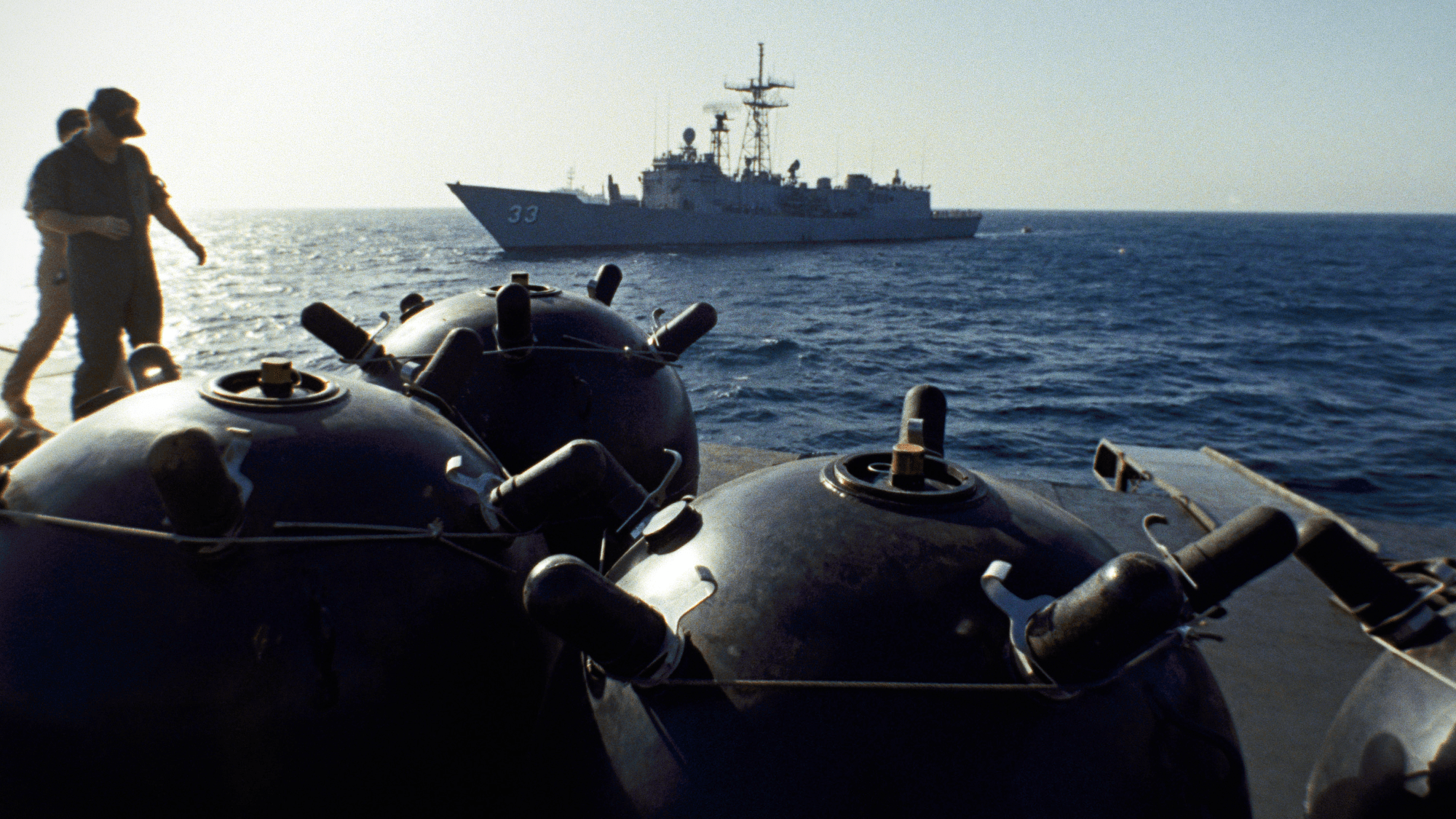
Now the security of India’s energy lifeline is under a “low-threshold” threat. On Tuesday, March 24, 2026, Navy Chief Admiral Dinesh K. Tripathi flagged that drones, uncrewed systems, and maneuvering mines are currently destabilizing the Strait of Hormuz. Therefore, even without a formal blockade, these modern technologies are disrupting critical global choke points. Currently, crude oil prices have surged by over 40% in just four weeks. Thus, the Indian Navy has deployed over half a dozen warships to escort fuel tankers safely to Indian ports.
Add businessleague.in as a Preferred Source


Also Read |Tamil Nadu Voter List Purge: 97 Lakh Names Deleted in SIR Phase 1
At a Glance:
-
The Threat: Drones and maneuvering mines targeting tankers in the Gulf.
-
Market Impact: Crude oil prices have jumped 40% in the last 30 days.
-
Naval Response: Over six Indian warships deployed for “tanker escort” duties.
-
Official Stance: Admiral Tripathi warns that technology is lowering the “disruption threshold.”
-
Diplomatic Shift: Navy Chief cancels scheduled visits to Australia and New Zealand to monitor the crisis.
In This Article:
-
Modern Warfare: Drones and “Manoeuvring Mines”
-
The 40% Oil Spike: Why the Strait of Hormuz Matters
-
Operation Escort: Indian Warships in the Gulf Region
-
Strategic Pivot: India-Japan Cooperation in the Indo-Pacific
-
Frequently Asked Questions (FAQs)
Also Read |Tamil Nadu Voter List Purge: 97 Lakh Names Deleted in SIR Phase 1
Modern Warfare: Drones and “Manoeuvring Mines”
Now the nature of maritime blockades has fundamentally changed. According to Admiral Tripathi, traditional naval standoffs are being replaced by stealthy, high-tech disruptions. Therefore, the threat to the Strait of Hormuz is no longer just about large destroyer fleets.
First, uncrewed systems (drones) allow for persistent surveillance and targeted strikes at a low cost. Next, “manoeuvring mines” introduce a level of unpredictability that standard mine-sweeping protocols struggle to handle. Thus, any country can disrupt global energy flows without officially declaring a blockade. Speaking in Delhi, the Navy Chief noted that these tools have a “far-reaching impact” that we are already witnessing today.
The 40% Oil Spike: Why the Strait of Hormuz Matters
Now the economic fallout of the West Asia conflict is hitting Indian consumers directly. Because the Strait of Hormuz connects the Persian Gulf to the wider world, it is the most vital energy artery on the planet. Therefore, any “disruption” immediately sends ripples through the global markets.
First, Brent crude oil prices have surged over 40% since the conflict escalated in late February. Next, the uncertainty over shipping safety has forced insurance premiums to skyrocket for cargo vessels. Thus, India is facing a double-edged sword of high energy costs and potential supply shortages. Currently, the government is scrambling to stabilize domestic fuel stocks while the Navy secures the shipping lanes.
Operation Escort: Indian Warships in the Gulf Region
Now the Indian Navy is taking a “proactive” rather than a reactive stance. Because the threat to Indian-flagged tankers is real, the Navy has mobilized a significant portion of its western fleet. Therefore, over half a dozen warships are now stationed close to the Gulf region.
First, these vessels provide a “protective bubble” for tankers carrying essential fuel to India. Next, the Navy Chief has personally cancelled his bilateral visits to Australia and New Zealand to oversee these operations. Thus, the mission is clear: ensure that India’s energy imports are not held hostage by non-state actors or rogue technology. Meanwhile, coordination with international partners remains a top priority to maintain free navigation.
Also Read |Tamil Nadu Voter List Purge: 97 Lakh Names Deleted in SIR Phase 1
Strategic Pivot: India-Japan Cooperation in the Indo-Pacific
Now the crisis is also shaping India’s broader diplomatic strategy. Admiral Tripathi delivered his remarks at the International Conference on India-Japan Cooperation. Therefore, it is clear that maritime security in the Indo-Pacific is now inseparable from the stability of the Middle East.
First, India and Japan are looking to share intelligence on “uncrewed systems” and drone defense. Next, both nations are committed to maintaining “open choke points” for global trade. Thus, the collaboration between Delhi and Tokyo is becoming a cornerstone of regional security. So while the immediate focus is on the Strait of Hormuz, the long-term goal is to build a resilient maritime infrastructure that can withstand the “low-threshold” threats of the future.
Frequently Asked Questions (FAQs)
What is the “low-threshold” threat mentioned by the Navy Chief? It refers to the use of relatively cheap, accessible technology like drones and mines to disrupt trade without needing a massive military force.
How many Indian warships are currently in the Gulf? The Navy has confirmed that over half a dozen (more than six) warships are currently deployed to escort tankers.
How much has the price of crude oil risen? Crude oil prices have surged by over 40% in the four weeks leading up to late March 2026.
Why did the Navy Chief cancel his visit to Australia? Admiral Tripathi cancelled his visit to personally oversee the Navy’s response to the evolving West Asia conflict and the energy security crisis.
What is a “manoeuvring mine”? Unlike static mines, these are modern naval mines that can move or be remotely guided to target specific vessels, making them much harder to detect and clear.
Also Read |Tamil Nadu Voter List Purge: 97 Lakh Names Deleted in SIR Phase 1
End…..
Add businessleague.in as a Preferred Source

