


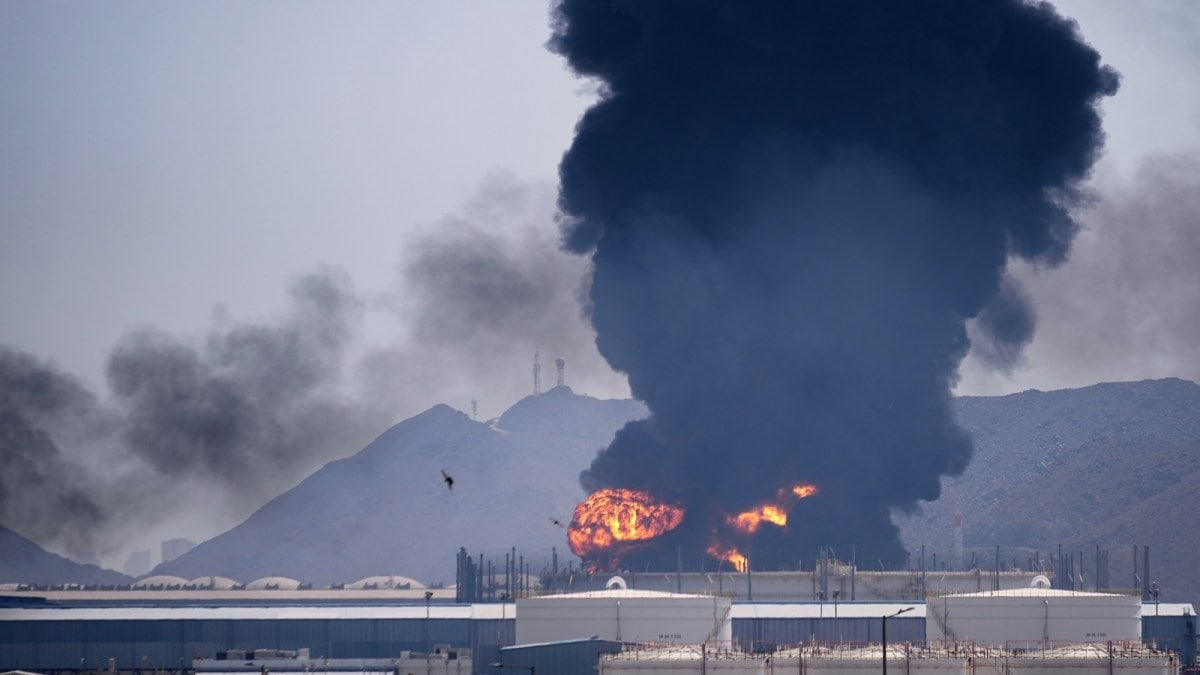
Now the fragile geopolitical equilibrium of the international energy corridor is encountering a profound, highly volatile security shock. A sequence of high-velocity military exchanges over the weekend has completely disrupted ongoing diplomatic reconciliation efforts across the Gulf region. Therefore, compiled battlefield data confirms that Middle East tensions escalate to dangerous multi-month highs following intense American retaliatory strikes in Southern Iran.
Add businessleague.in as a Preferred Source


Meanwhile, this sudden kinetic projection follows the controversial downing of an unmanned American surveillance platform over high-traffic maritime trading routes. United States Central Command asset groups executed immediate, highly coordinated strikes to eliminate active electronic threat nodes operating along coastal mountain sectors. Still, arriving at a permanent diplomatic solution remains blocked as both administrations rewrite their ceasefire frameworks.
An aggressive cross-border enforcement campaign is testing the limits of regional deterrence maps.
Also Read | Viral Trump Lookalike Buffalo Rescue: Saved From Eid Sacrifice
Calibrated Precision Strikes Neutralize Coastal Defense Radars
Now regional defense monitoring installations are processing extraordinary tactical tracking data sheets from the Gulf theater. The temporary quiet that historically insulated local shipping lines throughout the spring months has dissolved completely over forty-eight hours. Therefore, the fast execution of these precision runs proves that Middle East tensions escalate whenever automated monitoring platforms face physical intercept actions.
So the centralized command offices at CENTCOM authorized immediate strike packages involving carrier-based fighter wings on Saturday evening. Meanwhile, the aircraft utilized advanced standoff ordnance items to shatter target tracking arrays without entering deep interior detection envelopes. Thus, the tactical response successfully cleared out several critical threat clusters before dawn broke.
“The air operation was executed as a measured and deliberate self-defense deployment,” a military spokesperson stated early Monday. Therefore, operational field commanders maintain absolute authority to protect regional transport assets from facing unprovoked state-backed harassment loops.
Smashing the Drone Control Nodes
First, understand that the precision strikes specifically eliminated an active ground telemetry station alongside two ready-to-launch attack drones. The targeted facility functioned as a primary coordination center used by local units to guide automated swarms toward global merchant vessels. Therefore, neutralizing this infrastructure cluster directly lowers the operational risk metrics facing shipping lines. Period.
Next, look at the precise performance metrics tracking across the responding naval aviation groups. The fighter jets completed their low-altitude attack runs and returned to their sea-based home platforms without encountering a single system loss. Thus, the technical superiority of the strike package completely overwhelmed the local air defense networks.
Finally, the military command emphasized that its asset groups will continue to execute necessary security sweeps throughout the active ceasefire window. The presence of international task forces provides an essential protective shield for neutral commercial trade activities. Therefore, monitoring standards remain exceptionally rigid along the main maritime pathways. Period.
The Local Electronic Silence
So regional signals intelligence networks are logging a total data blackout across the affected coastal sectors this morning. The physical destruction of the radar antennas blocks the state’s ability to track low-flying naval movements through the narrow channels. Still, rebuilding these sensory installations remains a high priority for the target administration.
Now let’s examine the primary air defense event that triggered this massive response.
The Iranian Account of the Mid-Air Drone Downing
Now let’s clear up a major public contradiction clouding the initial airspace tracking logs. A common mistake among many open-source intelligence followers is assuming that modern surveillance craft can wander close to sensitive border lines without drawing heavy kinetic feedback. Wrong.
Instead, the reality that caused Middle East tensions escalate involves a highly successful surface-to-air missile engagement executed by specialized local defense squads. The Islamic Revolutionary Guard Corps issued a definitive public statement through semi-official channels to detail their intercept actions. They claim their surveillance mainframes locked onto an American MQ-1 drone unit that had allegedly violated sovereign territorial airspace codes.
Meanwhile, local media networks are broadcasting graphic footage showing the moment advanced air defense missiles intercepted the aerial vehicle.
The Border Violation Argument
First, consider the strict spatial arguments presented by the IRGC legal branch. They assert that the unmanned aircraft entered their northern defensive sectors during early Sunday hours with clear intentions to execute hostile surveillance routines. Therefore, the command justifies the deployment of advanced kinetic interceptors as a mandatory sovereign defense action. Period.
Next, look at the sharp contradiction tracking across the Pentagon’s official statement sheets. United States defense officials maintain that the surveillance drone was operating entirely inside international airspace parameters when the attack occurred. Thus, Washington labels the intercept as an unprovoked act of aggression designed to damage ongoing peaceful negotiations.
Finally, the physical debris fields from the shattered drone have reportedly plummeted into deep underwater channels. Both navies are currently deploying advanced deep-sea recovery teams to secure the flight recorder components straight from the ocean floor. Therefore, the material proof will ultimately settle the absolute coordinates of the intercept event. Period.
Are tracking logs being shared publicly? No. Is the maritime search zone expanding? Organized tightly under heavy naval guard.
Unpacking the Critical Geography of the Qeshm Island Hub
Now the physical target distribution selected by American planners reveals an exceptional focus on core maritime chokepoints. Evaluating why Middle East tensions escalate requires tracing the unique strategic geography defining the Qeshm Island base sectors. This expansive landmass sits directly inside the narrow neck of the global energy transit highway.
The Guarding of the Strait
First, any military installation mounted on Qeshm Island holds a natural geographical advantage to monitor or block international shipping traffic. The local squads use this terrain to deploy anti-ship missile batteries and launch fast attack boats into international sea lanes within minutes. Therefore, neutral task forces prioritize balancing this terrain to prevent full economic blockades.
Next, look at the second strike zone located near the coastal town of Goruk. This mainland station houses the primary long-range radar networks that feed search data straight to the island missile bays. Thus, by striking both points simultaneously, the American response successfully blindfolded the entire coastal defense sector.
Then, this geographical layout underscores why any friction in this theater triggers immediate panic waves across international commodity exchanges. The narrow shipping lanes handle roughly twenty percent of the global petroleum consumption volume daily. Therefore, even a brief military standstill introduces massive risk premiums onto global transport invoices.
Also Read | Viral Trump Lookalike Buffalo Rescue: Saved From Eid Sacrifice
Why Trump Demands Immediate Changes to the Truce Outline
Now the unexpected acceleration of kinetic strikes has thrown international diplomatic channels into absolute structural confusion. The transition toward a peaceful resolution was progressing steadily behind closed doors until the drone downing occurred. Therefore, the text of the upcoming peace treaty is undergoing intense revision cycles at the highest executive levels.
The Demand for Verification Upgrades
First, United States President Donald Trump has reportedly instructed his security team to halt final signatures on the proposed draft. Addressing a briefing room pool, administration sources revealed that the President is demanding strict new modifications to verify compliance. Therefore, the White House refuses to accept vague verbal promises regarding the cessation of local drone swarms.
Next, look at the deep political calculations guiding this tough diplomatic posture. The executive team wants to ensure that any active truce structure permanently disables the state’s ability to export tactical weapon units to regional proxy networks. Thus, by raising the verification standards, Washington aims to establish a more lasting regional containment net.
Then, the sudden military friction is drawing sharp criticism from international mediation groups in Europe. Diplomats argue that adding extra conditions at the last minute risks collapsing months of delicate multi-lateral talk cycles entirely. Therefore, the political atmosphere surrounding the negotiation desks stays exceptionally tense this Monday.
Evaluating the Structural Architecture of the Sixty-Day Draft
Now understanding the true stakes of the current crisis requires looking back at the core provisions built into the latest draft agreement. The multi-page document represents the absolute peak of complex diplomatic engineering conducted by neutral global intermediaries. Therefore, analyzing the treaty components reveals how close the region had moved toward temporary stability.
The Three Pillars of the Truce
First, the primary layer of the agreement mandates an absolute 60-day cessation of all hostile military actions across both land and sea borders. This cooling window was designed to let regional economic entities clean up their shipping schedules without fearing sudden drone strikes. Therefore, the framework promised immediate relief to global transport networks.
So if we review the structural target metrics built into the text:
-
Immediate complete clearing of all defensive shipping blockades inside the Strait of Hormuz
-
Establishing a verified international framework to resume technical talks on nuclear enrichment bounds
-
Creating shared hotlines connecting central command desks to prevent accidental missile triggers
The provisions were aimed at building a predictable baseline for future comprehensive peace treaties.
The Situation Room Standoff
Next, a high-level White House Session held on Friday afternoon was explicitly tasked with reaching a final determination on the agreement text. However, the meeting concluded without generating any definitive resolution metrics as advisers debated inspection access clauses. Thus, the diplomatic delay left an open operational window for the weekend drone crisis to explode.
The Severe Strategic Consequences Shaking Global Trade Lanes
Now the immediate economic fallout of these rolling air strikes is hitting global commodity distribution networks with full force. Financial trading terminals are registering high-velocity movements across all primary maritime insurance indexes this morning. Therefore, the reality of the military standoff ripples far past the immediate target sectors in Southern Iran.
Spiking the Maritime Insurance Premiums
First, international commercial shipping lines have been instructed to exercise extreme caution when scheduling transits through the lower gulf channels. Large enterprise carriers must pay substantial “war-risk” insurance premiums to secure cargo protections for their fleets today. Therefore, the cost of moving standard consumer goods across continents is scaling upward rapidly.
Next, look at the defensive routing changes being executed by major shipping conglomerates. Multiple commercial fleets are abandoning the short strait routes entirely, choosing to divert their container vessels around the southern African cape instead. Thus, this transport shift adds up to twelve extra days to global delivery timelines.
Then, the sudden logistics strain is causing minor processing backlogs across major European import ports. Factories face delayed arrivals for essential industrial components, which squeezes manufacturing schedules long-term. Therefore, geopolitical friction remains an absolute, highly disruptive factor for modern just-in-time supply chains.
Also Read | Viral Trump Lookalike Buffalo Rescue: Saved From Eid Sacrifice
How Enterprise Intelligence Analytics Trace Regional Battery Lines
Now let’s connect this high-stakes military exchange to the advanced technological tracking systems reshaping modern electronic warfare theaters. The speed of contemporary air defense response loops leaves zero openings for manual human sorting errors during an active engagement. Therefore, understanding the automated hardware suites deployed by both forces clarifies the true mechanics of the clash.
The Logic of Automated Intercept Loops
First, the IRGC’s mobile air defense arrays utilize advanced phased-array radars that track hundreds of low-radar-cross-section targets simultaneously. These systems utilize automated threat prioritization algorithms to launch hyper-velocity intercept missiles within seconds of a tracking lock. Therefore, modern drone platforms face an incredibly hazardous survival landscape when moving near radar networks.
Next, look at the electronic warfare countermeasure suites integrated straight into modern American fighter aircraft. The jets deploy advanced digital radio frequency memory jammers to spoof enemy tracking servers effortlessly during an attack run. Thus, the pilots can blindfold local land batteries before entering their optimal firing zones.
Then, managing a modern regional deployment requires using real-time satellite telemetry to map out the exact position of mobile missile launchers daily. If tracking sensors record the movement of fresh radar batteries near the coast, command mainframes update flight paths instantly. Therefore, data superiority remains your ultimate shield against cross-border technological hazards.
Predict the Short-Term Evolution of the Standoff This Week
Now let’s conclude by projecting how this volatile military stand-off will evolve over the subsequent seven days. Strategic defense analysts anticipate that both administrations will maintain highly defensive postures to avoid appearing weak before their internal audiences. Therefore, the path toward a swift diplomatic exit remains exceptionally narrow this week.
The Risk of Uncontrolled Escalation
First, if regional proxy networks launch uncoordinated follow-up attacks on western assets, a full wage-scale conflict loop could trigger rapidly. The presence of heavy naval task forces ensures that any subsequent strike will face immediate, hyper-scaled kinetic retaliation from the air blocks. Therefore, the threat of unintended structural escalation stays high.
Next, look at the intense behind-the-scenes pressure coming from global consumer nations. Industrial economies are putting heavy diplomatic pressure on both capitals to seal the 60-day truce agreement before oil inventories experience permanent draws. Thus, international trade needs are functioning as an organic brake against total war.
Then, citizens must prepare for volatile market reports throughout the entire upcoming options expiration cycle. Until the White House approves the final amended treaty text and verifies the safety of the shipping channels, regional security indicators will fluctuate. Therefore, maintaining a highly cautious risk posture remains your finest strategic asset this season.
Frequently Asked Questions
Now let’s resolve immediate questions from the public regarding why Middle East tensions escalate following the recent airstrikes. These answers break down targets, drones, and treaty updates clearly. Therefore, read them carefully.
Why did Middle East tensions escalate so dramatically over the weekend? The primary driver was a high-stakes military exchange where the US launched heavy precision airstrikes on Iranian radar bases. This kinetic response followed the downing of an unmanned American MQ-1 surveillance drone by local air defense units.
Which specific locations inside Southern Iran were targeted by US fighter jets? According to the official CENTCOM briefings, the self-defense airstrikes successfully targeted and neutralized premium military radar assets and drone command facilities located in Goruk and on the strategic perimeter of Qeshm Island.
What is the Iranian administration’s official position regarding the drone downing? The Islamic Revolutionary Guard Corps asserts that the American MQ-1 drone violated sovereign territorial airspace parameters with clear intentions to execute hostile operations. Therefore, local units deployed advanced air defense missiles to destroy the target.
Were any American service members harmed during the retaliatory air operations? No. United States Central Command officially confirmed that zero American service members were injured or harmed during the weekend precision strikes. All deployment aircraft returned safely to their sea-based home platforms. Therefore, asset metrics stay green.
Why is President Donald Trump delaying the final signature on the proposed ceasefire? President Trump has reportedly requested extensive new amendments to the draft agreement to upgrade verification and compliance rules. The White House refuses to accept loose treaty phrasing regarding local drone activity and regional proxy funding channels.
What core provisions are currently built into the 60-day truce draft? The comprehensive treaty draft incorporates a mandatory 60-day cessation of all cross-border hostilities, strict measures to guarantee open shipping access through the vital Strait of Hormuz, and a clear baseline framework to resume international talks on nuclear development.
How is this sudden military stand-off impacting international commercial shipping? Because Middle East tensions escalate, commercial shipping lines are facing massive jumps in war-risk insurance premiums. Multiple maritime operators are completely bypassing the strait route to divert their cargo fleets around Africa, adding 12 extra days to transport timelines.
Also Read | Viral Trump Lookalike Buffalo Rescue: Saved From Eid Sacrifice
End..
Add businessleague.in as a Preferred Source

