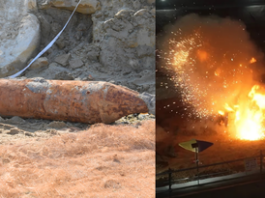

Now the geopolitical architecture of the Middle East theater is entering an era of unprecedented, highly volatile kinetic escalation. A sudden, massive surface-to-surface missile barrage early Wednesday morning has disrupted traditional deterrence parameters across the entire Persian Gulf maritime corridor. Therefore, verified deployment reports confirming that Iran attacks US bases positions regional command centers to manage an immediate shift into full-scale combat alert status today.
Add businessleague.in as a Preferred Source


Meanwhile, this explosive military confrontation follows an intense, highly destructive cross-border clash targeting sovereign territory along the strategic Strait of Hormuz. The Islamic Revolutionary Guard Corps (IRGC) has deployed its elite aerospace assets to rain concentrated firepower straight onto American forward staging facilities. Still, minimizing the absolute collateral damage across neighboring civilian sectors requires executing high-velocity air defense interceptions before secondary missile waves can penetrate defensive perimeters.
An aggressive cross-border strike campaign is testing the absolute technological limits of regional anti-missile grids.
Also Read | Viral Trump Lookalike Buffalo Rescue: Saved From Eid Sacrifice
Unpacking the High-Velocity Ballistic Salvos Tearing Across Gulf Airspaces
Now local strategic monitoring desks are processing a remarkable turnaround in regional force deployment velocities. The traditional insulation that historically kept localized border skirmishes from transforming into wide-scale cross-border rocket exchanges has vanished completely this week. Therefore, the immediate realization that Iran attacks US bases proves that regional command networks are operating under zero-warning frameworks across the Gulf today.
So the centralized missile command centers finalized their launch keys inside the western military districts early Wednesday morning to open the active combat loops. Meanwhile, this fast-tracked kinetic offensive represents an exceptional display of operational readiness from the country’s primary ballistic development labs. Thus, the offensive force avoids facing the long coordination stalls that typically slow down multi-front operations over extended planning seasons. Period.
“The synchronized arrival of the missile bodies systematically challenged multiple early warning radars within five minutes flat,” an expert analyst confirmed. Therefore, international defense consortiums must prioritize updating their tracking software codes to handle these dense, multi-vector ballistic attack grids safely long-term.
The Destruction of the Forward Staging Zones
First, consider the strict physical sequence of tactical events logged across the northern tip of the Gulf during the morning hours. The under-surface pressure engines delivered an energetic kinetic salvo that completely transformed standard defensive postures into live intercept zones. Therefore, the heavy missile bodies descended rapidly through upper cloud layers, striking target staging parameters and triggering localized fire loops.
Next, look at the intense public panic patterns spreading across close-lying urban districts right after the warning sirens began sounding. The civilian population experienced direct structural vibrations that rattled residential housing complexes and triggered widespread vehicle alarms across major avenues. Thus, thousands of anxious resident blocks rushed into underground transit tubes, generating immediate urban gridlocks that threatened safety tracks.
Finally, the specialized custom defense networks completed their initial alignment sweeps before the main morning maritime transport lanes could fully clear. Coastal radar centers applied strict security locks to isolate the active flight corridors from encountering any neutral civilian airline paths. Therefore, the early airspace management matrix operates with exceptional tactical precision this Wednesday morning. Period.
The Military Assessment Loops
So prominent global energy trading syndicates are expanding their operational risk management models immediately following these high-stakes updates. Losing steady navigation access across key shipping check-points threatens the baseline price configurations of global fuel markets long-term. Still, parsing the true strategic driver of this kinetic outburst requires exploring the initial flashpoint on Qeshm Island.
Now let’s examine the territory security breach that forced the high command’s hand.
How the Conflict on Qeshm Island Triggered an Unprecedented Regional Reaction
Now let’s clear up a major public misconception regarding modern state sovereignty boundaries inside the zone. Many casual news followers believe that global powers can execute isolated anti-terror raids on outlying maritime islands without sparking wide conventional wars. Wrong.
Instead, the spectacular reality confirming that Iran attacks US bases stems straight from a deep institutional refusal to tolerate any foreign operations on domestic soil. When external forces executed an unannounced kinetic strike targeting defense assets on the beloved island of Qeshm, they crossed an absolute red line. Therefore, the strategic command center in Tehran bypassed all lower diplomatic channels to execute an immediate, conventional military response.
Meanwhile, this territorial flashpoint transforms the strategic landscape from an asymmetric shadow war into a direct peer-on-peer conventional conflict.
The Strategic Position of the strait Anchor
First, consider how object-based maritime surveillance networks analyze the geographic importance of the island footprint inside the Strait of Hormuz. The territory functions as a natural sovereign fortress that overlooks the most critical oil transit lane on the surface of the earth. Therefore, any external aggression targeting this specific defense perimeter represents a direct threat to the baseline national survival codes of the state. Period.
Next, look at the precise administrative calculations that guided the rapid construction of the retaliatory strike matrix. The military high command determined that allowing the island raid to pass without a conventional counter would permanently degrade national deterrence metrics. Thus, by shifting into active surface-to-surface ballistic launches, the defense department systematically forces western planners to balance their escalation calculations.
Finally, the localized rocket divisions utilized advanced mobile transporter-erector-launcher units to execute their firing runs from hidden mountain bunkers. These specialized vehicles shifted positions instantly under the cover of dense night environments to protect their launch rails from facing any preventative counter-strikes. Therefore, the initial battery survival index remains exceptionally high as early tracking fields clear. Period.
Are launch points remaining tied to static fixed firing pits? No. Is the retaliatory intent absolute? Configured perfectly via clear, high-yield tactical deployments.
The Official IRGC Warning Text Proclaiming the End of Hit and Run Tactics
Now the physical execution of these ballistic salvos is paired with an incredibly firm, highly structured ideological text package. The aerospace command refuses to let its actions face any external narrative distortion loops across international news servers. Therefore, checking the official text blocks published by the IRGC high command clarifies the profound long-term shift rewriting regional combat engagement rules.
The Era of Arrogance Confronted
First, the official statement text explicitly frames the current missile operations as an initial response for retaliation targeting “American terrorist forces.” The communication issues an un-compromised, highly direct warning to the government of the United States, labeling the western state as the leader of global arrogance. Therefore, the document establishes a clear precedent that any future border violation will face a crushing counter that bypasses all historical boundaries. Period.
Next, consider the specific linguistic choices defining the end of previous defensive paradigms inside the official release:
-
Proclaiming openly that the historical era of asymmetric “hit and run” actions has officially ended today
-
Declaring that aggressor forces must bear the absolute dire consequences of their reckless adventures across state borders
-
Issuing a firm warning to all regional capitals against allowing their soil or airspace to face exploitation by external states
The text highlights a highly confident, conventional military doctrine designed to force total strategic compliance across neighbors.
Dismantling the Sanctuary Assumptions
Then, the official document outlines that the brave national forces will not hesitate to turn all headquarters of aggression into ash. This stark phrasing signals that any staging base utilized to launch operations against the state loses its traditional sovereign safety protections instantly. Therefore, the strategic calculation forces neighboring governments to think twice before providing logistics access to western fleets.
Also Read | Viral Trump Lookalike Buffalo Rescue: Saved From Eid Sacrifice
De-Coding the Interception Capabilities of Kuwait’s Unified Air Defense Batteries
Now the focus shifts straight from ideological text blocks to target the high-precision military technology operating across checked terminal fields. The sudden news that Iran attacks US bases forced the immediate activation of Kuwait’s unified air defense networks. Therefore, analyzing the operational mechanics of the local anti-ballistic missile screens reveals an extraordinary layer of modern technology working to protect cities.
The Mechanics of High-Velocity Interception Loops
First, as incoming ballistic threats crossed upper tracking boundaries, localized phased-array radar units locked onto the hostile tracks instantly. The defense computers deployed advanced tracking algorithms to calculate target descent windows, launching multi-tier interceptor missiles into the upper atmosphere. Therefore, the system completely removes the bulk of the incoming kinetic energy long before the hostile warheads can reach civilian street grids. Period.
Next, look at the precise public messaging circulated via official state communication accounts shortly after the sirens began sounding. The military high command stated clearly that any loud explosions heard across city blocks represent the successful destruction of hostile targets by local air defense units. Thus, the text entries successfully prevent internal civilian panic loops by clarifying the mechanical source of the acoustic booms.
Then, individual battery stations are utilizing advanced electronic counter-countermeasure arrays to shield their guidance signals from facing heavy jamming drops. The software loops are updated continuously using shared tracking frameworks to ensure that intercept calculations maintain perfect validation margins. Therefore, the defensive shield operates with maximum structural reliability indicators throughout the entire afternoon session.
The Dangerous Spread of Exploded Shockwaves Across Iraq, Bahrain, and Erbil
Now the geopolitical fallout of this multi-layered missile strike extends far past the physical borders of the primary Kuwaiti staging tracks. The arrival of early morning hours witnessed matching tactical tracking reports flashing across multiple surrounding state airspaces simultaneously. Therefore, reviewing the wider regional footprint of the explosions clarifies the immense strain squeezing the entire Gulf stability matrix this week.
The Multi-Vector Blast Footprints
First, independent intelligence tracking networks processed confirmed detonation sounds and tracking reflections stretching across Iraq, Bahrain, and northern Erbil zones. This wide geographic distribution indicates that the aerospace units executed a highly coordinated, multi-axis strike routine to confuse regional tracking hubs. Therefore, the strategic maneuver forces separate national commands to freeze their export assets while checking local airspace integrity. Period.
Next, look at how this broad strike strategy targets the complex web of western logistics and intelligence assets scattered across separate regional territories. By launching concurrent tracking lines toward multiple different base hubs, the offensive effectively prevents individual commands from providing mutual assistance loops to neighbors. Thus, the entire multi-national base network faces simultaneous defensive constraints that slow down corporate execution times.
Then, this regional spread explains why central regulatory bodies are issuing immediate emergency maritime and aviation restrictions across states. International commercial airlines are rerouting their high-volume long-haul passenger fleets away from the upper Gulf tracking corridors entirely this week. Therefore, maintaining a highly active, real-time data ingestion pipeline functions as the ultimate shield to protect civilian transit assets from facing unintended intercept risks.
Why Public Debris Clearance Regulations Minimize Civilian Secondary Trauma Risks
Now let’s switch our analytical focus straight over to the advanced safety protocols managing local civil populations post-interception. When high-velocity ballistic missiles are destroyed in the upper atmosphere, the resulting fragmentation pattern drops high-weight metal chunks over thousands of square yards. Therefore, checking the explicit warnings issued by the General Staff of the Army explains how the state minimizes secondary safety hazards.
The Danger of Unexploded Sub-Munition Blocks
First, military authorities issued an absolute command instructing citizens to avoid approaching any falling structural fragments or unidentified objects. The twisted metal debris falling from intercepted targets can contain volatile unburned liquid rocket propellants or unexploded proximity fuzes. Therefore, the security cell warns that simple personal curiosity can trigger severe accidental detonation loops across high-density city blocks. Period.
Next, look at the strict administrative reporting frameworks established to streamline automated clean-up operations across communities today. Residents are directed to leverage secure mobile emergency applications to transmit the exact coordinates of found metal segments straight to ordnance disposal units. Thus, the city can deploy specialized sapper crews to neutralize the hazard zones without encountering long processing stalls.
Then, this protective stance emphasizes why the country’s municipal boards are enforcing absolute verification rules around all local news reports. Citizens are urged to completely bypass unverified social media rumor files and follow updates exclusively through certified state channels. Therefore, maintaining absolute on-street discipline and respecting the active safety cordons remains your premier strategy to ensure family survival this season.
Also Read | Viral Trump Lookalike Buffalo Rescue: Saved From Eid Sacrifice
How Advanced Phased Array Radar Systems Track Volatile Mach Five Trajectories
Now let’s connect this real-world military drama to the advanced technological infrastructure tools protecting modern civilian populations during regional conflicts. Managing a dense ballistic defense network requires deploying automated electronic components that filter out artificial radar tracking clutter with absolute precision. Therefore, understanding the database technologies managed by modern tracking squads clarifies how networks capture high-velocity targets effortlessly.
The Power of Digital Beamforming Networks
First, regional tracking installations utilize highly sensitive active electronically scanned array (AESA) radar grids that lock onto tiny radar cross-section changes instantly. These advanced electronic sensors utilize thousands of individual solid-state transmit-receive modules to shift radar beam directions along multiple spatial axes simultaneously within microseconds. Therefore, the tracking nodes capture the precise physical trajectory of incoming high-velocity targets without experiencing any mechanical data clipping loops. Period.
Next, look at how these integrated network dashboards optimize the computational processing of complex incoming track data streams. The software applies advanced digital tracking filters to isolate genuine ballistic missile nose cones from falling separation booster clutter variables. Thus, instead of wasting precious hours manually auditing raw squiggly lines, technicians can deploy target verification routines straight to the correct grid node.
Then, this technological transparency ensures that national monitoring mainframes can maintain a highly resilient stance against unexpected missile shocks long-term. Combining real-time deep-space satellite tracking links with automated land-based radar networks forms an incredibly potent defense to secure public stability. Therefore, modern civic security infrastructure continues to function with exceptional operational efficiency scores even when facing highly volatile undersea and upper atmosphere movements.
Predicting the June Trajectory of International Post-War Stabilization Frameworks
Now let’s conclude by projecting how this monumental regional conflict will shape global diplomatic and defense policy frameworks over the subsequent two quarters. Strategic international security experts anticipate that the upcoming United Nations security sessions will witness intense debates targeting post-war stabilization plans. Therefore, the path toward restoring open commerce routes remains exceptionally narrow but highly active as global blocks mobilize.
The Shadow of Factional Leadership Influence
First, the current escalation has forced international strategic committees to dust off comprehensive regional transition studies authored during earlier calculation eras. Long-term defense planning logs reveal that alternative post-war management blueprints for the territory frequently cross-referenced the political influence profiles of veteran regional figures. Therefore, the current crisis requires central ministries to evaluate past institutional models to find stable local tracking anchors. Period.
Next, look at the intense backing coming from major maritime transport organizations and global industrial consortiums across the world. The continuous availability of a transparent, rule-based ocean transit corridor remains an absolute condition to protect global shipping margins from facing severe inflationary draws. Thus, international trade requirements function as an organic engine to push global powers into drafting high-speed mediation protocols.
Then, the general public must maintain a high level of geopolitical awareness to keep their household resource allocation planning fully optimized ahead of seasonal market shifts. Cooperating with official safety guidelines and respecting active civil defense notices ensures that your loved ones stay fully protected under any conditions. Therefore, embracing this complete digital weather and defense tracking evolution remains your ultimate strategy to master the changing patterns of our earth safely.
Frequently Asked Questions
Now let’s resolve immediate questions from the general public regarding why Iran attacks US bases under the latest regional military escalations today. These answers break down strikes, interceptions, and safety rules clearly. Therefore, read them carefully.
What specific military escalation occurred in the Persian Gulf region today? The primary driver was a major surface-to-surface ballistic strike. The Aerospace Force of the Islamic Revolutionary Guard Corps launched concentrated missile salvos, confirming that Iran attacks US bases in Kuwait while triggering wide-scale air defense sirens.
Why did the IRGC execute these precise missile strikes against western bases? According to official statements published by the IRGC high command, the missile operations were launched in direct retaliation for a recent external military raid targeting sovereign assets on Iran’s strategic Qeshm Island.
What specific warning did the military command issue regarding “hit and run” actions? The official IRGC statement announced that the historical era of asymmetric “hit and run” tactics has officially ended. The document issued a firm warning that any further border violations will face devastating counters bypassing all established boundaries.
How did Kuwait’s military respond to the incoming ballistic threat vectors? Kuwait’s unified air defense networks activated instantly across the country. Specialized anti-ballistic missile batteries engaged the incoming hostile targets, executing multiple successful interceptions in the upper atmosphere to protect local city blocks.
Which other regional areas logged explosions during the morning rocket barrages? The multi-axis ballistic offensive fanned out across wide coordinates. High-frequency tracking reports confirmed that synchronized explosions and tracking entries registered across deep sectors of Iraq, the island of Bahrain, and northern Erbil zones.
What safety instructions did the General Staff of the Army pass down to local citizens? The military command issued strict safety guidelines cautioning residents against approaching any fallen metal debris or unidentified objects. Falling structural fragments can hold unexploded proximity fuzes or highly toxic, volatile liquid rocket propellants.
Where can local residents check verified updates regarding airspace safety and travel alerts? Citizens are strongly directed to completely bypass unverified social media rumor files and follow real-time routing advisories exclusively on official electronic portals managed by emergency authorities and the local military command. Following certified state records remains your smartest strategy.
Also Read | Viral Trump Lookalike Buffalo Rescue: Saved From Eid Sacrifice
End…
Add businessleague.in as a Preferred Source
🙏 Support Independent Journalism
We keep news free for you.
Most readers support with ₹500 ❤️
or scan QR below

Voluntary contribution. No tax benefits.
DISCLAIMER
We have taken all measures to ensure that the information provided in this article and on our social media platform is credible, verified and sourced from other Big media Houses. For any feedback or complaint, reach out to us at businessleaguein@gmail.com